
ARBITRATION
Plea Of Waiving Arbitration Clause Cannot Be Examined By Referral Court U/S Of 8 A&C Act, Falls Within Domain Of Tribunal: Delhi High Court
The Delhi High Court bench of Justice Purushaindra Kumar Kaurav while allowing an application under Section 8, Arbitration and Conciliation Act, 1996 (“ACA”) has observed that the plea of waiver of arbitration clause is a plea concerning rights in personam and does not render the dispute to be manifestly non-arbitrable. Consequently, the determination of such a plea properly falls within the jurisdictional domain of the Arbitral Tribunal itself. Facts The instant application had...

Director Of Govt Dept Ineligible To Act As Arbitrator In Dispute Between Dept & Other Party Due To Bar U/S 12(5) Of A&C Act: HP High Court
The Himachal Pradesh High Court bench of Justices Tarlok Singh Chauhan and Sushil Kukreja has held that the statutory bar under subsection (5) of Section 12 of the Arbitration Act applies squarely, as the Director, Department of Digital Technologies and Governance, cannot be considered an independent and impartial arbitrator due to his potential role as a consultant or advisor to the respondents; accordingly, he could not be appointed as an arbitrator, and another arbitrator was appointed...
Original Claim Can Be Amended At Argument Stage In Arbitration Proceedings, Provisions Of CPC Do Not Apply Strictly: Calcutta High Court
The Calcutta High Court bench of Justice Shampa Dutt (Paul) has held that an amendment to the original claim may be permitted during arbitral proceedings, even at the stage of final arguments, particularly when costs have been imposed on the party seeking the amendment and accepted by the opposite party—provided the amendment does not materially alter the nature of the original claim or cause prejudice. It further held that while Civil Procedure Code, 1908 (CPC) provisions may be...
No Fixed Format For Sending Notice U/S 21 Of A&C Act, Outlining Clear Intention To Adopt Arbitration Is Sufficient: Delhi High Court
The Delhi High Court bench of Justice Jasmeet Singh has held that there is no prescribed format for a notice invoking arbitration. The legal requirement is that the party invoking arbitration must clearly outline the disputes between the parties and state that if these disputes remain unresolved, arbitration proceedings will be initiated. The intention to resolve the disputes through arbitration must be explicitly stated in the notice. Brief Facts: In the present case, Petitioners...
Fresh Cause Of Action Cannot Accrue U/S 18 Of Limitation Act If Liability Is Acknowledged After Expiry Of Period Of Limitation: Delhi High Court
The Delhi High Court bench of Justices Subramonium Prasad and Harish Vaidyanathanshankar has held that for a valid acknowledgment under section 18 of the Limitation Act, 1963 certain essential requirements must be met. Firstly, the acknowledgment must be made before the relevant period of limitation has expired. Secondly, it must pertain specifically to the liability concerning the right in question. Lastly, the acknowledgment must be in writing and signed by the party against whom such ...
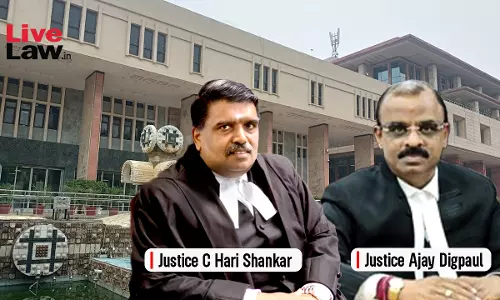
'Conduct Is Disquieting To Court's Conscience': Delhi High Court Dismisses Applications For Condonation Of Delay In Filing & Re-Filing Appeal
The Delhi High Court bench of Justices C. Harishankar and Ajay Digpaul observed that the conduct of the appellants in this case is deeply troubling to the court's conscience. They neither informed the respondents about the filing of the present appeals nor disclosed the same to the court, even though the respondents' appeals challenging the same arbitral award had been listed and heard multiple times. Under these circumstances, the delay in filing and refiling the appeals cannot be...
S. 11 SARFAESI Act | DRT Can't Decide Disputes Between Banks Over Secured Assets; Must Be Referred To Arbitration : Supreme Court
In a significant ruling under the SARFAESI Act, 2002 (“Act”), the Supreme Court today (May 23) held that inter-creditor disputes (between secured creditors) must be resolved through arbitration under Section 11 of the Act read with the Arbitration & Conciliation Act, 1996 (“Arbitration Act”). Unlike the Arbitration and Conciliation Act, which requires a written agreement for reference, Section 11 of the Act creates a statutory mandate for arbitration, eliminating the need for any such...
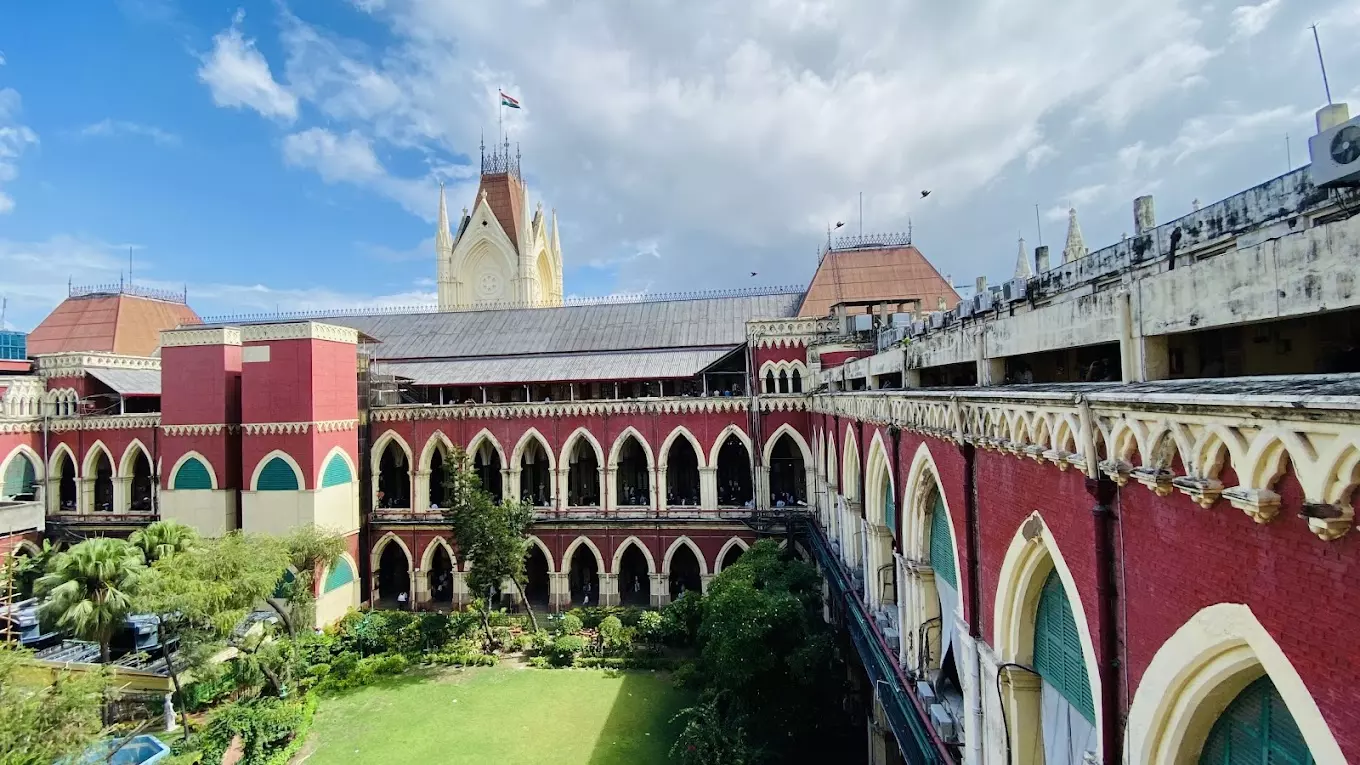
Court Is Not Appropriate Forum To Seek Interim Relief During Arbitration Proceedings: Calcutta High Court
The Calcutta High Court bench of Justice Shampa Sarkar has held that the appropriate forum for seeking interim relief after the constitution of the Arbitral Tribunal is the Tribunal itself under Section 17 of the Arbitration Act. Recourse to the court under Section 9 is permitted during the arbitration proceedings only if the remedy under Section 17 is found to be inefficacious. Brief Facts: This application has been filed under Section 9(1) of the Arbitration and Conciliation Act,...
Interim Measures U/S 9 Of Arbitration Can't Be Sought By MSME During Conciliation Proceedings: Calcutta High Court
The Calcutta High Court bench of Justice Shampa Sarkar has held that interim measures under Section 9 of the Arbitration Act can be sought by the MSME only after mandatory conciliation before the MSME Council fails and the dispute proceeds to arbitration—either conducted by the Council or referred to an arbitral institution. Only then do the provisions of the Arbitration Act apply. Consequently, seeking relief under the Arbitration Act during conciliation is clearly prohibited under...
[Arbitration] S.10 Of General Clauses Act Applies Only If S.34 Application Was Filed Within Time, Court Was Closed On Last Day Of Limitation: Delhi HC
The Delhi High Court bench of Justices Hari Shankar and Ajay Digpaul has held that the benefit of Section 10 of the General Clauses Act is available only when the petition is filed within the normal limitation period that is 90 days as prescribed under section 34(3) of the Arbitration Act and the court was closed on the last day of that period. It does not apply when the court was closed on the last day of the extendable period under proviso to Section 34(3) of the Arbitration Act. ...
[Arbitration Act] Opposite Party's Failure To Reply To S.21 Notice Doesn't Imply Consent To Appointment Of Named Arbitrator: Delhi High Court
The Delhi High Court bench of Justice Jyoti Singh while setting aside an arbitral award has observed that unilateral appointment of arbitrator vitiates the award and if the opposite party fails to reply to the notice under Section 21, Arbitration and Conciliation Act, 1996 (“ACA”), then such inaction cannot lead to an inference as to implied consent or acquiescence of the party to appointment of the named Arbitrator. The Court held that in such a situation the only recourse available to...
Interest Ceases To Accrue On Decretal Amount Deposited In Court Registry When Award Holder Has Knowledge Of Deposit: Delhi High Court
The Delhi High Court bench of Justices Vibhu Bakhru and Tejas Karia has held that once the Judgment Debtor deposits the decretal amount with the court registry pursuant to a court order, and the Award Holder has notice of such deposit, interest on the deposited amount ceases to accrue. Consequently, interest can only be claimed on the remaining outstanding amount, not on the sum deposited with the court. Brief Facts: PCL STICCO (JV) (Award Holder) filed an appeal under Section 13(1A)...