
ARBITRATION

Challenge To Rejected Jurisdiction Objection Must Ordinarily Await Arbitral Award: Karnataka High Court
The Karnataka High Court has recently held that an order rejecting a jurisdictional objection by an arbitral tribunal cannot ordinarily be challenged through a writ petition while arbitral proceedings are pending. Such a challenge must ordinarily await the arbitral award stage. Justice Suraj Govindaraj delivered the ruling while declining to interfere with an order of a sole arbitrator who had rejected a challenge to the tribunal's jurisdiction in a dispute arising from an Agreement of Sale. ...

Once Complaint Is Admitted, Arbitration Clause Cannot Oust Consumer Forum Jurisdiction: Supreme Court
The Supreme Court has held that a consumer who has invoked the Consumer Protection Act cannot be forced into arbitration merely because the underlying agreement contains an arbitration clause. It restored a homebuyer's complaint alleging delayed possession of a flat for adjudication on merits before a consumer forum. A Division Bench of Justices Vikram Nath and V. Mohana set aside orders of the consumer fora that had referred the dispute between T.K.A. Padmanabhan and Abhiyan Cooperative...
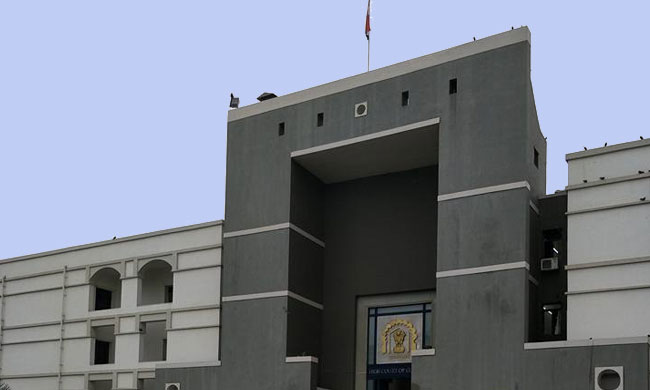
Courts Cannot Interfere With NH Act Compensation Award Based On Section 26 RFCTLARR Assessment: Gujarat HC
The Gujarat High Court on 8 June held that an arbitral award determining compensation under the National Highways Act, 1956 cannot be interfered with under Sections 34 and 37 of the Arbitration and Conciliation Act, 1996 where the Arbitrator has assessed market value in accordance with Section 26 of the Right to Fair Compensation and Transparency in Land Acquisition, Rehabilitation and Resettlement Act, 2013 based on the evidence on record. A Bench of Chief Justice Sunita Agarwal and Justice...

LiveLawBiz Arbitration Cases Weekly Digest: June 15 - June 21, 2026
Nominal Index Atlanta Infra Assets Limited v. NHAI, 2026 LLBiz HC (DEL) 622.M/s Profile India International v. M/s SS Brothers Associates & Anr., 2026 LLBiz HC (DEL) 616.Orange Orbit LLP v. HostBooks Limited & Ors., 2026 LLBiz HC (DEL) 617.National Highways Authority of India v. Progressive Constructions Limited, 2026 LLBiz HC (DEL) 625.Chander Mohan Lall v. DLF Home Developers Limited, 2026 LLBiz HC (DEL) 626.K. Prem Kumar v. Escape Artists Motion Pictures & Ors. and K....

Madras HC Upholds Solatium, Interest But Quashes 12% Additional Compensation In NH-47 Land Acquisition Case
The Madras High Court has recently set aside a Tiruppur district court's direction granting landowners an additional 12% compensation in a batch of land acquisition disputes arising from the six-laning of the Chengapalli-Walayar stretch of National Highway-47. A Division Bench of Justices P. Velmurugan and K. Govindarajan Thilakavadi held that landowners are entitled to solatium and interest in acquisitions under the National Highways Act. However, they cannot claim the additional 12% amount...

MP High Court Refers Gopal Enterprises-NCL Dispute To Arbitration Despite Use Of 'May' in Clause
The Madhya Pradesh High Court has referred a payment dispute between Gopal Enterprises and Northern Coalfields Limited (NCL) to arbitration. It held that the use of the word "may" in the contract's dispute resolution clause did not dilute the parties' intention to resolve disputes through arbitration. Justice Deepak Khot rejected NCL's objections and appointed Justice H.P. Singh, a former judge of the High Court of Madhya Pradesh, as the sole arbitrator. "The intention of the parties to...

Karnataka High Court Sets Aside Part Of Arbitral Award Over GST Computation On Non-Tendered Works
The Karnataka High Court has partly set aside an arbitral award in a dispute between the National Centre for Biological Sciences (NCBS) and URC Constructions Pvt Ltd. The court held that the arbitral tribunal ignored material evidence while concluding that the value of non-tendered items was ₹9.65 crore exclusive of GST. A division bench of Chief Justice Vibhu Bakhru and Justice C.M. Poonacha found that invoices and other records on the arbitral record showed that at least some GST was...

Excluded Period Need Not Overlap With Limitation Period To Be Excluded In Arbitral Award Execution: Bombay HC
The Bombay High Court has held that, for the purpose of excluding a period while computing limitation, it is not necessary that the limitation period should have commenced or expired during the period sought to be excluded. Observing that "the period excluded has to be simply excluded", the court ruled that the period excluded by the Supreme Court during the COVID-19 pandemic must be left out while calculating the limitation for the execution of an arbitral award. Justice Abhay Ahuja made the...

Gauhati High Court Refuses To Appoint Arbitrator In Techno Steel-IWAI Dispute, Holds Noida Was Arbitral Seat
The Gauhati High Court has held that Noida was the juridical seat of arbitration in a dispute between Techno Steel and Craft Industries and the Inland Waterways Authority of India (IWAI), and therefore declined to appoint an arbitrator for want of territorial jurisdiction. Justice Soumitra Saikia held that the parties had effectively agreed to Noida as the arbitral seat under the contract. The court observed, “This Court will have to hold that in terms of the agreement, the parties have...

Pecuniary Jurisdiction Alone Cannot Confer S.34 Jurisdiction In Arbitration Petitions: Calcutta High Court
On 18 June, the Calcutta High Court held that pecuniary jurisdiction alone cannot confer jurisdiction under Section 34 of the Arbitration and Conciliation Act, 1996, in the absence of territorial jurisdiction, reiterating that both conditions must coexist for a court to entertain a challenge to an arbitral award. Justice Gaurang Kanth dismissed a petition filed by Kanchan Konwer and another, the widow and son of late Tapan Konwer, who challenged an arbitral award passed in favour of developer...
Arbitral Award Based On Undisclosed Material Violates Principles Of Natural Justice: Bombay High Court
The Bombay High Court on 8 June held that an arbitral award becomes patently illegal when the tribunal relies on material not disclosed to a party or taken from external sources without granting an opportunity to respond. Justice Sharmila U Deshmukh while hearing a petition filed by Eicher Motors Ltd. (Eicher), set aside an award granting interest and costs in favour of Ashutosh Ranjit Majumdar after finding that the tribunal relied on undisclosed Yahoo Finance data while computing...

Notice Issued In Name Of Non-Existing Entity Vitiates Entire Arbitral Process: Telangana High Court
The Telangana High Court has held that a statutory notice issued in the name of a non-existing entity is a nullity and vitiates the entire arbitral process. The court made the observation while setting aside an arbitral tribunal's order passed in proceedings initiated on the basis of a Section 21 notice issued to a dissolved company. A division bench of Justice K. Lakshman and Justice B.R. Madhusudhan Rao observed, “Any statutory notice issued in the name of a non-existing entity is a nullity...