
ARBITRATION
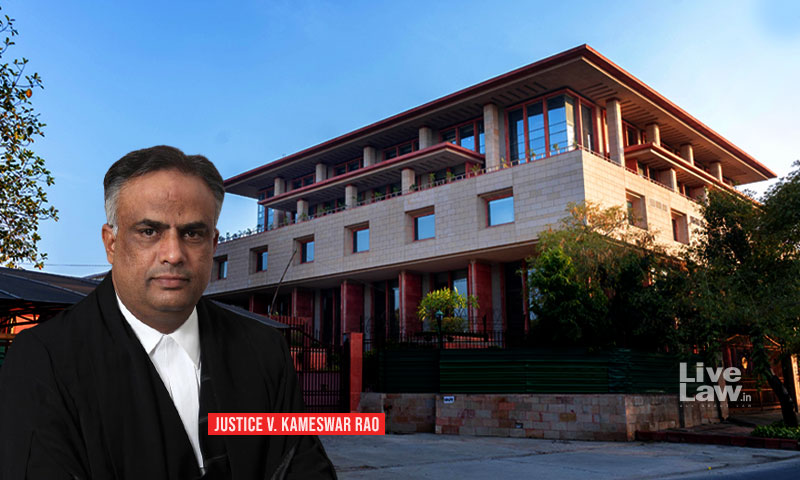
Order Passed By The Arbitrator Allowing Meetings As Per Convenience Of Parties, Would Not Change The Seat Of Arbitration: Delhi High Court
The Delhi High Court has ruled that an order passed by the Arbitrator holding that the arbitral proceedings shall be conducted at any other place, would not change the seat of Arbitration as provided in the Arbitration Clause. The Single Bench of Justice V. Kameswar Rao held that the Arbitrator cannot decide anything contrary to what has been decided by the parties. The petitioner M/s Sat Kartar Tour N Travels was awarded a contract by the respondent Oil and Natural Gas Corporation...

Arbitration Cases Weekly Round-Up: 29th May To 4th June, 2022
Allahabad High Court Section 47 CPC Application Is Not Maintainable In Execution Proceedings UnderArbitration Act, 1940: Allahabad High Court Case Title: Bharat Pumps and Compressors versus Chopra Fabricators Citation: 2022 LiveLaw (AB) 269 The Allahabad High Court has held that an application under Section 47 of the CPC is not maintainable in the execution proceedings under Section 17 of the Arbitration Act, 1940. The Single Bench of Justice Piyush Agarwal held that an...

Award Cannot Be Remitted To The Arbitral Tribunal Under Section 34 (4) Of The A&C Act, If No Reasons and Findings Are Recorded: Rajasthan High Court
The Rajasthan High Court has ruled that the arbitral award cannot be remitted back to the Arbitral Tribunal under Section 34 (4) of the Arbitration and Conciliation Act, 1996 (A&C Act) if there are no findings recorded in the arbitral award on the contentious issues. The Single Bench of Justice Ashok Kumar Gaur reiterated that discretionary powers under Section 34 (4) of the A&C Act cannot be exercised under the guise of additional reasons or for filling up the gaps in the...

If MoU Arises Out Of An Agreement Containing Arbitration Clause, Reference Of MoU Is Valid: Delhi High Court
The Delhi High Court has ruled that where an MoU has been signed by the parties for settlement of dues arising under an agreement, arbitration can be sought for violation of the terms of the MoU, even if the MoU does not contain an Arbitration Clause. The Single Bench of Justice Anup Jairam Bhambhani held that since the MoU was a part of the dispute covered by the Arbitration Clause contained in the agreement, the dispute between the parties could be referred to arbitration. The...
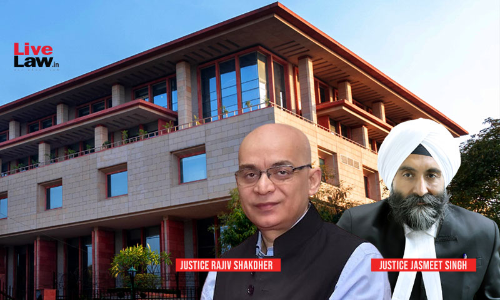
Once The Ledger Duly Reflects The Amount As Outstanding And Payable, The Period Of Limitation Would Run From The Said Date: Delhi High Court
The High Court of Delhi has held that acknowledgment of an amount as due and payable under the ledger/statement of accounts, constitutes a fresh cause of action and extends the period of limitation. The Division Bench of Justice Rajiv Shakdher and Justice Jasmeet Singh held that the period of limitation for an amount that is shown as outstanding in the book of accounts would get extended from the date of such acknowledgement in terms of Section 18 of the Limitation Act. The Court...

Monthly Digest Of Arbitration Cases : May 2022
Supreme Court "Group Of Companies" Doctrine Needs Relook,Says Supreme Court; Refers Issues To Larger Bench Case Title: Cox and Kings Limited versus SAP India Private Limited and Anr. Citation: 2022 LiveLaw (SC) 455 The Supreme Court has referred various aspects regarding the application of the doctrine of 'Group of Companies', which is often utilised to bind non-signatories to an Arbitration Agreement, to a larger Bench. "There is a clear need for having a relook at the...
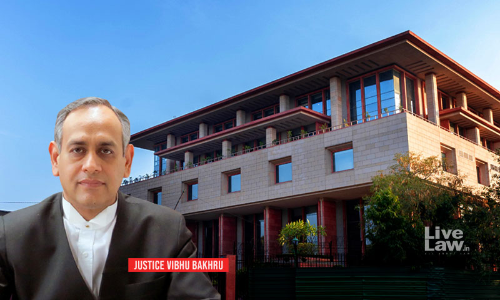
Embargo Under Section 12(5) Of The A&C Act Would Not Apply To A Distant Relative Of The Parties: Delhi High Court
The High Court of Delhi has held that the embargo under Section 12(5) of the A&C Act would not apply to a distant relative of the parties. The Single Bench of Justice Vibhu Bakhru held that in terms of Explanation 1 and Entry 9 to the Seventh Schedule r/w Section 12(5) only spouse, sibling, child, parent or life partner of a party would be ineligible to be appointed as an arbitrator. The Court observed that the father-in-law of the niece of the parties cannot be held to be a...

High Courts Without Original Civil Jurisdiction Require Commercial Division For International Arbitration: Karnataka High Court
The Karnataka High Court has ruled that even with respect to a High Court that does not exercise an Ordinary Original Civil Jurisdiction, a Commercial Division is required to be established for the purpose of considering applications and appeals arising out of an International Commercial Arbitration. The Court added that the said Commercial Division must comprise of a Single Judge. The Bench, consisting of Chief Justice Ritu Raj Awasthi and Justice Suraj Govindaraj, held that though ...

Enforcement Of A Foreign Arbitral Award Can Be Filed In More Than One High Court: Madras High Court
The High Court of Madras has held that more than one High Court can exercise jurisdiction for the recognition and enforcement of a part of arbitral award if the claims are decided for and against the parties thereto. The Single Bench of Justice Senthilkumar Ramamoorthy held that the Court for the purpose of the enforcement of a foreign award would be the one within whose jurisdiction either the award debtor carries his business or its assets are located within its jurisdiction. The...
Multiple Arbitrations With Regard To Existing Claims On Same Contract Are To Be Avoided: Delhi High Court
The High Court of Delhi has held that multiple arbitrations with regard to existing claims on same contract are to be avoided. The Single Bench of Justice Suresh Kumar Kait held that permitting the parties to have multiple arbitrations for the adjudication of the existing disputes related to the same contract would entail multiple observations. The Court further held that there is no absolute bar in terms of Entry 22 to the Vth Schedule against the appointment of the same...

Section 47 CPC Application Is Not Maintainable In Execution Proceedings Under Arbitration Act, 1940: Allahabad High Court
The Allahabad High Court held that an application under Section 47 of the CPC is not maintainable in the execution proceedings under Section 17 of the Arbitration Act, 1940. The Single Bench of Justice Piyush Agarwal held that an arbitration award is not a decree as defined under section 2(2) of CPC and therefore, the objection under section 47 of CPC, which can be filed only in execution of decree (as defined under section 2(2) CPC), is not maintainable in the proceedings seeking...

Arbitral Award:Power To Set Aside To Include Modify: Need To Relook NHAI Vs. M.Hakeem
Section 34 of the Arbitration and Conciliation Act, 1996 (Hereinafter "the Act") provides for recourse to a court against an arbitral award by way of an application for setting aside the Award. Does this mean that the Court is powerless to modify the arbitral award. In other words, is it that always the Court has to necessarily either set aside the arbitral award or uphold the same in totality. No doubt, the Arbitration Act, 1940, (which was repealed by the Act) gave express power to the...