
ARBITRATION
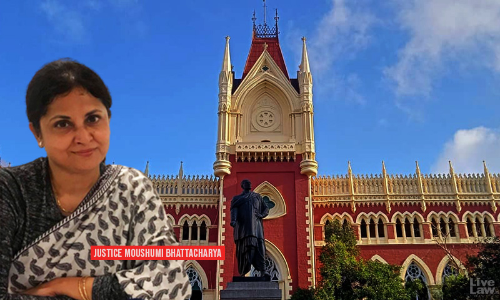
Arbitration Act | Tribunal’s Mandate Terminates U/S 29A Unless Extended During Subsistence: Calcutta High Court
The Calcutta High Court has recently held that the mandate of an arbitral tribunal is held to be terminated under Section 29A of the Arbitration & Conciliation Act, 1996, (“1996 Act”), unless the same is extended during its subsistence, in the absence of which, an arbitrator would become de jure inadmissible.In disposing of three arbitration petitions containing the aforesaid identical point of law, a single-bench of Justice Moushumi Bhattacharya held:Section 29-A of The Arbitration and...
If Contract Mandates Arbitration Only When Claims Collectively Are 20% Or Less Of Contract Value, Court Won’t Compel Arbitration If Exceeds : Delhi High Court
The Delhi High Court has held that in cases where the contract stipulates arbitration solely in instances where the cumulative value of claims is below 20% of the contract value, the court would abstain from directing the parties towards arbitration if the claims surpass this specified cumulative value threshold. The bench of Justice Manoj Kumar Ohri held that the Court can conduct a preliminary enquiry to find out if the dispute is arbitrable in terms of the agreement and refuse...

Third Party Having Interest In The Immovable Property Can Challenge The Award Before The Executing Court If The Award Was Obtained Fraudulently: Sikkim High Court
The High Court of Sikkim has held that a third party/objector can file a petition under O.XXI R.97 R/W Section 47 of CPC before the Executing Court if it can be shown that the arbitral award in respect of the immovable property is a nullity or obtained by fraud. The bench of Justice Meenakshi Madan Rai held that there is no bar under the law for a stranger to the proceedings who has an independent legal right to appear and contest the execution proceedings and whose property interests...
Claims Cannot Be Referred To Arbitration When The Requirement To Mandatorily Notify Such Claims Was Not Followed: Delhi High Court
The Delhi High Court has held that claims of a party cannot be referred to arbitration when the requirement to mandatorily notify such claims with the General Manger (GM) was not followed. The bench of Justice Manoj Kumar Ohri held that the Court can conduct a preliminary enquiry to find out if the dispute is arbitrable in terms of the agreement and refuse arbitration when the claims are ex facie non-arbitrable. The Court also held if the contract provides for arbitration only...
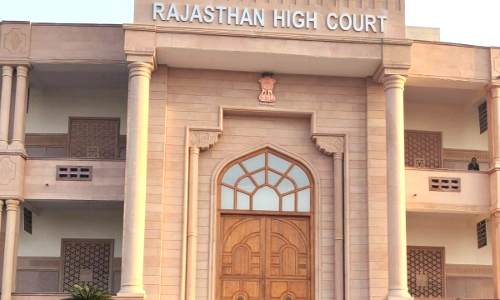
Place Of Arbitration Does Not Become The Seat Of Arbitration When The Exclusive Jurisdiction Is Conferred On Courts Of Another Place: Rajasthan High Court
The Rajasthan High Court has held that the place of arbitration does not become the seat of arbitration when the exclusive jurisdiction is conferred on Courts of another place. The bench of Justice Pushpendra Singh Bhati held that where a place is designated merely as a ‘venue’ and courts of another place have been granted the exclusive jurisdiction, the latter is a clear ‘contrary indicia’ that prevents the place from becoming the seat of arbitration. The Court held that New Delhi...
The India International Arbitration Centre (IIAC) Releases Conduct Of Arbitration Regulations, 2023
The India International Arbitration Centre (IIAC) has officially unveiled the India International Arbitration Centre (Conduct of Arbitration) Regulations, 2023 (hereinafter referred to as the "Regulations"), shedding light on the intricate procedures governing arbitral processes. These Regulations, which became effective on September 1, meticulously outline the procedure for initiating arbitration under the purview of IIAC, the selection of arbitrators, and the mechanisms for resolving...
Justice And Fairness In Arbitration - An Overlooked Principle?
Arbitration is emerging as a powerful dispute resolution mechanism to address the challenges posed by hefty litigation costs and time-consuming legal proceedings in courts of law, thereby offering mutually agreeable and amicable means of resolving disputes. The idea of party autonomy is one of the essential components of the arbitration mechanism as a result of the pressing need for effective and accessible dispute resolution processes. This provides the disputing parties the freedom to...

The Question Of ‘Completion Of Pleadings’ Under Section 29A Of The Indian Arbitration And Conciliation Act,1996.
The Arbitration and Conciliation Act, 1996 amended in 2015 first introduced section 29A which prescribed the time limit of 12 months for an Arbitral Tribunal to conclude the proceedings and pass an award from the date it enters reference. The objective of the amendment was to expediate the arbitration proceedings and to make them more time efficient and desirable to the parties. In the year 2019 another amendment was made to Section 29A after which the time limit of 12 months for...
Security Offered By An Award-Debtor For Stay Of Arbitral Award Must Be ‘Clean, Unblemished With Good Exchange Value’: Calcutta High Court
The Calcutta High Court has recently held that the security furnished by an award-debtor for stay of an arbitral award must be “clean, unblemished and with good exchange value.”Sarat Chatterjee & Co. (“applicants”) had argued that that an earlier division-bench judgement of 2015, had already secured 10,000 metric tonnes of Coke equating to more than the total security value of the award of Rs 18.21 crores in favour of the Munisubrata (“respondents”), and that the Court could now affect the...

Arbitration Monthly Digest: August 2023
Supreme Court: Court Has No Power To Modify Award Under S. 34 Arbitration & Conciliation Act : Supreme Court Case Title: Larsen Air Conditioning and Refrigeration Company vs Union of India The Supreme Court reiterated that a court, under Section 34 of the Arbitration and Conciliation Act, has no power to modify an arbitration award. The limited and extremely circumscribed jurisdiction of the court under Section 34 of the Act, permits the court to interfere with an award, sans...

Arbitration Cases Weekly Round-Up: 28 August to 3 September 2023
Bombay High Court: Court Can Within The Limited Scope Of Judicial Scrutiny Under Section 11 Of The A&C Act, Examine If Claims Are Frivolous Or Meritless: Bombay High Court Case Title: 22Light vs OESPL Pvt Ltd The High Court of Bombay has held that despite the limited scope of judicial scrutiny under Section 11 of the A&C Act, the Court would refuse to appoint the arbitrator when on a prima facie scrutiny of the material on record, it can come to a conclusion that claims...
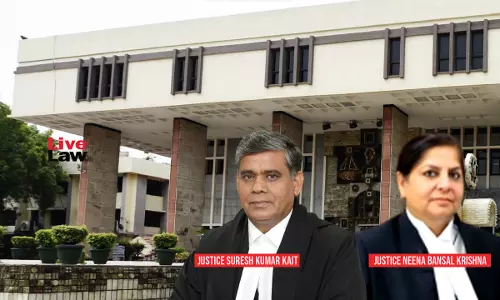
Principles Of Natural Justice Not Violated When The Opportunity To Make Oral Submission Is Not Availed: Delhi High Court
The High Court of Delhi has held that the principles of natural justice are not violated when the opportunity to make oral submissions on an issue was granted but not availed by the party. It held that no party has the absolute right to insist on his convenience in every respect. The bench of Justices Suresh Kumar Kait and Neena Bansal Krishna held that an Arbitrator has a right to manage the proceedings and to give directions to the parties to be present on a particular date, time and...