
ARBITRATION

Arbitration Cases Weekly Round-Up: 18 To 24 September 2023
Supreme Court: 'Every Arbitrator May Not Be Legally Trained, Some Decisions Are Based On Equity' : Supreme Court Explains Scope Of Judicial Interference In Arbitral Awards Case Title: Batliboi Environmental Engineers Limited vs Hindustan Petroleum Corporation Ltd and Anr. The Supreme Court bench comprising Justice Sanjiv Khanna and Justice M.M. Sundresh, has held that while setting aside an arbitral award for being violative of Section 28(3) of the Arbitration and Conciliation...

Arbitration Award And Stamp Duty Paid On It
Award of an Arbitrator is an instrument chargeable with duty as per section 3 of the Indian Stamp Act, 1899. There is no exemption for any Award. Is any duty payable on an Award dismissing a claim? If any duty is payable on such an Award, what is the rate at which it is payable? If no duty is payable, even when the property involved in the dispute is valued at hundreds of crores of rupees, will it make sense? These questions led to the present study (with particularly reference to the...
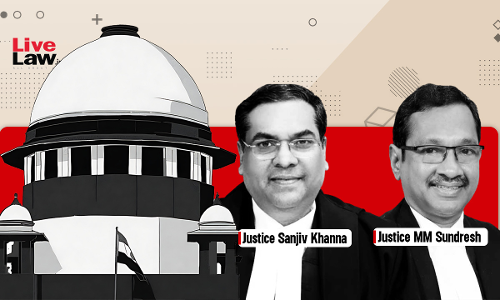
Supreme Court Explains Scope Of Judicial Interference In Arbitral Awards
The Supreme Court Bench comprising Justice Sanjiv Khanna and Justice M.M. Sundresh, has held that while setting aside an arbitral award for being violative of Section 28(3) of the Arbitration and Conciliation Act, 1996, it must be considered that the Arbitrator is empowered to interpret the contract terms reasonably. Arbitrator’s interpretation cannot be a ground for setting aside of award, since the construction of contract’s terms is finally for the arbitrator to decide. Under Section 28(3),...
Liquidated Damages Provided In The Agreement Cannot Be Awarded To A Party In Absence Of The Proof Of Actual Loss: Delhi High Court
The High Court of Delhi has held that the sum agreed by the parties as liquidated damages would not dispense with the requirement of proof by the party claiming liquidated damages that it actually suffered a loss. The bench of Justice Manoj Kumar Ohri held that a sum ascertained as liquidated damages in the contract is not in the nature of penalty, but is a pre-estimate of loss estimated by the parties likely to be suffered by a party in the event of breach of contract by the other...
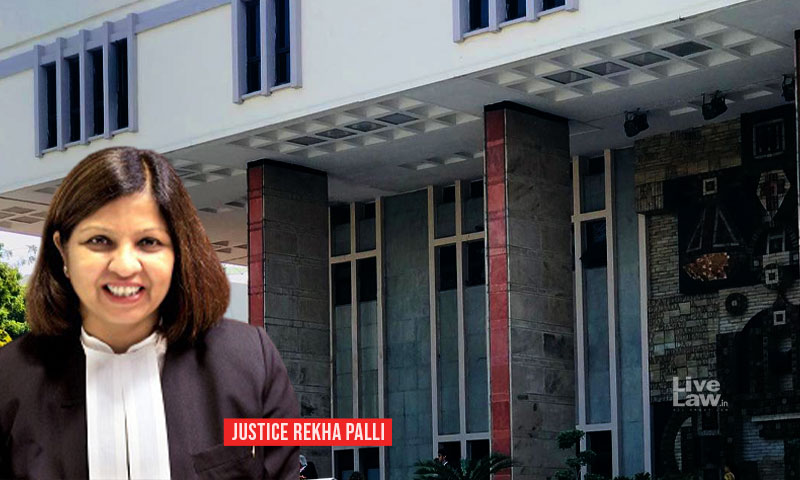
Whether The Arbitration Agreement Is Vitiated By Fraud Should Be Left To The Wisdom Of The Arbitrator: Delhi High Court Reiterates
The High Court of Delhi has reiterated that a question as to whether the arbitration agreement is vitiated by fraud should be left to the wisdom of the arbitrator who will be free to decide the same on the basis of the evidence and the Court exercising power under Section 11 of the A&C Act should not get into such a finding. The bench of Justice Rekha Palli held that merely because a criminal complaint has been lodged against the petitioner for the alleged fraud is not a ground to ...
Execution Petition For Arbitration Award Would Lie Only Before The Designated Commercial Courts: Andhra Pradesh High Court
The High Court of Andhra Pradesh has held that an execution petition for an arbitration award can only lie before the designated Commercial Courts and no other Court viz., Civil/District Court can entertain such an application. The bench of Justices D.V.S.S. Somayajulu and Duppala Venkata Ramana held that an execution/enforcement petition for an arbitration award of a specified value would be an application within the meaning of Section 15 of the Commercial Courts Act, 2015 that...
Arbitration Cases Weekly Round-Up: 11 To 17 September 2023
Calcutta High Court:Arbitration Act | Tribunal’s Mandate Terminates U/S 29A Unless Extended During Subsistence: Calcutta High Court Case Title: Rohan Builders (India) Pvt Ltd vs Berger Paints India Ltd The Calcutta High Court has recently held that the mandate of an arbitral tribunal is held to be terminated under Section 29A of the Arbitration & Conciliation Act, 1996, (“1996 Act”), unless the same is extended during its subsistence, in the absence of which, an arbitrator would...
Fees To Arbitrator Has To Be Treated On Parity With The Fees Of The Liquidator And Must Be Given A Preferential Status In Terms Of Priority Of Dues: Madras High Court
The High Court of Madras has held that the fees to arbitrator has to be treated on parity with the fees of the liquidator and must be given a preferential status in terms of priority of dues. The bench of Justice Abdul Quddhose observed that if the arbitrator’s are not paid their dues, the object of arbitration will get defeated as competent arbitrators would hesitate to adjudicate disputes of companies facing financial crisis. Facts Pursuant to a dispute between the parties,...
Moratorium Under IBC Does Not Bar Payment Of Fees To Arbitrator Due Prior To Moratorium: Madras High Court
The High Court of Madras has held that the moratorium under Section 14 of the Insolvency and Bankruptcy Code, 2016 does not affect the payment of fees to the arbitrator for the award passed before the moratorium was declared. The bench of Justice Abdul Quddhose has held that mere initiation of insolvency proceedings against an entity should not be a ground to deny the legitimate fees to the arbitral tribunal. It observed that arbitrators provide essential services which are saved by...
Arbitration Clause In Loan Restructuring Agreement, Liability Is Transferred To New Agreements, Binding On Parties: Delhi High Court
The High Court of Delhi has held that when earlier loan agreement liabilities are transferred through an agreement, the subsequent loan agreements' arbitration clauses become binding on the parties. The bench of Justices Manmohan and Mini Pushkarna reiterated that Section 12(5) inserted through the 2015 Amendment to the Act would not apply to an arbitration that had commenced before the amendment came into force. It held that an arbitration commences on the date when the notice of...
Fees Fixed By The Arbitrator Cant Be Challenged, After Unconditional Acceptance By The Party: Madras High Court
The High Court of Madras has held that once a party has unconditionally accepted the fees fixed by the arbitral tribunal during the arbitral proceeding cannot later challenge the fees of the arbitral tribunal by filing petition under Section 39(2) of the A&C Act. The bench of Justice Abdul Quddhose clarified that as per Section 39(1) of the Act, the arbitral tribunal possesses a lien on the award to cover any outstanding arbitration costs, and it has the authority to withhold the...
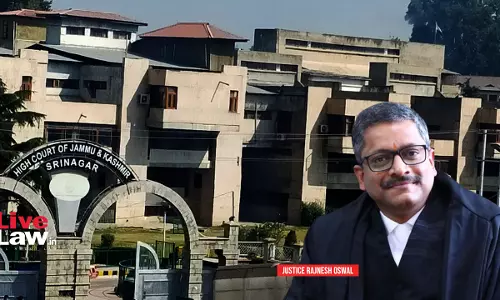
J&K Arbitration And Conciliation Act | Filing Application U/S 5 Not Bar To Referral For Arbitration U/S 8(1): High Court
The Jammu and Kashmir and Ladakh High Court has clarified that filing of the application under Section 5 of the Jammu and Kashmir Arbitration and Conciliation Act, 1997 cannot be construed as a submission of statement of the substance of the dispute within the meaning of Section 8(1) of the Act to create a legal bar in referring the matter to an arbitratorSection 8(1) of the Act prescribes that an application to refer parties to arbitration should be made before submitting the first statement on...