
No Commissioner's Authorisation, No VAT Revisional Power For Joint Commissioner: Allahabad High Court
Upasna Agrawal
1 Oct 2026 1:55 PM IST
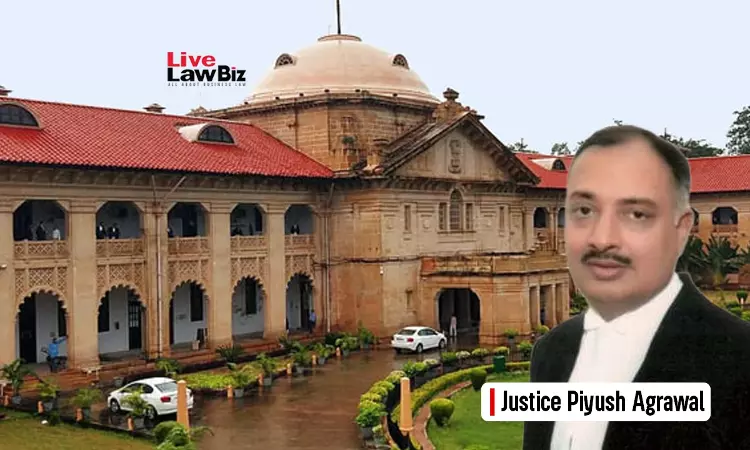
The Allahabad High Court on 11 September held that the Joint Commissioner (Executive) cannot exercise revisional powers under Section 56(1) of the U.P. VAT Act, 2008 without an order of authorisation by the Commissioner, Commercial Tax. Proceedings initiated by an unauthorised officer are without jurisdiction and void ab initio.
Justice Piyush Agrawal allowed Sai Baba Ent Bhatta's revision against the order of the Commercial Tax Tribunal, Kanpur, holding that there was nothing on record to show that the Commissioner had conferred the revisional power on the Joint Commissioner (Executive), Commercial Tax, Etawah. The Bench observed:
“In the absence thereof, the proceedings initiated by the Joint Commissioner (Executive), Etawah, against the revisionist in exercise of the power under Section 56(1) of the U.P. VAT Act are without jurisdiction and void ab initio and, therefore, are liable to be set aside.”
Sai Baba Ent Bhatta manufactures and sells bricks in Uttar Pradesh. Following five surveys conducted between April 2008 and January 2009, an assessment was made for Assessment Year 2008-09 by enhancing the filing period and selling rate. Bhatta challenged the assessment in appeal.
The Joint Commissioner (Executive), Commercial Tax, Etawah subsequently issued a notice dated 10 February 2014 under Section 56(2) of the Act proposing to revise the order dated 29 May 2012. By order dated 2 June 2014, the Joint Commissioner enhanced the taxable turnover and created an additional liability of Rs. 4,27,879.
The Commercial Tax Tribunal, Kanpur partly allowed the appeal against the revisional order on 19 March 2016, following which the matter reached the High Court in revision.
Bhatta argued that the Commissioner, Commercial Tax, U.P. had never authorised the Joint Commissioner to call for and examine the records of orders passed by subordinate officers. It was further argued that, after the U.P. VAT Act came into force, no order delegating the revisional power under Section 56(1) had been issued to any authority.
Additional Chief Standing Counsel opposed the revision, arguing that the objection had not been raised before the authorities below and could not be raised for the first time before the High Court.
The Court noted that the jurisdictional objection was admittedly being raised for the first time before it. However, it held that such an objection could be entertained as jurisdiction goes to the root of the matter. It held:
“However, the issue of jurisdiction goes to the root of the matter. If any order has been passed without jurisdiction, the question of jurisdiction can be raised at any stage.”
The Bench relied on the Supreme Court's decision in Chandrika Misir and another v. Bhaiyalal, as well as its own decisions in M.S. Traders v. Commissioner of Sales Tax, U.P., Lucknow and Shyam Lal Om Prakash v. Commissioner of Sales Tax, U.P. In those decisions, it was held that an objection to jurisdiction goes to the root of the matter and can be raised at any stage, including for the first time before the Tribunal or in revision before the High Court.
It then examined the record to determine whether the Joint Commissioner had been authorised to exercise the revisional power. It observed:
“The record shows that the Commissioner, Commercial Tax, Lucknow, after the implementation of the U.P. VAT Act, has not authorized the Joint Commissioner (Executive), Commercial Tax, Etawah, to initiate proceedings under Section 56(1) of the U.P. VAT Act. The State could not even demonstrate in the counter affidavit that the said power was delegated to the Joint Commissioner (Executive), Etawah, by any Notification, Act or Circular.”
Accordingly, the High Court allowed the revision, finding that the Joint Commissioner had not been authorised to exercise the revisional power, and the proceedings under Section 56(1) to be without jurisdiction and void ab initio.
Counsel for Revisionist(s): Lokesh Mittal, Murari Mohan Rai
Counsel for Opposite Party(s): C.S.C.