
Rajasthan VAT Act Permits Search Of Residential Premises In Tax Evasion Cases: Rajasthan High Court
Rajnandini Dutta
8 May 2026 9:49 PM IST
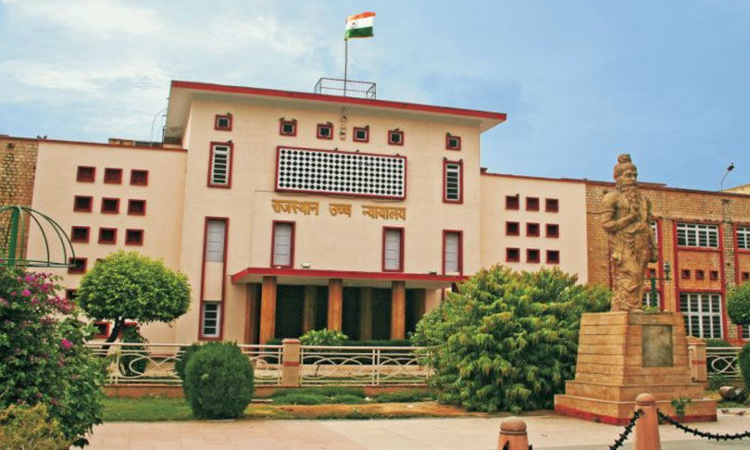
The Rajasthan High Court has recently held that the Rajasthan Value Added Tax Act does not prohibit searches at residential premises, provided the statutory requirements for search and seizure are strictly fulfilled.
A Division Bench of Justice Arun Monga and Justice Sunil Beniwal referring to Section 75 of the Rajasthan Value Added Tax Act, 2003 observed,
“Thus, the statute does not prohibit search of residential premises as such; however, the exercise of such power is conditioned upon strict fulfillment of the statutory requirements.”
The court was dealing with writ petitions filed by Anil Sugar Candy Works, Tulsani Food Industries, and Nagad Narayan Agro Food, which challenged search and seizure proceedings carried out at both their business premises and the residences of their proprietors in Bikaner in 2012.
The firms, engaged in the manufacturing and sale of sugar candy and related products, argued that the tax department had acted without jurisdiction by searching residential premises despite having no prior material to show that business activities were being conducted there or that books of accounts were maintained there.
They contended that the proceedings were triggered merely by an anonymous complaint and amounted to an impermissible roving inquiry.
The anonymous complaint had alleged that six firms belonging to the same business family were involved in tax evasion worth crores of rupees through misclassification of goods, underreporting sales, benami billing, cash transactions, etc.
Following internal inquiries, the Commercial Taxes Department ordered simultaneous searches at the firms' business premises and the residences of the proprietors. Documents were seized during the operation, leading to the writ petitions.
The State argued that the firms belonged to the same family, were engaged in similar business activities and had already been facing multiple tax disputes and proceedings involving allegations of tax evasion. It also pointed out that the residential addresses were reflected in the firms' registration records.
The Court noted that six firms were registered under different names by members of the same family and that the petitioner-firms were engaged in similar business activities from separate premises in the same industrial area. It further noted that earlier departmental records showed multiple tax disputes involving the firms.
On this aspect, the bench said:
“In the considered opinion of this Court, these facts were sufficient to raise suspicion regarding the business activities of the petitioner-firms, and there was sufficient reason to believe that there existed a strong possibility of tax evasion or avoidance of tax liability by the petitioner-firms”
The Court rejected the argument that residential premises could not be searched in the absence of material justifying such action.
Referring to the statutory scheme, the bench noted that the law permits inspection of a dealer's place of business as well as “any other place” where authorities believe business is being carried on or accounts are being kept and also empowers search where concealment of business-related facts is suspected.
The court also rejected the explanation that one of the residential premises had been rented out to a third party.
It observed, “If the premises had been rented out, there would have been no reason for such documents belonging to the petitioner-firms to be lying therein.”
At the same time, the court cautioned against indiscriminate use of search powers.
It observed, “There is no doubt, and the law is well settled, that the assessing authority cannot make a roving and fishing inquiry or proceed with the harsh step of search and seizure unless it has reason to suspect that a person is indulging in tax evasion or avoiding tax liability.”
Holding that the statutory threshold had been met in the present case, the High Court upheld the search and seizure proceedings and dismissed the writ petitions.
For Petitioner: Advocate Lokesh Mathur, Prakash Kumar
For Respondent: AAG Mahaveer Bihsnoi, Harshwardhan Singh, Anirudh Singh Shekhawat