
Subsidised Sales Don't Bar ITC, Milling By-Products Not Taxable Under AP VAT: Andhra Pradesh High Court
Mehak Dhiman
9 Feb 2026 3:00 PM IST
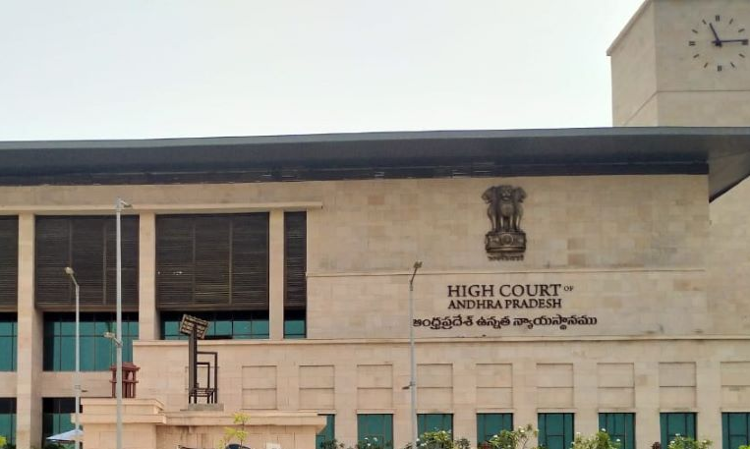
The Andhra Pradesh High Court on 2 February held that input tax credit (ITC) cannot be disallowed merely because essential commodities are sold at subsidised prices fixed by the State Government. It further held that by-products such as broken rice, bran and husk retained by millers during the milling of paddy do not constitute a taxable disposal or transfer attracting levy under the Andhra Pradesh Value Added Tax Act, 2005.
A Bench of Justice R. Raghunandan Rao and Justice T.C.D. Sekhar was dealing with a writ petition filed by the Andhra Pradesh State Civil Supplies Corporation Limited, challenging an assessment order passed for the period from June 2014 to March 2015.
The Corporation, a wholly State-owned undertaking, is engaged in the procurement and distribution of essential commodities under the Public Distribution System at prices fixed by the State Government, without any profit motive. It procures commodities such as rice, sugar and pulses from VAT dealers and claims input tax credit on such purchases.
As it does not have its own milling facilities, paddy procured by it is supplied to rice millers for milling in accordance with Central Government guidelines. Under the milling arrangement, only the resultant rice is required to be returned to the Corporation, while by-products such as broken rice, bran and husk are retained by the millers.
The assessment authority, however, restricted ITC on sugar and red gram dhal on the ground that these goods were sold at prices lower than their purchase value. It further levied purchase tax under Section 4(4) of the AP VAT Act by treating the by-products left with the millers as consideration for milling services.
The High Court rejected both grounds adopted by the Revenue. It noted that Rule 20(4)(a) of the AP VAT Rules, 2005 clearly permits full input tax credit where goods are brought and sold in the same form.
The Bench observed:
“In the case on hand, admittedly there is no transfer of by-products inasmuch as they remain with the millers as per the terms of the agreement. Therefore, by no stretch of imagination can the same be termed as disposal, inasmuch as there is no transfer of title to the goods.”
The Court further observed that the sale of commodities at subsidised rates pursuant to government policy cannot be a basis to proportionately disallow input tax credit, particularly when the dealer has no discretion in fixing the sale price.
On the levy of tax on by-products, the Court held that there was no transfer of title or disposal of goods by the Corporation, as the by-products remained with the millers as per the terms of the agreement and without any consideration. In the absence of a taxable sale or disposal, the essential conditions for invoking Section 4(4) of the Act were not satisfied.
The Bench stated:
“Further, it is the responsibility of the millers to pay Sales Tax/Value Added Tax or any other tax on the wastage left by the petitioner under the agreement. In such circumstances, the order under challenge is not sustainable inasmuch as there is no under-declaration of output tax by the petitioner in relation to by-products left to the millers.”
Relying on its earlier decision in Food Corporation of India v. State of Andhra Pradesh [1999] 115 STC 148 (AP), the Court reiterated that the value of broken rice, bran and husk arising during milling cannot be added to the turnover of the procuring agency for the purposes of VAT.
Accordingly, the Court set aside the impugned order as arbitrary and contrary to the settled position of law and allowed the writ petition.
For Petitioner: A V A Siva Kartikeya