
Hiring Buses To APSRTC Without Control Transfer Not Taxable As Deemed Sale: Andhra Pradesh High Court
Mehak Dhiman
16 Sept 2026 1:44 PM IST
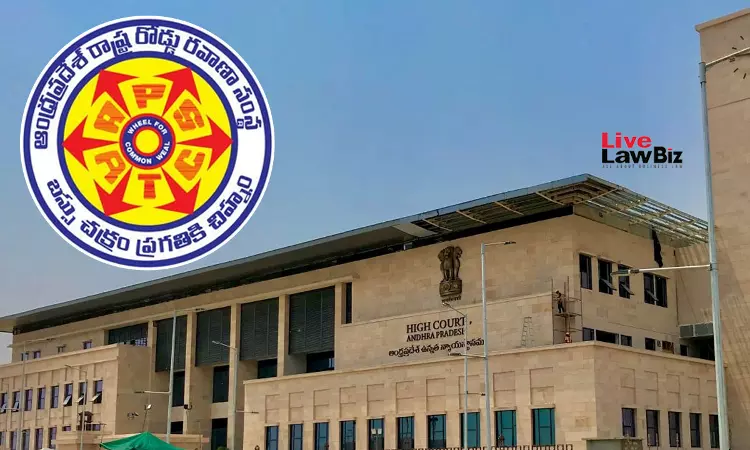
The Andhra Pradesh High Court on 3 September held that hiring buses to the Andhra Pradesh State Road Transport Corporation (APSRTC) does not amount to a transfer of the right to use goods where substantial control and physical possession remain with the bus owners.
A Division Bench of Justices Ninala Jayasurya and T.C.D. Sekhar quashed the assessment orders against private bus operators, holding that the transactions were not taxable as deemed sales under Section 4(8) of the Andhra Pradesh Value Added Tax Act, 2005. The judges observed:
“...In other words, buses are operated and maintained by the petitioners and control of the same was not transferred to APSRTC, at any point of time. Petitioners, in effect, not only retained full responsibility for plying the buses by manning the same. In such circumstances, transactions pursuant to the agreements entered with the APSRTC would not fall within the purview of Section 4(8) of the Act. They cannot be treated as a deemed sale”
In the first petition, the petitioner entered into agreements with APSRTC during 2014-15 to 2016-17 to operate buses on specified routes at agreed hire charges per kilometre.
Following a report from the Regional Vigilance and Enforcement Office, the Commercial Tax Officer issued a show-cause notice alleging suppression of hire charges and proposed tax at 14.5%. The Commercial Tax Officer rejected the petitioner's objections and raised a tax demand of Rs. 96,17,394 for the relevant period.
In the second, the petitioner entered into an agreement with APSRTC in 2011 to operate a bus at an agreed rate per operated kilometre. The appellate authority initially set aside an assessment order raising a demand of Rs. 9,65,855 and directed fresh consideration. The assessing authority subsequently confirmed the demand in February 2024.
The two petitioners contended that the agreements did not result in a transfer of the right to use the buses. They submitted that they continued to operate and maintain the vehicles, remained responsible for the drivers and statutory obligations, and retained physical control over the buses.
The Revenue argued that since the agreements required the buses to operate exclusively for APSRTC, the transactions amounted to deemed sales and were taxable under Section 4(8) of the APVAT Act.
The High Court examined the terms of the agreements and noted that the bus owners had to keep the vehicles insured, pay the drivers' wages and comply with statutory obligations, including ESI requirements. The agreements also required the owners to make the buses available on all days except two days in a calendar month for maintenance. Any change in the vehicle or model required prior approval, while the owners remained responsible for operating and maintaining the buses.
The Bench found that these contractual conditions showed that the petitioners retained exclusive physical control over the buses. It held that the petitioners operated and maintained the buses and never transferred control over them to APSRTC. As the owners retained responsibility for plying and manning the buses, the transactions did not constitute a transfer of the right to use goods under Section 4(8).
It relied on the Supreme Court's decision in K.P. Mozika v. Oil and Natural Gas Corporation Ltd., which held that merely permitting another person to use goods does not necessarily amount to a transfer of the right to use them. The top court also held that such a transfer requires possession and substantial control of the goods to vest in the user. Where the owner retains substantial control, the transaction does not constitute a transfer of the right to use.
Further, the judges also referred to the Supreme Court's judgment in Bharat Sanchar Nigam Ltd. v. Union of India, which laid down the parameters for determining whether a transaction constitutes a transfer of the right to use goods. They also relied on decisions concerning the hiring of buses and other equipment, including Hari Durga Travels v. Commissioner of Trade and Taxes and Transocean Offshore International Ventures Ltd. v. Union of India.
Applying these principles to the agreements between the petitioners and APSRTC, the Bench concluded that the petitioners did not transfer the right to use the buses and that the transactions were therefore not exigible to VAT under Section 4(8) of the APVAT Act.
Accordingly, the High Court held that the assessment orders were without jurisdiction and unsustainable, and quashed them. It allowed both writ petitions, with no order as to costs.
For Petitioner: Mr. Shaik Jilani Basha and Mr. Kranthi Kiran, Advocates
For Respondent: Mr. R. Kalyan Chakravarthy, Government Pleader for Commercial Tax