
VAT

Transit Pass Surrender Not Conclusive Proof Of Goods Movement, Doesn't Bar KVAT Penalty: Karnataka HC
The Karnataka High Court on 15 July held that surrender of a transit pass under the Karnataka Value Added Tax (KVAT) Act does not conclusively establish genuine interstate movement of goods or prevent authorities from initiating penalty proceedings. A Division Bench of Justices S.G. Pandit and Dr. K. Manmadha Rao dismissed an appeal filed by Sri C. Girish, proprietor of Jai Gurudev Road Carriers, and upheld the penalty imposed under Section 53(12) of the KVAT Act (which provides for penalty...
CESTAT Delhi Allows Pharma Company's ₹70 Lakh Refund, Holds Claim Not Hit By Unjust Enrichment
The Customs, Excise and Service Tax Appellate Tribunal (CESTAT), New Delhi, has allowed a pharma company's appeal and held that its refund claim of about ₹70 lakh was not hit by unjust enrichment, setting aside orders directing the amount to be credited to the Consumer Welfare Fund.The ruling was delivered by a tribunal comprising Judicial Member Binu Tamta and Technical Member P.V. Subba Rao.Vivek Pharmachem India Ltd., which manufactures medicaments, had availed CENVAT credit of about ₹70 lakh...

Best Judgment Assessment Cannot Ignore VAT Composition Scheme Compliance By Contractor: Telangana HC
The Telangana High Court on 13 July held that a best judgment assessment cannot be sustained when the assessing authority fails to consider the statutory composition scheme opted by a works contractor and ignores the records maintained in accordance with the law. A Division Bench comprising Justices P. Sam Koshy and Nandikonda Narsing Rao set aside the assessment order passed against Chaitanya Enterprises, a proprietary concern engaged in electrical contracting works, which had challenged the...
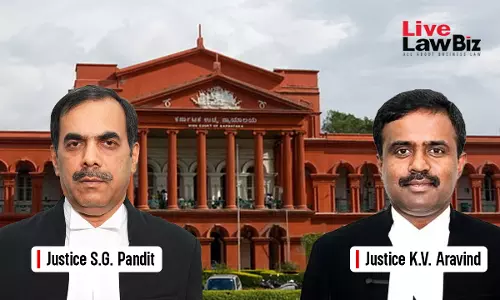
KVAT Revision Orders Must Be Passed Within Five Years Of Order Sought To Be Revised: Karnataka High Court
The Karnataka High Court has held that tax authorities cannot keep suo motu revision proceedings under the Karnataka Value Added Tax (KVAT) Act pending indefinitely after initiating them within the statutory four-year period. While the authority validly initiates revision by calling for records within four years of the order proposed to be revised, the final revisional order must also be passed within a reasonable time, the court ruled. A division bench of Justice S.G. Pandit and Justice K.V....
CENVAT Credit Rules Do Not Make Ownership Of Goods A Condition For Availing Credit: CESTAT Chandigarh
The Chandigarh Bench of the Customs, Excise and Service Tax Appellate Tribunal (CESTAT) has held that the CENVAT Credit Rules do not make ownership of goods a condition for claiming CENVAT credit. It observed that CENVAT credit is attached to inputs and not to persons. The tribunal, however, ruled that a manufacturer cannot claim credit on inputs where the contractor has availed the benefit of abatement under the Works Contract (Composition Scheme), as that would result in the same tax benefit...
CESTAT Delhi Upholds CENVAT Credit Reversal On Common Services Used For Own Investments
The Principal Bench of the Customs, Excise and Service Tax Appellate Tribunal (CESTAT), New Delhi, has upheld the demand for proportionate reversal of CENVAT credit on common input services used for both taxable services and an assessee's own investment activities. The tribunal held that buying and selling securities on one's own account is neither a taxable service nor an exempted service. It ruled that CENVAT credit attributable to such activities is inadmissible. A bench of Judicial Member...

Karnataka HC Holds Revised Return Mandatory For Lower VAT Claim, Rejects India Heritage Foundation's Plea
The Karnataka High Court on 8 July held that a taxpayer cannot seek a lower VAT rate during reassessment proceedings without first filing a revised return under the Karnataka Value Added Tax (KVAT) Act, and dismissed India Heritage Foundation, Bengaluru's revision petition seeking to reduce the VAT rate on iron and steel used in a works contract from 12.5% to 4%. A Division Bench of Justices S.G. Pandit and Rajesh Rai K relied on its earlier decision in Nandi Constructions v. State of Karnataka...

Bombay High Court Orders Registration Of Auction Purchaser's Sale Certificate, Quashes Sales Tax Attachment
The Bombay High Court has directed the Sub-Registrar to register an auction purchaser's sale certificate without insisting on a No Objection Certificate from the Sales Tax Department after finding that the secured creditor's claim took priority over the Department's tax dues. A division bench of Justices Manish Pitale and Shreeram V. Shirsat granted the relief to Neon Laboratories, which had purchased the property in an auction conducted by a bank under the SARFAESI Act. The court also...

Rent For Furniture In Commercial Lease Not Taxable As Deemed Sale: Telangana High Court
The Telangana High Court on 3 July held that rent received from leasing commercial buildings along with furniture, fixtures and other amenities cannot be taxed as a transfer of the right to use goods under the Andhra Pradesh Value Added Tax Act, 2005 (APVAT Act) or the Andhra Pradesh General Sales Tax Act, 1957 (APGST Act), where the transaction is essentially one of renting immovable property and no exclusive right over the goods is transferred to the tenant. A Division Bench of Justices P....

AP High Court Sets Aside VAT Orders On ISRO's Satish Dhawan Space Centre, Flags National Interest
The Andhra Pradesh High Court on 22 June set aside VAT assessment orders passed against Satish Dhawan Space Centre SHAR, a unit of the Indian Space Research Organisation, holding that an improper tax burden on an institution engaged in critical space programmes could adversely affect national interest. A Division Bench of Justices R. Raghunandan Rao and T. C. D. Sekhar allowed the writ petition, set aside the assessment orders, and remanded the matter to the assessing authority for fresh...
CENVAT Credit On Tippers Can't Be Denied Due To Purchase Before Inclusion As Capital Goods: CESTAT Kolkata
The Kolkata Bench of the Customs, Excise and Service Tax Appellate Tribunal (CESTAT) has held that CENVAT credit on tippers cannot be denied merely because the vehicles were received before tippers were brought within the definition of capital goods. The tribunal observed that eligibility for credit must be examined when the vehicles are put to use for rendering output services. A bench of Judicial Member Ashok Jindal and Technical Member K. Anpazhakan allowed an appeal filed by Libra...

States Cannot Levy Local VAT On Inter-State Sales Even If Sale Is Deemed To Occur Within The State: Supreme Court
The Supreme Court on Friday held that a state cannot impose its own Value-Added Tax (VAT) on a transaction that qualifies as an inter-state sale merely because the Central Sales Tax Act deems the sale to have taken place within that state for the limited purpose of identifying which state may collect tax. A bench of Justice J.K. Maheshwari and Justice Atul S Chandurkar held that where the statutory provision defining an inter-state sale conflicts with the provision determining the deemed...