
Commercial Court Must Decide Jurisdiction Before 'Sarkari Result' Trademark Suit Amendment: Allahabad High Court
Riya Rathore
9 Oct 2026 6:09 PM IST
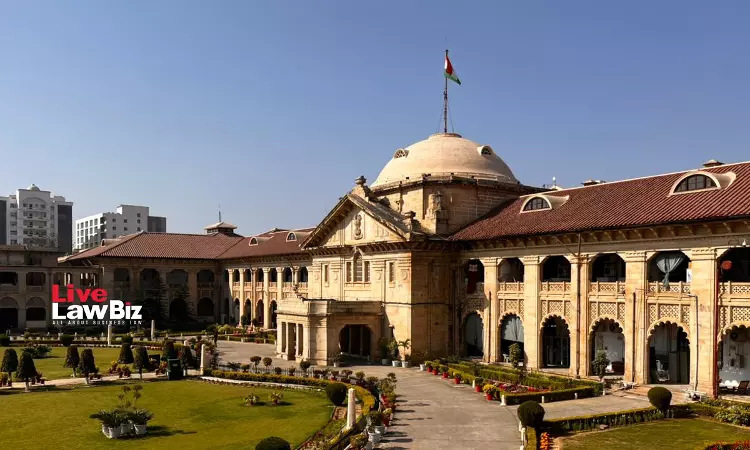
The Allahabad High Court has ruled that a Commercial Court must decide a challenge to its subject-matter jurisdiction before considering an application to amend the plaint.
Justice Rohit Ranjan Agarwal dismissed a petition filed by I Think Apps Pvt. Ltd., which owns the “Sarkari Result” trademark, challenging the Varanasi Commercial Court's decision to hear a jurisdiction application filed by Anugya Gupta and another before taking up the company's amendment plea.
“An amendment seeking to rectify the essential juridical facts conferring jurisdiction upon the court cannot be said to be curing the defects,” the High Court observed.
I Think Apps had filed a suit before the Commercial Court under the Trade Marks Act, 1999, seeking a permanent injunction against the use of its “Sarkari Result” trademark and the website sarkariexam.com. It also sought a mandatory injunction to stop the use of the domain sarkariresult.com and close certain social media platforms.
The Commercial Court granted a temporary injunction on June 12, 2025. A Division Bench dismissed the appeal against the order on September 23, 2025. The Supreme Court stayed both orders on January 16, 2026.
On March 23, 2026, Gupta and the other respondent sought the return or rejection of the plaint under Order VII Rules 10 and 11 of the Code of Civil Procedure (CPC), arguing that the Commercial Court lacked jurisdiction.
I Think Apps applied to amend the plaint on August 9, 2026, seeking to specify the suit's value as ₹5 lakh. The Commercial Court directed on August 13 that the jurisdiction application be decided first. The company then challenged this decision before the High Court under Article 227 of the Constitution.
I Think Apps argued that the proposed amendment was merely formal. It contended that deciding the amendment application first would avoid the delay and expense of filing a fresh suit if the plaint were returned or rejected. The company relied on decisions of the Madhya Pradesh, Delhi, Punjab and Haryana, and Bombay High Courts.
The respondents countered that the plaint did not disclose the specified value required under Section 2(1)(i) of the Commercial Courts Act, 2015. The provision sets a minimum value of ₹3 lakh for a commercial dispute to fall within the Act. They also questioned the Commercial Court's territorial jurisdiction and argued that the plaint disclosed no cause of action.
Justice Agarwal noted that the specified value had not been disclosed when the suit was filed. The amendment application came only after the respondents raised the jurisdiction objection.
While courts generally take a liberal approach to amendments, the judge observed that the jurisdiction challenge had to be addressed first.
Relying on the Supreme Court's decision in Harshad Chiman Lal Modi v. DLF Universal Ltd. (2005), the High Court distinguished territorial and pecuniary jurisdiction from subject-matter jurisdiction. It noted that a court lacking subject-matter jurisdiction cannot adjudicate a dispute and that an order passed without such jurisdiction is a nullity.
The judge rejected the argument that the amendment would merely correct a defect without changing the nature of the case. Such an amendment, he observed, would alter the character of the original plaint.
Rejecting the company's contention that deciding the amendment application first would cause no prejudice, the High Court held that procedural convenience could not override the need to establish jurisdiction.
“Where subject-matter jurisdiction has been raised, the same needs to be addressed first prior to taking up of amendment application as the court which does not have jurisdiction of subject-matter cannot pass any order for amending the plaint as it would be a nullity,” the court ruled.
The High Court dismissed the petition without imposing costs.
For I Think Apps: Senior Advocate Devendra Kumar Misra
For Respondents: Advocates Abhinav Gaur, Anurag Kumar Ojha, Shreya Trivedi and Vibhu Rai