Foreign Trademark Use Cannot Confer Rights In India Without Goodwill In Local Market: Bombay High Court
Riya Rathore
27 Nov 2026 6:13 PM IST
The Bombay High Court has recently held that foreign use of a trademark does not confer enforceable rights in India unless it translates into legally protectable goodwill within the Indian market.
The court observed that trademark law is territorial in operation and overseas registrations or reputation cannot, by themselves, defeat an Indian registration.
“ ..it is well accepted proposition that the Trade Marks Act is territorial in operation and does not recognize extra territorial use as conferring enforceable rights in India unless such use translate into legally protecting goodwill within the Indian Market.,” the division bench of Justices Bharati Dangre and Ashish S. Chavan reiterated.
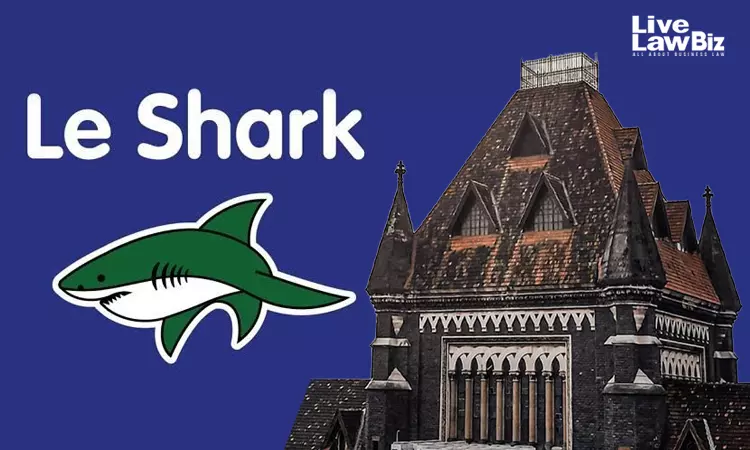
The court made the observation while restoring the Indian trademark registration for 'LE SHARK' in the name of Mumbai-based trader Anil Shah and the other appellants. It set aside a single judge's October 2025 order directing removal of the mark from the Register of Trade Marks on a rectification petition filed by UK-based Le Shark Apparel Limited.
The dispute concerned trademark registration No. 466002 in Class 25, covering articles of clothing, including boots, shoes, slippers, scarves and raincoats. Shah applied for registration on January 13, 1987, on a proposed-to-be-used basis. The Registrar granted registration on October 15, 1991.
Le Shark Apparel's predecessor had conceived the 'LE SHARK' mark in 1984 and secured registrations for it in the United Kingdom in 1984 and 1985. The company claimed that the brand had acquired substantial goodwill internationally and that Shah had dishonestly adopted an identical mark.
Le Shark Apparel was incorporated in the UK in October 2013 as a joint venture company. It relaunched the brand in December 2014 and applied for registration of the mark in India on February 17, 2015.
The examination report informed Le Shark Apparel of Shah's existing registration. It filed a rectification application on March 20, 2018, seeking cancellation of the mark under Sections 9, 11, 18(1), 47 and 57 of the Trade Marks Act, 1999.
The single judge allowed the petition in October 2025, holding prima facie that Shah had fraudulently adopted the mark and had not used it bona fide. The judge held that Le Shark Apparel's use of the mark from 2014 onwards, even if confined to markets outside India, was irrelevant to the rectification proceedings.
Setting aside that order, the division bench held that the territorial operation of trademark law and the requirement of establishing goodwill in India could not be overlooked merely because the proceedings concerned rectification rather than infringement or passing off.
The court relied on the Supreme Court's decision in Toyota Jidosha Kabushiki Kaisha v. Prius Auto Industries Ltd., (2018) 2 SCC 1, which applied the territoriality principle and required evidence that the foreign mark's reputation had spilled over into India before the rival mark was adopted.
The bench clarified that actual sales in India are not essential in every case to establish transborder reputation. Such spillover may be demonstrated through the circulation of international magazines and journals, access to internet sources, seminars and other means of communication that bring the mark to the knowledge of consumers dealing with the relevant products.
However, international reputation alone does not automatically establish goodwill in India.
Applying these principles, the court found that Le Shark Apparel had not produced evidence showing that its predecessor's reputation had reached Indian consumers before Shah applied for registration in 1987.
The company had not placed on record invoices, advertisements or evidence of distribution of its products in India before that date. Its rectification application also did not specifically plead that it had acquired transborder reputation in India. Instead, the application indicated that the company intended to launch its products in the Indian market.
The bench further observed that the registrations obtained by Le Shark's predecessor in the UK in 1984 and 1985 were not, by themselves, sufficient to establish that Shah had adopted the mark in bad faith. There was no specific evidence to show that he knew of the foreign registrations when he applied for the Indian mark in 1987.
“Bad faith cannot be simplicitor alleged on the basis of similarity in the two marks in absence of any specific evidence led to the effect that prior to adoption of the mark, 'Le Shark' the registered proprietor was aware of the mark which was registered in the United Kingdom, or in some part of the world in a far flung area,” the court observed.
The bench also took note of the fact that Shah's registration had remained on the Register for more than three decades. It held that removing the mark on the basis of a prima facie finding, without sufficient evidence to establish Le Shark Apparel's goodwill in India, was unjustified.
The court observed that removal of the registration would cause irreparable harm to the appellants' business in India. On the other hand, Le Shark Apparel had not yet launched its products in India and would suffer no loss if the appellants' registration continued.
The division bench accordingly quashed the single judge's order, dismissed Le Shark Apparel's rectification petition and allowed the appeal. It also refused the company's request to stay the judgment.
For Appellants: Advocate Alankar Kirpekar a/w. Lakshyaved R. Odhekar, Omkar N Mhasde, Ayush Tiwari, Janaki Bhide, Sujen Shaikh and Syed Nabeel Ali
For Respondents: Advocates Rohan Kadam, Rucha Vaidya, Manosij Mukharjee, Dominic Alvares and Sneha Meghani i/b Suvarna Joshi