
Deadline For Filing Evidence In Support Of Trademark Opposition Is Directory, Not Mandatory: Bombay High Court
Riya Rathore
18 Jun 2026 2:51 PM IST
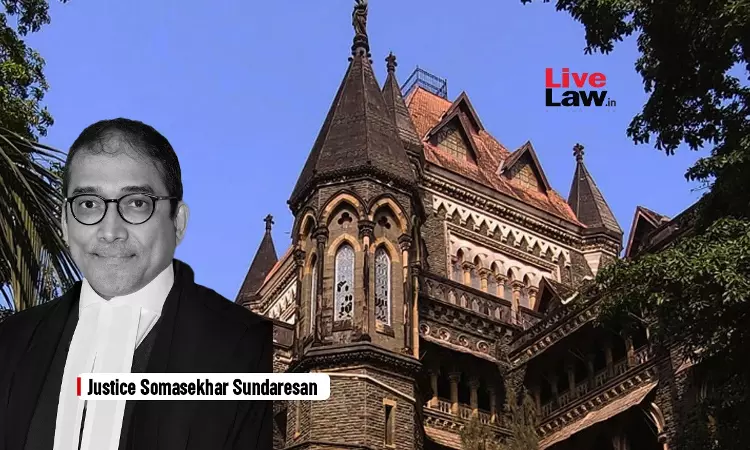
The Bombay High Court has recently held that the two-month deadline for filing an evidence affidavit in trademark opposition and rectification proceedings is directory and not mandatory, finding that the broader scheme of the Trade Marks Rules, 2017, does not support treating it as an inflexible limitation period.
"One must remember that the scheme of Rules 44 to 51 of the 2017 Rules are procedural provisions to aid in adjudicating the merits of Opposition Proceedings and Rectification Proceedings. The Registrar has been given a free play in the joints with discretion to allow evidence necessary for the adjudication. What is perceived as being simply impermissible under Rule 45, when practically permissible under Rule 47 and Rule 48, makes it only reasonable to conclude that the deadline in Rule 45 is directory and not mandatory." Justice Somasekhar Sundaresan observed.
The court delivered the ruling while dismissing a petition filed by Black Diamond Motors Pvt. Ltd. against an order of the Registrar of Trade Marks. The order had allowed Black Diamond to place an evidence affidavit on record despite a delay of more than three years.
The dispute arose from rectification proceedings concerning the "Black Diamond Motors" trademark. Black Diamond Track Parts had filed an interlocutory application along with an evidence affidavit and sought extension of time to bring the affidavit on record.
Before the High Court, Black Diamond Motors contended that the two-month deadline under Rule 45 was mandatory and incapable of extension. It relied on decisions of the Delhi High Court, including Sun Pharma Laboratories Ltd. v. Dabur India Ltd. and Mahesh Gupta v. Registrar of Trademarks.
The court rejected that interpretation. It examined the scheme of Rules 45 to 48 and noted that the Rules contemplate additional evidence being filed at later stages of the proceedings.
"If the deadline in Rule 45 were to be a mandatory stipulation akin to a provision of limitation for filing an Evidence Affidavit, it would be illogical for Rule 47 to enable the Rectification Applicant to file more evidence and for Rule 48 to grant discretion to the Registrar to permit even more evidence being led," Justice Sundaresan held.
According to the Court, Rule 45 forms part of a procedural framework governing the conduct of opposition and rectification proceedings. The discretion conferred on the Registrar under Rule 48 was a relevant indicator that the Rule 45 deadline was procedural in character.
The court also considered the consequence of deemed abandonment under Rule 45(2). It rejected the argument that failure to file an evidence affidavit within the prescribed period automatically results in abandonment of the underlying proceedings.
"If the desirable deadline is not met, to hold that the very Notice of Opposition or the application for registration would stand abandoned, would be truly absurd and in direct conflict with the substantive rights created under Section 21 and Section 57 of the TM Act," Justice Sundaresan observed.
The court held that the deeming fiction created by Rule 45(2) must be confined to the purpose for which it was enacted. It cannot be used to extinguish substantive rights created under the parent statute.
On the Registrar's power to extend time, the Court interpreted Section 131 of the Trademarks Act as permitting extension of deadlines prescribed in the Rules. It held that the exclusion for time limits "expressly provided in this Act" applies only to timelines expressly set out in the statute itself. It does not extend to timelines contained in subordinate legislation.
It also rejected the contention that an application seeking extension of time must be filed before expiry of the original deadline. Referring to the Supreme Court's decision in Rohan Builders (India) Pvt. Ltd. v. Berger Paints (India) Ltd, it held that importing such a requirement would amount to judicial legislation when the statute itself permits extension after expiry of the prescribed period.
While disagreeing with the approach adopted in Sun Pharma and Mahesh Gupta, the court noted that neither decision had examined the implications of Rule 48. It agreed with the reasoning adopted by the erstwhile Intellectual Property Appellate Board in Sahil Kohli v. Registrar of Trade Marks.
"Procedural provisions and that too in subordinate legislation must serve as a servant of justice delivery flowing from the parent statute and cannot be a tyrant ruling and curtailing the substantive rights created in the parent statute," Justice Sundaresan observed.
For Black Diamond Motors: Advocate Hiren Kamod, a/w Thomas George & Neeti Nihal, Tanvi Sinha, Navankur Pathak, Bargavi Bharadwaj, i/b Saikrishna & Associates
For Black Diamond Track Parts: Advocate Atul Singh a/w Arzoo Gupta & Mitika Agarwal, i/b Nidhi Bangera