
Bombay High Court Restrains Use Of 'ZEKODOL-P', Finds It Deceptively Similar To IPCA's 'ZERODOL'
Riya Rathore
24 Feb 2026 5:15 PM IST
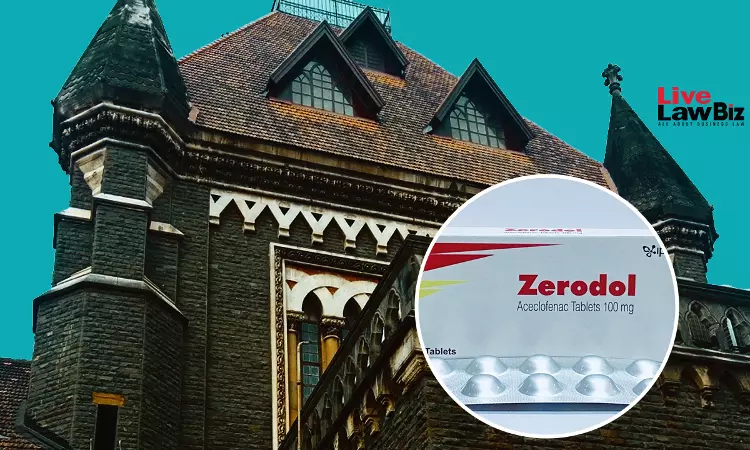
The Bombay High Court has granted a permanent injunction in favour of IPCA Laboratories Limited, restraining Rikon Pharmaceuticals Pvt Ltd from using the mark “ZEKODOL-P”, after holding that it infringes IPCA's registered trademark “ZERODOL” and amounts to passing off.
Justice Arif S. Doctor, in a judgment pronounced on February 23, 2026, held that the impugned mark is “phonetically, visually and structurally almost identical” to the plaintiff's mark. The court also imposed a cost of Rs 15 Lakh on Rikon.
The Court observed that “the essential and dominant feature of both marks is the suffix 'DOL'” and that “there is very little to choose from between the suffixes of both the marks, i.e., 'ZEKO' and 'ZERO'.” It further held that “the overall commercial impression created by the rival marks is strikingly similar” and that the marks are “virtually identical in their visual, structural, and phonetic composition.”
The court noted that both marks are used in respect of identical goods, namely “pain relievers and medicinal and pharmaceutical preparations.”
IPCA submitted that it coined and adopted the trademark “ZERODOL” in or about September 1992 in respect of medicinal and pharmaceutical preparations and that the mark has been in use since 2003.
The company presently markets more than ten pharmaceutical formulations incorporating “ZERODOL” as an essential feature, including ZERODOL-P, ZERODOL-PT, ZERODOL-S, ZERODOL-MR and ZERODOL-TH.
After comparing the rival marks, the Court concluded that “considering the visual, structural and phonetic similarity of the marks along with the identity of the goods, the likelihood of confusion is not merely probable but is imminent.”
Emphasising the public health dimension, Justice Doctor observed:
“In the case of medicinal products, even a remote possibility of confusion must be treated with heightened caution, given its direct impact on public health. The Defendant's use of the impugned mark is, therefore, also liable to be restrained on the ground of passing off.”
The Court also recorded that despite service of the Writ of Summons, the defendant failed to enter appearance. As a result, the plaintiff's evidence stood “uncontroverted and unrebutted,” and the adoption of the impugned mark was found to be dishonest.
While IPCA sought punitive damages of Rs 5 lakh, the Court declined to award damages, holding that the plaintiff had “failed to place on record any proof of any actual loss or quantification of any financial or material harm or reputational damage from the infringement.” It therefore held that “a decree for damages cannot be granted.”
However, invoking Section 35 of the Code of Civil Procedure as amended by the Commercial Courts Act, 2015, the Court ruled:
“In these circumstances, having regard to the Plaintiff's established rights, the dishonest adoption by the Defendant, the uncontroverted evidence on record, and the statutory mandate under Section 35 as amended, the Plaintiff is entitled to a decree for infringement and passing off, together with an award of costs.”
Accordingly, the suit was decreed in terms of the prayer clauses, and Rikon Pharmaceuticals Pvt Ltd was directed to pay costs of Rs 15 lakhs to IPCA within eight weeks.
For IPCA: Advocates Minesh Andharia and Jay Shah i/b Krishna & Saurastri Associates LLP