
Madras High Court Warns Bank-Initiated LOCs Could Leave Debtors At “Mercy Of Wolves Of Creditors”
Kirit Singhania
8 Oct 2026 11:55 AM IST
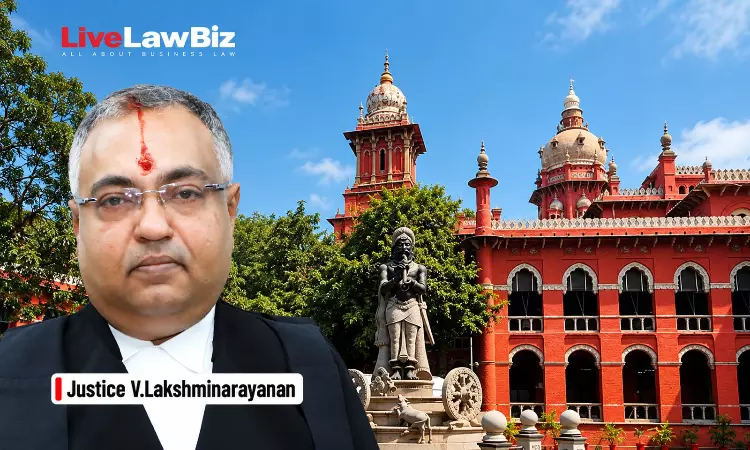
The Madras High Court has held that a bank manager's letter to the Bureau of Immigration seeking issuance of a Look Out Circular cannot be treated as “law” for restricting a citizen's fundamental right to travel abroad.
The court warned that allowing nationalised banks to seek Look Out Circulars (LOCs) against debtors could embolden private creditors and non-banking financial companies (NBFCs) to seek similar restrictions, leaving debtors “at the mercy of wolves of creditors.”
“'Law' under Article 21 implies a legislation. A letter written by the Manager of the bank to the Bureau Of Immigration cannot be treated as 'law'. If a Nationalized Bank is permitted to do this, then every private creditor or NBFCs would also be emboldened to approach the police for issuance of LOC to prevent their debtors from going abroad. God forbid the debtors from being thrown at the mercy of wolves of creditors,” Justice V. Lakshminarayanan observed.
The court was hearing a review petition filed by Bank of Baroda against an earlier order directing removal of the LOC issued against Kondepati Ganga Prasad, a guarantor of GVR Infra Projects. The bank had confirmed that the loan account was closed pursuant to the resolution plan approved for the company.
Ganga Prasad had approached the High Court seeking revocation, withdrawal or recall of the LOC. He was a promoter director of GVR Infra Projects, which had taken a loan from Vijaya Bank. The company subsequently defaulted, and Vijaya Bank merged with Bank of Baroda.
Bank of Baroda, as financial creditor, initiated insolvency proceedings against GVR Infra Projects under the Insolvency and Bankruptcy Code. The National Company Law Tribunal approved a resolution plan, which was put into force and the debt against the principal debtor was satisfied. However, the LOC against Ganga Prasad continued as he was a guarantor.
When the writ petition came up for hearing, the Central government informed the court that the LOC had been opened on the requisition of Bank of Baroda. Counsel for the bank also produced an email stating that the loan account had been closed pursuant to the resolution plan, while maintaining that the LOC should continue.
The court consequently directed the authorities to remove the LOC so that Ganga Prasad could go about his life normally.
Bank of Baroda subsequently sought a review of that order. It argued that although the debt against the principal debtor had been extinguished, the LOC should remain because Ganga Prasad was a guarantor.
The bank also submitted that the resolution professional had advised the banks to initiate bankruptcy proceedings against Ganga Prasad. It said the proposal was under active consideration and alleged that the fact had been suppressed from the court.
The court rejected the bank's claim that Ganga Prasad had suppressed a material fact. Justice V. Lakshminarayanan noted that an email dated April 8, 2026 from the resolution professional had called upon the stakeholders to initiate further proceedings after a repayment plan proposed by Ganga Prasad was rejected.
However, when the review petition was heard, the financial institutions were still holding consultations about their next course of action. No further proceedings had been initiated, and the court therefore held that Ganga Prasad could not be accused of suppressing facts.
The bank also relied on a 2024 Supreme Court order concerning the right of persons to travel abroad, arguing that people in Ganga Prasad's position had to obtain permission from the High Court before leaving the country.
The High Court, however, held that the Supreme Court order was confined to the petitioners in that case. It was not a direction under Article 141 of the Constitution applicable to all persons seeking to travel abroad.
The court observed that the right to travel freely across the world is a fundamental right protected under Article 21 of the Constitution. Any restriction on that right must be in accordance with law.
The court also examined whether there was any allegation of fraud against Ganga Prasad. The court asked whether Bank of Baroda had lodged a complaint with the Central Bureau of Investigation or local police alleging fraudulent activities by Ganga Prasad or his co-directors.
The bank's answer was in the negative. Therefore, the court observed that the bank had to distinguish between a borrower who obtained a loan with fraudulent intent and one who had taken a decision that the bank might consider “foolish or even idiotic” and which resulted in a loss.
The court noted that not every business venture is successful. It also observed that banks are aware when lending that all loans will not necessarily be repaid, and some may become sticky or non-performing assets.
He further observed that taking a mortgage loan does not mean that a citizen has surrendered his constitutional and legal rights to the bank.
“For a mere fact that a citizen of this Country raises a mortgage loan does not mean that he has mortgaged his constitutional and legal rights, lock, stock and barrel, with the bank,” the court observed.
The court also noted that Ganga Prasad was responsible for the loss caused to the bank. At the same time, it observed that the bank had not prosecuted the officials responsible for approving the loan because it was aware that the lending decision was a business decision taken by its managerial authorities at the relevant time.
The court held that where there was no fraud either by Ganga Prasad or the bank's officials, the mere fact that he was a defaulter could not justify forcing him to remain in India to ensure repayment.
The court also considered Ganga Prasad's stated reason for wanting to travel abroad. His case was that he intended to earn money abroad and return to repay the bank.
The bank, however, wanted him to repay the amount before permitting him to leave. Justice V. Lakshminarayanan described the situation as a “catch-22 situation.”
“If the bank wants the money, the petitioner has to earn it. The petitioner in his wisdom has decided to go abroad to earn it. The bank says till he pays the amount, he should not be permitted to go abroad. This vicious circle has to be broken,” the court remarked.
Finding no error apparent on the face of the record, the court dismissed Bank of Baroda's review petition. The petition was dismissed without costs.
For Petitioner: Advocate Revathi Manivannan
For Respondents: Arvind Pandian, Senior Counsel, Advocates Sandeepkumar, G. Subramanian