
IBC | Limitation For Appeals Against NCLAT Orders Runs From Pronouncement, Not Certified Copy Receipt: Supreme Court
Kirit Singhania
14 Oct 2026 7:55 PM IST
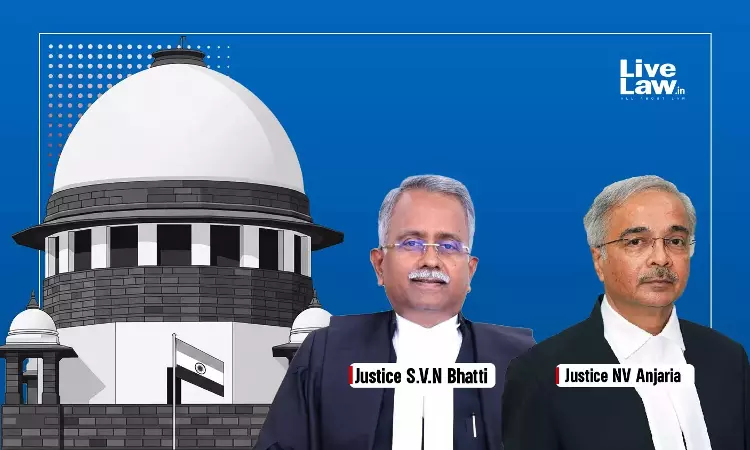
The Supreme Court on Wednesday held that the limitation period for filing an appeal against an order of the National Company Law Appellate Tribunal (NCLAT) begins from the date of pronouncement of the order and cannot be postponed until a litigant chooses to apply for and collect a certified copy.
The Court cautioned that Parliament's provision for excluding the time required to obtain a certified copy would be redundant if limitation did not begin upon pronouncement of the order.
“The phrase “from the date of receipt of the order” in Section 62(1) cannot be read as the date on which a party chooses to apply for and collect a certified copy. If the limitation clock remained suspended until physical collection at the litigant's leisure, the limitation period would then become fluctuating and indefinite. Furthermore, Section 12(2) of the Act, 1963 would be rendered wholly redundant. There would be no reason for Parliament to make the exclusion of "time requisite for obtaining a copy" applicable via Section 238-A of the IBC if limitation did not already commence upon pronouncement.", a division bench of Justices S.V.N. Bhatti and N.V. Anjaria observed.
The Court delivered the ruling while dismissing an appeal filed by the Assistant Commissioner of Central Tax as barred by limitation, holding that it had been filed beyond the maximum permissible period of 60 days under the Insolvency and Bankruptcy Code (IBC).
The dispute arose from excise demands raised against Samyu Glass Private Limited, a glass container manufacturer, between 2013 and 2017. After the company stopped manufacturing in late 2016, it challenged the demands before the CESTAT. During insolvency proceedings, the tax department filed a claim of ₹22.60 crore, while the resolution plan approved by the NCLT, Hyderabad on August 13, 2021 provided ₹1,34,657 towards excise arrears.
The NCLAT Chennai bench upheld the resolution plan on August 2, 2023. The tax department challenged this decision before the Supreme Court on November 21, 2023 but the respondents objected that the appeal was time barred.
Before the apex court, The department argued that limitation should run from October 11, 2023 when it received the certified copy, having applied for it on September 6, 2023.
The Court rejected the department's contention, holding that a litigant cannot keep the limitation period suspended by delaying the application for a certified copy. Only the time genuinely required to obtain the copy can be excluded while calculating limitation.
The Court reiterated that the IBC is a self contained code and its special limitation framework overrides inconsistent laws. Although Section 238-A applies the Limitation Act, 1963, “as far as may be,” the Court said, this is subject to Section 29(2) of the Limitation Act and the Companies Act cannot override or relax the IBC's strict appellate timelines.
"While Section 238-A of the IBC applies the provisions of the Act, 1963 “as far as may be”, this is subject to Section 29(2) of the Act, 1963. Where a special statute provides a distinct period of limitation, that period governs to the exclusion of general provisions, and the IBC, being a special law, would have an overriding effect. Section 61(1) of the IBC starts with a non-obstante clause. Consequently, the appellate mechanisms under the Companies Act cannot control or relax the statutory architecture of the IBC."
Explaining the legal provisions under the IBC, the Court said that an appeal to the Supreme Court must be filed within 45 days with a further 15 days available for condonation of delay on sufficient cause. Courts cannot condone delay beyond this 60 day outer limit.
The Court also clarified that the right to appeal cannot be extended through procedural rules, including the Supreme Court Rules, if doing so would defeat the IBC's strict timelines. These limits are intended to ensure speedy resolution of insolvency proceedings and preserve asset value.
In the present case, the department spent 35 days before applying for the certified copy and another 41 days after receiving it before filing the appeal. The actionable period therefore totalled 76 days, exceeding the statutory ceiling by 16 days.
The Court held that accepting the department's interpretation would make the limitation period indefinite and undermine the statutory scheme.
Accordingly the department's appeal was dismissed as time barred. The Court did not enter into the merits of the case.
For Petitioner: K. M. Nataraj, ASG, Advvocates Sharath Nambiar, Vinayak Sharma, Indira Bhakar, Vatsal Joshi, Chitransh Sharma, Anuj Srinivas Udupa, Satvika Thakur, Nikita Capoor, Yogya Rajpurohit, Ritika Ranjan, S. Subramanium, Ishan Bhaduri, Sahaj Joshi, Gurmeet Singh Makker- 2357, AOR
For Respondent: Shradha Agrawal- 3468, AOR, Ayshwarya Chandar- 3463, AOR