
Auction Purchaser Rights Not Absolute Under SARFAESI; Must Yield Where Sale Is Illegal: Supreme Court
Kirit Singhania
2 April 2026 9:38 AM IST
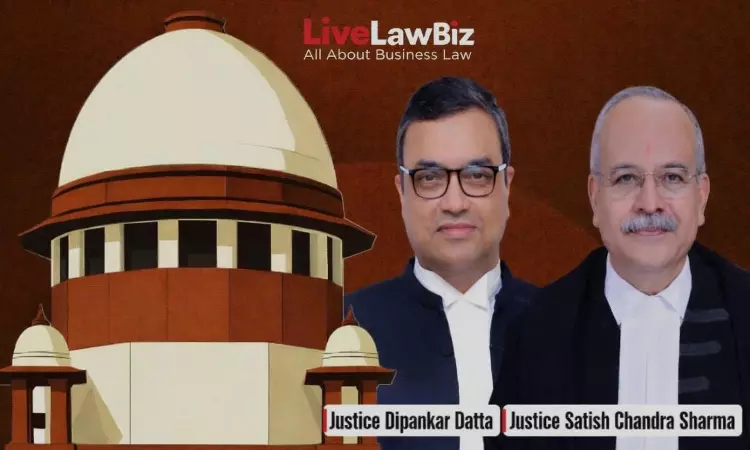
The Supreme Court on Wednesday (April 1) held that the rights of a bona fide auction purchaser are not absolute and must yield where the sale process is legally flawed, as it dismissed appeals filed by auction purchasers and the Central Bank of India and upheld a Madras High Court judgment setting aside a SARFAESI auction sale.
A bench of Justices Dipankar Datta and Satish Chandra Sharma affirmed the High Court's April 12, 2023 ruling, which had annulled the auction after finding that the borrowers had discharged the entire outstanding liability and that the sale suffered from statutory irregularities.
“While the rights of a bona fide auction purchaser and the sanctity of a confirmed sale ordinarily merit protection, such protection is not absolute and must yield where the sale process itself is shown to be legally infirm or incongruous with the extant statutory framework,” the court observed.
The court underscored that proceedings under the SARFAESI Act are aimed not at mechanically completing a sale but at ensuring lawful realisation of secured assets.
“The raison d'être of proceedings under the SARFAESI Act is not the mechanical completion of a sale, but the lawful realisation of the secured asset in a manner that is fair, transparent, and conducive to securing the best possible value while balancing the interests of all stakeholders involved.” the bench said.
The dispute arose from credit facilities availed from the Central Bank of India on November 3, 2017, with the loan account classified as a non-performing asset on November 25, 2018. Recovery proceedings were initiated in February 2020, and an e-auction was conducted on September 4, 2020, in which the auction purchasers emerged as successful bidders and deposited 25% of the bid amount.
However, confirmation of the sale remained stalled for a prolonged period due to a series of interim orders passed by the Debts Recovery Tribunal (DRT), Debts Recovery Appellate Tribunal (DRAT), and the High Court.
The court noted that although the auction purchasers eventually paid the balance 75% of the sale consideration on March 31, 2022, this was far beyond the statutory timeline prescribed under Rule 9(4) of the SARFAESI Rules. It held that such delay, not attributable to the borrowers, rendered the sale inchoate and open to judicial scrutiny.
In the meantime, the borrowers continued to pursue legal remedies and, pursuant to court directions, made substantial deposits before ultimately remitting the entire outstanding dues of over Rs. 2.29 crore on December 2, 2022.
Observing that allowing the sale to stand despite full repayment would result in disproportionate deprivation of property, the court said:
“If the process suffers from material irregularities or fails to conform to mandatory requirements, thereby rendering the sale inchoate, the Court would be justified in intervening, particularly where the borrower has, in the interregnum, discharged the outstanding liability, so as to obviate disproportionate deprivation of property and uphold substantive justice.”
Agreeing with the High Court's findings that the sale had not attained finality in accordance with law and that the borrowers, having discharged the entire liability, could not have been divested of the secured assets, the Supreme Court upheld the setting aside of the auction.
The appeals were accordingly dismissed.