
Top Stories
LiveLawBiz IBC Weekly Digest: August 31 - September 5, 2026
SUPREME COURTSupreme Court Issues Notice In Canara Bank's Plea Against NCLAT Order Setting Aside Insolvency Admission Of Equinox India DevelopmentsCase Title : CANARA BANK (E-SYNDICATE BANK) VS. EQUINOX INDIA DEVELOPMENTS LIMITED Case Number : DIARY NO. - 36294/2026The Supreme Court on Monday issued notice on Canara Bank's challenge to the NCLAT order setting aside the admission of its Section 7 insolvency petition against Equinox India Developments Ltd., formerly Indiabulls Real Estate Ltd. A...
Supreme Court Refuses To Interfere With HC Order Quashing ₹363 Crore GST Demand Against Vodafone Mobile Services Post Merger
The Supreme Court on Monday refused to interfere with the Bombay High Court's order quashing GST proceedings involving a ₹363 crore demand against Vodafone Mobile Services Ltd. after its merger with Idea Cellular Ltd.A bench of Justices J.B. Pardiwala and K. Vinod Chandran dismissed the Union of India's special leave petition at the threshold. The High Court had held that GST proceedings initiated against Vodafone Mobile Services Ltd after its merger with Idea Cellular Ltd and Vodafone...

LiveLawBiz RERA Cases Weekly Digest: August 31 - September 5, 2026
NOMINAL INDEXM/s Neumec Developers and Builders v. Chirag Jain and Anr., 2026 LLBiz HC(BOM) 482Hubtown Ltd. v. Smitesh Shivaji Patil, 2026 LLBiz HC(BOM) 483Omaxe Ltd. v. Asha Saini, 2026 LLBiz HC (DEL) 917M/s Prestige South City Holdings v. Prestige Silver Springs Villa Owners Association & Anr.; Prestige Silver Springs Villa Owners Association v. Prestige South City Holdings & Anr., 2026 LLBiz REAT (TN) 60Godrej Skyline Developers Pvt. Ltd. v. Joy Salve, 2026 LLBiz REAT (MH) 61Goyal...

LiveLawBiz: Corporate Legal News Daily Round-Up: September 05, 2026
IBCNCLT Chennai Admits Insolvency Plea Filed By Wootu Nutrition Against ItselfCompany Cannot Claim Non-Service of Notices After Keeping Registered Office Non-Functional: NCLATPost-2026 IBC Amendment, CIRP Withdrawal Barred Before CoC Formation Or After Plan Invitation: NCLATIPRDelhi High Court Revives Patent Bid For Improved Process To Make Drug Used To Reverse Muscle RelaxationBengaluru Court Orders Instagram To Restore Account Suspended Over IPL-Related PostsDelhi High Court Dismisses Review...

LiveLawBiz: Corporate Legal News Daily Round-Up: September 04, 2026
IBCNCLAT Delhi Sets Aside Insolvency Admission Against Raja Udyog, Notes Debt Fell Below ₹1 Crore ThresholdNCLAT New Delhi Upholds Dismissal Of Panshul Agro Food Plea Over Removal Of Hypothecated MachineryNCLAT New Delhi Clears Hurdles For ₹15-Cr Talwalkars Sale, Orders ROC To Reset Status To 'Active'NCLT Chennai Dismisses EY's Plea Seeking 1% Success Fee For Relief In GST Proceedings, Asks ICAI To ExamineRP Can Revisit Admitted Claim After Verification Fails To Establish Financial Debt: NCLAT...
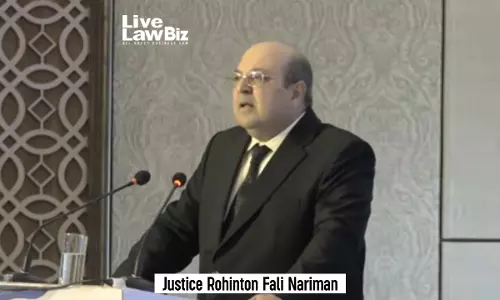
Justice Rohinton F. Nariman Calls For Direct Division Bench Appeals Against Domestic Arbitral Awards
Former Supreme Court Judge Justice Rohinton F. Nariman on Friday called for doing away with the Single Judge stage for challenges to domestic arbitral awards and allowing parties to go directly before a High Court Division Bench, with a full appeal on both facts and law. He suggested that the Division Bench decide such appeals within one year. Justice Nariman also stressed that the arbitration regime must ensure not only speed and cost-effectiveness, but also accuracy, so that awards which are...
NCLT Chennai Dismisses EY's Plea Seeking 1% Success Fee For Relief In GST Proceedings, Asks ICAI To Examine
The National Company Law Tribunal (NCLT) at Chennai has recently dismissed EY's insolvency plea against a company. EY was seeking a 1% success fee for relief obtained in GST proceedings.The tribunal found a genuine dispute over EY's entitlement to the outcome-based fee.It also observed that the nature of EY's professional engagement and the permissibility of the outcome-based fee arrangement may be examined by the Institute of Chartered Accountants of India if the services were rendered through...
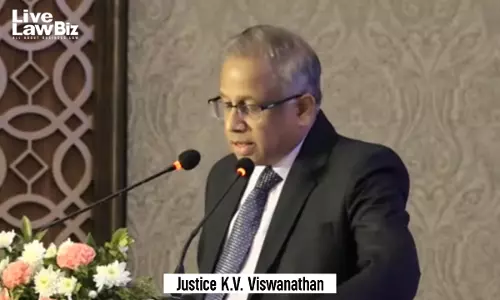
Arbitration, Mediation Should Be Primary Modes Of Dispute Resolution, Not Alternatives: Justice K.V. Viswanathan
Supreme Court Judge Justice K.V. Viswanathan on Thursday said that arbitration and mediation should increasingly be viewed as primary modes of dispute resolution rather than merely alternatives to conventional litigation. He said the central question today was no longer whether arbitration should be encouraged, but what kind of arbitral system India should build. Justice Viswanathan was delivering the keynote address at the inaugural session of the Gujarat High Court Arbitration Centre...
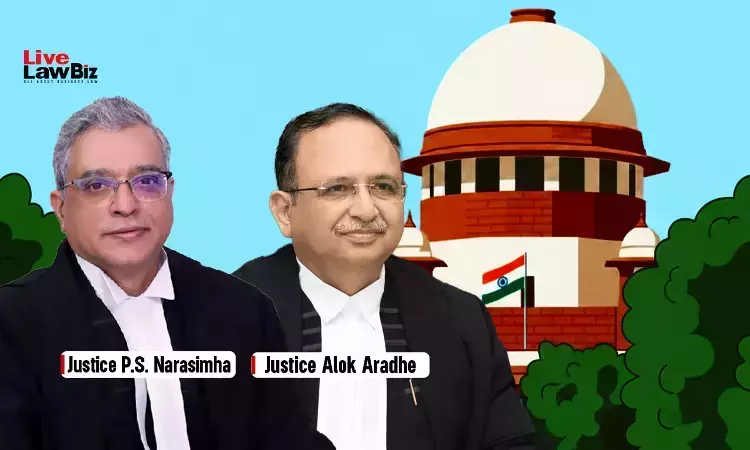
Supreme Court Upholds Order Allowing Energy Watchdog In JBVNL's ₹285 Crore Cross-Subsidy Surcharge Proceedings
The Supreme Court on Thursday declined to interfere with a Jharkhand High Court interim order allowing Energy Watchdog to participate in proceedings initiated by Jharkhand Bijli Vitran Nigam Limited (JBVNL) against Amalgam Steels and Power Limited and another company. JBVNL had raised cross-subsidy surcharge demands totalling about ₹285 crore against the two companies."While we decline to interfere with the interim order passed by the High Court, we make it clear that we have not expressed any...
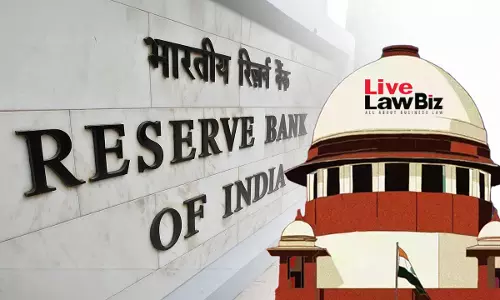
RBI Can Supersede Multi-State Co-Operative Bank Board For Up To Five Years In Public Interest: Supreme Court
The Supreme Court has ruled that the Reserve Bank of India can supersede the Board of Directors of a multi-State co-operative bank and extend the period of supersession from time to time, subject to an overall limit of five years. This power can be exercised in public interest, to protect depositors and the bank from harmful management, or to ensure proper management of the bank."Thus, for reasons to be recorded, the power of supersession of a multi-State co-operative bank, can be exercised by...
LiveLawBiz Indirect Tax Monthly Digest: August 2026
SUPREME COURTXerox's 'Kitting' Of Imported Photocopier Modules Is Not 'Manufacture': Supreme Court Upholds CESTAT RulingCase Title : Commissioner of Central Excise, Hyderabad-IV v. M/s Xerox India Ltd. & Ors. Case Number : Civil Appeal Nos. 5939–5941 of 2010 CITATION : 2026 LLBiz SC 257The Supreme Court has held that Xerox India's practice of grouping, plugging and pinning imported photocopier modules according to customers' requirements, commonly known as "kitting", did not amount to...

LiveLawBiz Direct Tax Monthly Digest: August 2026
SUPREME COURTCruise Does Not Cease To Be 'Carriage Of Passengers' Under Income Tax Act Because Of Onboard Hospitality: Supreme CourtCase Title : THE DIRECTOR OF INCOME TAX,(INTERNATIONAL TAXATION) VS M/S STAR CRUISES (INDIA) P. LTD. Case Number : Civil Appeal Nos. 3334-3336/2012 CITATION : 2026 LLBiz SC 259The Supreme Court has recently ruled that hospitality and entertainment offered on board a cruise do not alter the essential nature of the activity as the carriage of passengers under the...