
Tax
Consultancy Services Rendered To Foreign University/Foreign Group Entity Are Not “Intermediary Services”; Service Tax Not Leviable: CESTAT
The New Delhi Bench of Customs, Excise, and Service Tax Appellate Tribunal (CESTAT) has stated that the consultancy services rendered by the assessee to the foreign university/foreign group entity do not fall under the category of “intermediary services” and the assessee are eligible for the benefit of “export of services”. The Bench of Binu Tamta (Judicial Member) and (Technical Member) has observed that “it may also be appreciated that the final decision of admitting a student is...
Disputed Amount Paid Under Protest Much After Clearance Of Goods Is Not Covered Under Unjust Enrichment: CESTAT
The New Delhi Bench of Customs, Excise, and Service Tax Appellate Tribunal (CESTAT) has stated that disputed amount paid under protest much after clearance of goods is not covered by unjust enrichment. The Bench of Binu Tamta (Judicial Member) has observed that “once the supplies have already been made, any amount paid thereafter, as tax or deposit, the burden of such amount cannot be passed on to the assessee and, therefore, the test of unjust enrichment is not applicable.” In ...

Patna High Court Upholds ₹25 Lakh Service Tax Demand Against Travel Agency Which Failed To Disclose Transactions & Claimed Records Were Lost In Fire
The Patna High Court has recently upheld a service tax demand of ₹25.25 lakh against a travel agency, dismissing its defence that crucial business records had been lost in a fire. The Division Bench comprising Justice Rajeev Ranjan Prasad and Justice Ashok Kumar Pandey observed, “this petitioner having surrendered his service tax registration had not disclosed the transactions in ST-3. The Taxing Authority were not aware of this, they were looking for cooperation on the part of the petitioner,...
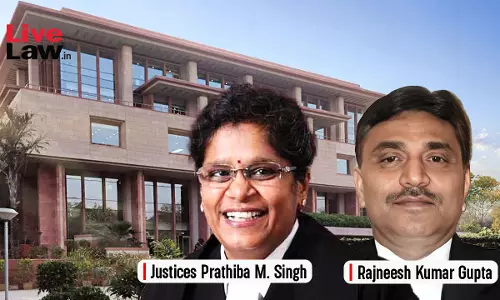
Dept Cannot Be Blamed If Assessee Is Not Diligent In Checking GST Portal For Show Cause Notice: Delhi High Court
The Delhi High Court has made it clear that an assessee cannot claim he was not granted an opportunity of hearing before an adverse order is passed, if he fails to check the GST portal for show cause notice and respond to the same.A division bench of Justices Prathiba M. Singh and Rajneesh Kumar Gupta observed,“Since the Petitioner has not been diligent in checking the portal, no reply to the Show Cause Notice has been filed by the Petitioner. Thus the department cannot be blamed.”The remarks...

Orders Under Omitted Rule 96(10) Of CGST Rule, 2017 Post 8th Oct, 2024 Not Valid; No Savings Clause: Uttarakhand High Court
The Uttarakhand High Court stated that orders passed under omitted Rule 96(10) Of CGST Rule, 2017 post 8th Oct, 2024 is not valid. The Division Bench of Chief Justice G. Narendar and Justice Alok Mahra stated that there was no scope for the department to pass any order by invoking the provisions of rule 96(10) of CGST Rule, 2017 after the same was omitted on 8th October, 2024 without a saving clause in favour of the pending proceeding. In this case, the assessee/petitioner who is...

Calcutta High Court Upholds Quashing Of ₹7.29 Crore Penalty Imposed On Dissolved HUF
The Calcutta High Court has upheld the quashing of penalty proceedings initiated against a dissolved Hindu Joint Family.A division bench of Chief Justice T.S. Sivagnanam and Justice Chaitali Chatterjee (Das) upheld the ITAT order which had relied on a Supreme Court ruling to declare the penalty action void-ab-initio.The Top Court had in CIT vs. Maruti Suzuki India Limited held that notice and/or consequent order issued in the name of a non-existent person renders the entire proceedings and all...
Once Input Tax Credit Is Wrongfully Availed Due To Fraud Or Suppression, State Officer Can Issue Notice Even Without Central Action: Patna HC
The Patna High Court has upheld a tax assessment order passed by the State GST Authority, clarifying that once a Proper Officer determines that input tax credit has been wrongfully availed or utilized due to fraud or suppression of facts, they are empowered to issue a notice under Section 74(1) of the CGST/BGST Act, 2017. A Division Bench comprising Justice Rajeev Ranjan Prasad and Justice Sourendra Pandey held, “According to sub-section (1), wherever it appears to the Proper Officer that there...
Subscription & Redemption Of Liquid Mutual Fund Units Can't Be Termed As “Trading Of Goods”, CENVAT Credit Admissible: CESTAT
The New Delhi Bench of Customs, Excise, and Service Tax Appellate Tribunal (CESTAT) has stated that subscription and redemption of liquid mutual fund units can't be termed as “trading of goods”. The Bench of Binu Tamta (Judicial Member) and Hemambika R. Priya (Technical Member) has observed that the activity of investment in mutual funds does not involve the presence of a service rendered by a service provider towards a recipient of service for some consideration. The activity...
Sale Of Liquid Carbon Dioxide Is Liable To Be Taxed At 5%: Andhra Pradesh High Court
The Andhra Pradesh High Court stated that the sale of liquid carbon dioxide is liable to be taxed at 5%. The Bench consists of Justices R Raghunandan Rao and K Manmadha Rao were addressing the issue of whether purified liquid Carbon Dioxide gas falls in the unclassified category of goods i.e., Schedule-V to the VAT Act, and is liable to be taxed @ 14.5% instead of 5%. In this case, the assessee/petitioner is in the business of purchasing carbon dioxide and production of liquid...
Income Tax Act | Bona Fide Belief With Genuineness Of Transaction Constitutes Reasonable Cause U/S 273B; No Penalty Imposable U/S 271E: Chhattisgarh HC
The Chhattisgarh High Court held that bona fide belief coupled with genuineness of transactions constitutes a reasonable cause under section 273B of the Income Tax Act for not invoking Section 271E of the Act. The Division Bench of Justices Sanjay K. Agrawal and Deepak Kumar Tiwari referring to Section 273B of the Income Tax Act stated that the word 'reasonable cause' has not been defined in the Income Tax Act, 1961. Therefore, in the context of the penalty provisions, the words...
Penalty U/S 122(1A) Of CGST Act Can Be Imposed On Both Taxable And Non-Taxable Person: Delhi High Court
The Delhi High Court has held that the penalty for GST evasion contemplated under Section 122(1A) of the Central Goods and Services Tax Act 2017, can be imposed on 'any person'— whether taxable or non-taxable.A division bench of Justices Prathiba M. Singh and Rajneesh Kumar Gupta thus differed from the Bombay High Court's decision in Amit Manilal Haria V. The Joint Commissioner of CGST & CE & Ors. (2025) which held that Section 122(1A) cannot be invoked against an employee as he is not a...

Tax Weekly Round-Up: April 28 - May 04, 2025
SUPREME COURTCentral Excise Tariff Act | Test Reports Justifying Reclassification Must Be Disclosed to Manufacturer : Supreme CourtCase Title: M/S OSWAL PETROCHEMICALS LTD. VERSUS COMMISSIONER OF CENTRAL EXCISE, MUMBAI – IICase no.: CIVIL APPEAL NOS. 129-130 OF 2011The Supreme Court ruled that when a test report forms the basis for reclassification of the petrochemical products, necessitating a higher duty, than the copy of such test reports ought to be furnished to the manufacturer-taxpayer....