
Supreme Court & High Courts

Delhi High Court Bars Fake Medical Videos Using Dr Devi Shetty's Persona, Flags Public Health Risk
The Delhi High Court has permanently restrained social media pages and YouTube channels from using cardiac surgeon Dr Devi Prasad Shetty's identity to promote false medical claims, observing that such videos could harm not just his reputation but also members of the public who might act on the claims.Justice Purushaindra Kumar Kaurav also restrained them from using the registered marks of Narayana Hrudayalaya Ltd., the hospital chain Dr Shetty founded. The Court said the misuse "is not confined...

Salman Khan's 'Kala Hiran' Suit: Delhi High Court Issues Notice On Producer Amit Jani's Jurisdiction Challenge
The Delhi High Court has issued notice on an application by producer Amit Jani, who contends that the court lacks territorial jurisdiction to hear Salman Khan's suit over the film “Kala Hiran: The Battle for Legacy"Justice Tejas Karia asked Khan to reply within four weeks and listed the application for December 16, along with the other pending matters in the case.The proposed movie is stated to be inspired by Khan's 1998 blackbuck poaching case.Jani's application seeks return of Khan's plaint...
Supreme Court Issues Notice On Birla Sun Life Insurance's Plea Against Service Tax On Life Insurance Charges
The Supreme Court on Friday issued notice on Birla Sun Life Insurance Co. Ltd.'s special leave petition challenging a Customs, Excise and Service Tax Appellate Tribunal (CESTAT), Mumbai order that partly upheld service tax demands on charges collected from life insurance policyholders. The Tribunal, in its April 10, 2026 order, set aside service tax demands on surrender, discontinuation and foreclosure charges, relying on its earlier rulings in similar cases involving life insurance companies. ...
Companies Must Clear The Way Before Launching Processes That May Infringe Patents: Calcutta High Court
The Calcutta High Court has said companies seeking to enter a market with a process potentially covered by an existing patent must remove legal obstacles before commencing operations, rather than waiting to be sued for infringement.“In most jurisdictions the Courts now recognize that insofar as patent matters are concerned, if a would be entrant seeks to launch a process which may be covered by an existing patent, it must take steps to clear the way i.e. remove all obstacles before commencing...

Delhi High Court Restrains 'Gulpy Orange' Maker From Using Bottle Similar To Coca-Cola's 'Pulpy Orange'
The Delhi High Court has restrained Chhabee Nutricos Industries LLP from using a new bottle shape for its “Gulpy Orange” drink, finding it prima facie deceptively similar to The Coca-Cola Company's “Minute Maid Pulpy Orange” bottle.Justice Vikas Mahajan observed that the bottle being used by Chhabee was “deceptively similar” to the shape of Coca-Cola's bottle after examining a comparison of the two designs.Coca-Cola alleged that Chhabee had slightly altered the bottle's shape to get around an...

Delhi High Court Orders Suspension Of Over 120 "JIO LOTTERY" Websites In Reliance Industries' Trademark Suit
The Delhi High Court has ordered the suspension of 126 JIO lottery websites and restrained their operator from using Reliance Industries' JIO trademark, observing that the websites “prima facie seem to satisfy the test of rogue website”.Justice Purushaindra Kumar Kaurav passed the ad interim order on October 7 after examining the websites and their content. The court referred to its earlier ruling in UTV Software Communication Ltd. v. 1337X.to, which laid down the test for identifying rogue...
Kerala High Court Orders FIR Against Pinarayi Vijayan, Daughter In CMRL-Exalogic Case
The Kerala High Court on Friday directed the registration of an FIR against Pinarayi Vijayan, his daughter Veena Vijayan, and former minister Mohammed Riyas in the CMRL-Exalogic case over alleged offences under the Prevention of Corruption Act. Justice A. Badharudeen passed the order on a petition filed by advocate K.M. Shajahan, who sought an FIR based on material forwarded by the Enforcement Directorate (ED). The petitioner also sought to transfer the investigation to the Vigilance and...
Commercial Court Can Secure Claim At Interm Stage If Party's Commercial Credibility Is In Doubt: Calcutta High Court
The Calcutta High Court has held that a commercial court can direct a party to secure a plaintiff's claim at an interim stage if it prima facie finds that the party's commercial credibility, probity, or substratum is in question. Justice Aniruddha Roy observed, “With the promulgation of the C. C. Act, 2015, even while trying a commercial suit, if the Court prima facie finds that the conduct of the defendant is such that it might have lost its commercial credence and probity or substratum,...
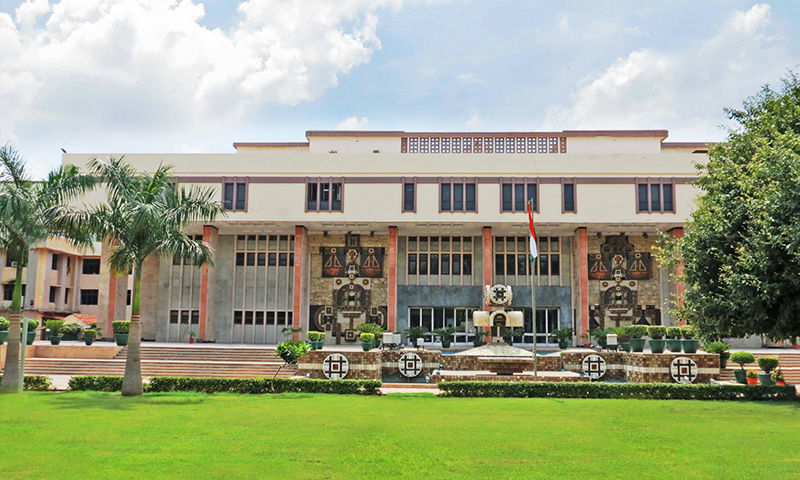
Delhi High Court Gives Income Tax Dept Final Chance To Credit ₹3.65 Crore Advance Tax To 92-Year-Old Assessee
The Delhi High Court has given the Income Tax Department a final opportunity to comply with its earlier order directing adjustment of a ₹3.65 crore advance tax payment towards the capital gains tax liability of a 92-year-old assessee, failing which the Court said it would direct payment of interest on the amount.The Division Bench of Justices Subramonium Prasad and Renu Bhatnagar has directed the Department to ensure that the amount is credited to the assessee's account by October 31, 2026.The...
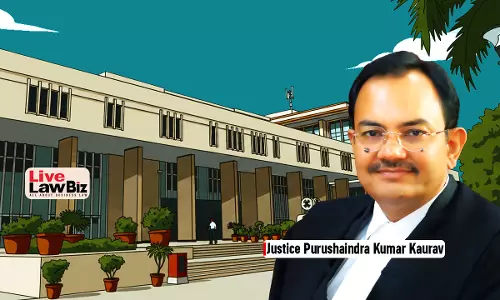
Publisher's Heir Cannot Claim Copyright Without Proof Of Assignment From Authors: Delhi High Court
The Delhi High Court has refused to grant an interim injunction to Shakti Sagar, who claimed copyright over 47 law books published by Delhi Law House (DLH) through her late father-in-law and husband. The court held that she had failed to establish a prima facie right because she had not shown how the copyrights were originally acquired from the authors. Justice Purushaindra Kumar Kaurav held that a person who is not the author can derive copyright title only through an assignment under Section...
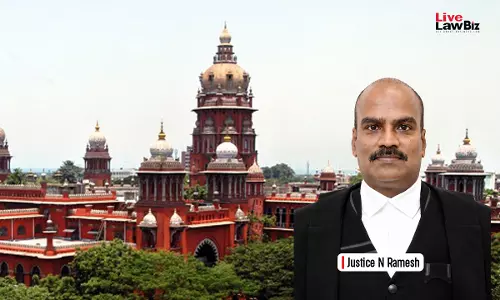
PMLA Not Meant For Private Property Disputes, ED Must Prioritise Public Money Cases: Madras High Court
On 6 October, the Madras High Court observed that the stringent provisions of the Prevention of Money Laundering Act (PMLA) are not meant to be invoked in disputes that are essentially between private individuals over private property, and that the Enforcement Directorate should prioritise cases involving public money, corruption and scams of national consequence. Justice N Ramesh granted bail to Ala Alagappan, the third accused in an ED money laundering case arising from allegations that his...
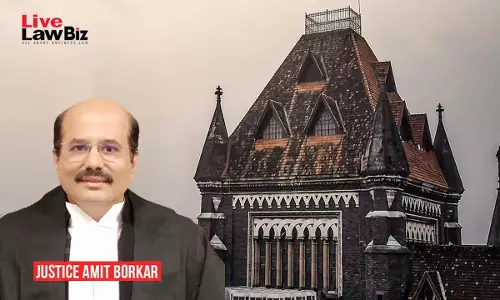
Arbitration Clause Need Not Be Reproduced In Work Orders If GCC Is Incorporated: Bombay High Court
The Bombay High Court has held that an arbitration clause need not be reproduced in individual work orders where the General Conditions of Contract containing the clause have been incorporated by reference. Justice Amit Borkar held that the relevant question is whether the General Conditions were incorporated into the work orders or were referred to only for a limited purpose, while appointing a sole arbitrator in a payment dispute between Shivkumar Enterprises and TATA Projects Limited. The...