
Bombay High Court Dismisses Revenue Appeal Against Millennium Beer Industries Over ₹21.92 Cr Service Tax
Rajnandini Dutta
7 Sept 2026 4:16 PM IST
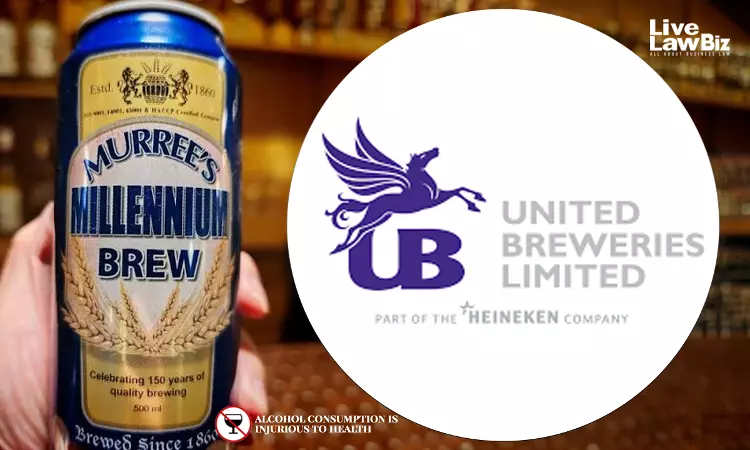
The Bombay High Court on 3 September dismissed the Revenue's appeal against the setting aside of a Rs. 21.92 crore demand against Millennium Beer Industries Ltd., holding that the extended period of limitation cannot be invoked to raise a service tax demand without establishing fraud, collusion or suppression of facts with an intent to evade tax, and
A Division Bench of Justices Nitin B. Suryawanshi and Abasaheb D. Shinde also held that the Revenue cannot take different stands in substantially identical cases after accepting a decision in favour of another taxpayer. The judges observed:
“In light of ratio laid down by the Hon'ble Apex Court in the case of Uniworth Textiles Ltd. (supra), and having regard to the fact that, the appellant has not been able to prove that any fraud, collusion or suppression of facts is attributed to the Respondent with intent to evade the payment of excise duty, the appellant could not have invoked the extended period of limitation against the Respondent.”
The dispute arose from an agreement under which Millennium Beer Industries manufactured and sold alcoholic beverages to customers of United Breweries Ltd. The Department issued a show cause notice demanding Rs. 21,92,03,724 in service tax, along with interest and penalties. The adjudicating authority confirmed the demand, which was subsequently set aside by the Customs, Excise and Service Tax Appellate Tribunal (CESTAT), Mumbai.
The Revenue challenged the Tribunal's decision, contending that the service tax liability could not be extinguished merely because the companies had amalgamated. It argued that the effective date of amalgamation should be the date on which the Registrar of Companies issued the certificate of incorporation, rather than the appointed date under the scheme of amalgamation.
Millennium Beer Industries, on the other hand, submitted that the relevant transactions had already been disclosed to the Department and that it had paid service tax on the consideration received towards intellectual property services. It further pointed out that the Revenue had accepted the Tribunal's decision in the case of SAB Miller Breweries Pvt. Ltd., which involved substantially identical facts and demands.
Accepting the objection, the High Court held that the principle of consistency is sacrosanct in revenue matters. Relying on the Supreme Court's decisions in Birla Corporation Ltd. v. Commissioner of Central Excise and Union of India v. Kaumudini Narayan Dalal, the Court observed that allowing the Revenue to take different stands in almost identical cases would be contrary to fairness and equity.
On limitation, it relied on Uniworth Textiles Ltd. v. Commissioner of Central Excise, Raipur and held that the Revenue had failed to establish the necessary ingredients for invoking the extended period of limitation. Consequently, the show cause notice was held to be barred by limitation.
The Bench concluded that the Tribunal's finding was neither erroneous nor perverse and that the appeal did not involve any substantial question of law.
Accordingly, the High Court dismissed the Revenue's appeal.
Appearances: Advocate Dwarkadas S. Ladda for the Revenue; Advocates A.P. Malani and A.P. Bhandari for the assessee.