
Supreme Court Accepts Lodha Panel's PACL Classification, Sets Out Relief For 5 Allottee Categories
Shilpa Soman
20 Nov 2026 2:56 PM IST
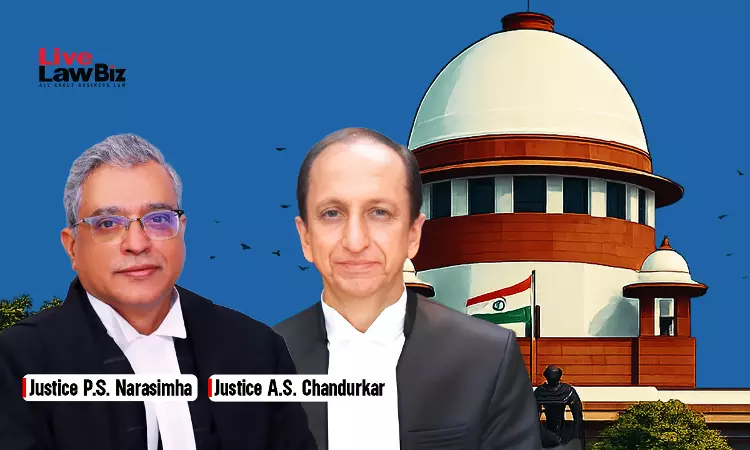
The Supreme Court on 19 November accepted the Justice (Retd.) R.M. Lodha Committee's categorisation of plot allottees in PACL's residential projects in Mohali and Bathinda, and directed allotment of plots to certain buyers and refunds with 8% interest to others after auction of the concerned plots.
A Division Bench comprising Justices Pamidighantam Sri Narasimha and Atul S. Chandurkar issued separate directions for five categories of allottees while deciding their applications. The judges observed:
“More than a decade has passed since then, and yet, this Court has been struggling to resolve this issue. Committees have been constituted, and various reports have been submitted and considered sporadically, within the limited time this Court has. These proceedings are not in the context of regular original or appellate jurisdiction that this Court exercises. It is necessary for this Court to conclude these proceedings at the earliest and at the same time, ensure that the investors are restituted in a reasonable manner. We cannot afford to convert these proceedings into suits for specific performance or public law proceedings for restitution and rehabilitation.”
The dispute arose from regulatory proceedings initiated by the Securities and Exchange Board of India (SEBI) against PACL for allegedly operating an unregistered Collective Investment Scheme (CIS) by collecting money from investors under various investment schemes.
In 1999, SEBI issued notices directing PACL to either obtain registration under the SEBI (CIS) Regulations, 1999, or wind up its operations. Although the Rajasthan High Court initially quashed the notices, the Supreme Court set aside the judgment in 2013 and remanded the matter to SEBI for fresh adjudication.
Following the remand, SEBI concluded that PACL was operating an unregistered CIS. It directed PACL's promoters and directors to refund the money collected from investors and wind up the schemes. The Securities Appellate Tribunal upheld SEBI's order, which PACL has challenged before the Supreme Court.
In February 2016, the Supreme Court constituted the Justice (Retd.) R.M. Lodha Committee to liquidate PACL's land assets and ensure equitable refunds to investors.
While examining claims relating to PACL's residential projects in Sectors 100 and 104 of Mohali and Bathinda, the Committee identified 2,032 units in the two Mohali sectors and 1,078 units in Bathinda. Many of these units had been allotted before 2 February 2016.
Following the Supreme Court's directions, the Committee examined the allottees' claims with the assistance of chartered accountants and submitted a report dividing them into five categories based on the mode and timing of their payments.
The Court accepted the Committee's categorisation and determined the relief available to each category.
The first category comprised allottees who had paid the full consideration through banking channels, irrespective of whether they had received possession certificates or executed their sale deeds.
Therefore, the Bench directed the Recovery Officer under Section 28A of the SEBI Act to issue sale certificates or no-objection certificates (NOCs) to these allottees within eight weeks. The Recovery Officer must also issue possession certificates to allottees who had not received them.
The second category comprised allottees who had paid more than 50% of the consideration through banking channels, whether before or after 2 February 2016.
In this, the judges directed the Committee to furnish these allottees, except those who made payments after 2 February 2016, with statements specifying the outstanding amounts under their agreements and their contributions towards internal development works within eight weeks.
Further, they said that allottees must pay the outstanding amounts within 30 days of receiving the statements. Once they receive the payments, the Recovery Officer must issue sale certificates or NOCs within eight weeks.
The Court also said that an allottee who fails to pay within the stipulated period may seek a one-time extension of up to 30 days from the Committee by showing sufficient reasons. If the allottee fails to pay even within the extended period, the Committee will treat the plot as unsold and refund the audited amount already paid.
The third category comprised allottees who had paid less than 50% of the consideration through banking channels.
The Bench directed the Committee to treat their plots as unsold and auction them. The Committee must refund the amount each allottee paid, along with 8% interest, within three months of the successful auction of the concerned plot.
It declined to give these allottees another opportunity to pay the outstanding consideration at prevailing market rates and retain their plots.
The fourth category comprised allottees who had made full or part payments in cash, as well as those who had paid through banking channels after 2 February 2016. Rejecting the applications filed by cash-paying allottees seeking allotment or refund, the Court clarified:
“We are of the opinion that they will be entitled to approach the appropriate Civil Court by filing suits for recovery/declaration.”
For allottees in this category who had paid through banking channels after 2 February 2016, the judges directed the Committee to refund the audited amount with 8% interest within three months of the successful auction of the concerned plot.
The fifth category comprised allottees who had transferred or sold their allotments during the pendency of the proceedings. The judges directed:
“We direct that the claims of the Category V applicants shall be dealt with in accordance with the category to which the concerned allottee/plot holder would have belonged but for the sale of the allotment during the pendency of the present proceedings.”
Separately, the Division Bench directed the Committee to verify applications filed by certain allottees claiming inclusion in the first category and pass appropriate orders, subject to any approval or objection by SEBI.
Accordingly, the Supreme Court accepted the Committee's classification and directed allotment or refunds based on the five categories of allottees.
Amici Curiae & Senior Counsel: Mr. Ranjit Kumar and Mr. Shadan Farasat (learned senior counsel), assisted by Ms. Nupur Kumar