
SEBI Proposes Fast-Track Settlement For Certain Violations, Cases Up To ₹10 Lakh
Shilpa Soman
15 Aug 2026 3:33 PM IST
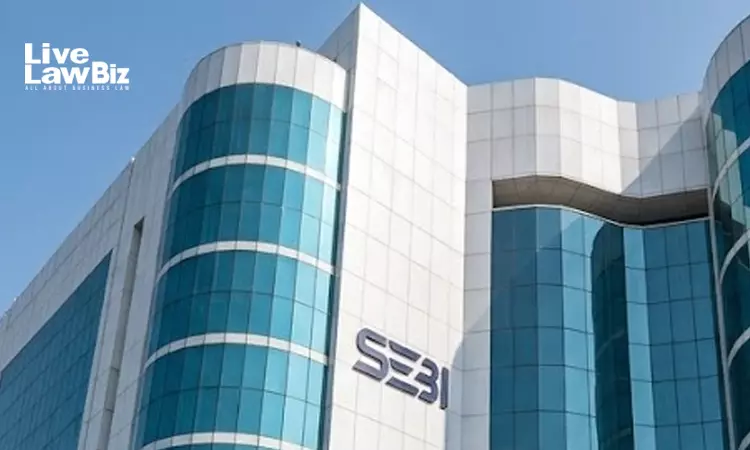
The Securities and Exchange Board of India (SEBI) has proposed a fast-track settlement mechanism for specified securities law violations and cases where the settlement amount is up to ₹10 lakh.
Eligible matters meeting the prescribed conditions would be able to bypass the high-powered advisory committee.
The proposal forms part of SEBI's draft Securities and Exchange Board of India (Settlement of Proceedings) Regulations, 2026. It follows a review of the existing settlement framework.
The fast-track mechanism would have two routes. One would be based on specified violations, while the other would be based on the monetary threshold.
Under the violation-based route, SEBI has proposed covering defaults such as delayed disclosures, including filing of returns, reports and documents. It would also cover non-disclosure by companies exclusively listed on regional stock exchanges which have exited, disclosures not made in specified formats, and delayed compliance with legal requirements or directions issued by the Board. The Board may also specify other defaults for this route.
Under the monetary threshold route, the settlement amount must be up to ₹10 lakh, and no non-monetary terms can be applicable.
The Internal Committee would then call upon the applicant to submit revised settlement terms within 21 days. The application would thereafter go directly before the Panel of Whole Time Members, without being considered by the High Powered Advisory Committee.
The proposed framework also introduces a simpler formula for calculating settlement amounts. SEBI's study found that, in cases where settlement could not be reached, the amounts proposed for settlement were, on average, eight times the penalties ultimately imposed.
SEBI said the ratio would come down to four times if the proposed regulations are approved.
SEBI has also proposed clearer treatment of repetitive defaults. The existing Regulations do not clearly define when an act or omission occurring multiple times should be treated as a repetitive default.
The draft proposes illustrations under which multiple instances of an act or omission may nevertheless be treated as a single default.
The draft further proposes extending the time for filing settlement applications in proceedings pending before SEBI from 60 days to 90 days. The period would run from service of the show-cause notice or supplementary show-cause notice, whichever is later.
It would also allow a fresh settlement application after an earlier rejection. This would be subject to an additional settlement amount of 20%, where the reason for the earlier rejection no longer applies.
For disclosure-related violations, SEBI has proposed moving the requirement of pre-disclosure to a later stage. The disclosure would have to be made after approval of the settlement application but before the settlement order is passed.
The draft also sets out a framework for settling cases involving misrepresentation of financials and diversion or siphoning of funds. Depending on the circumstances, applicants may be required to make appropriate disclosures.
In cases involving diversion or siphoning, applicants may also have to bring the funds back to the company. This would include interest from the date of the contravention until the filing of the settlement application.
Where an applicant is willing to bring back allegedly diverted or siphoned funds with interest, the proposal provides that the diversion or siphoning would not by itself prevent settlement. This would apply even where the diversion or siphoning caused losses to investors.
Public comments on the proposed regulations have been invited until September 4, 2026.