
RERA's 10% Advance Payment Cap Does Not Restrict REAT's Power To Order Higher Deposit: Bombay High Court
Shivani PS
6 Nov 2026 5:31 PM IST
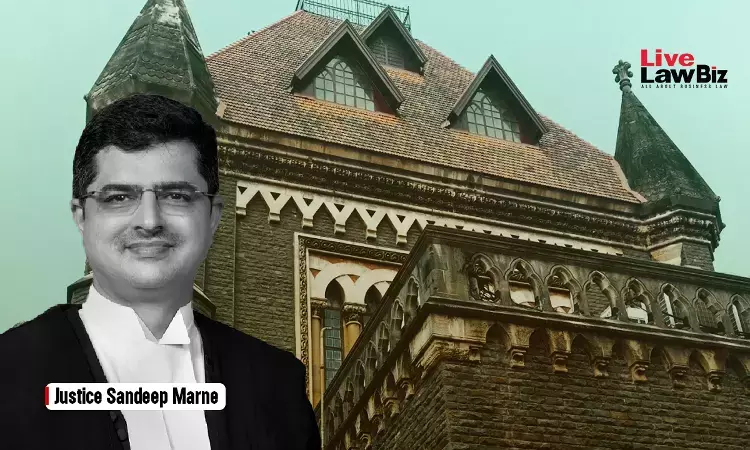
The Bombay High Court has recently held that the 10% cap under the Real Estate (Regulation and Development) Act, 2016, on the advance a developer can accept from a homebuyer before executing a registered agreement for sale does not restrict a Real Estate Appellate Tribunal's power to direct the buyer to deposit a higher amount as a condition for interim protection.
A Single Bench of Justice Sandeep V. Marne observed that the tribunal's powers to balance competing interests cannot be curtailed by a provision governing how much money a developer can accept from a homebuyer.
"The wide powers conferred upon the REAT under Sections 44(3) and 53 of RERA cannot be circumscribed by the restriction imposed under Section 13 on a promoter from accepting any amount beyond the prescribed limit as advance payment or application fee. Imposing such a restriction on the powers of the REAT would amount to rewriting the statute. Such restriction would also provide an undue advantage to an allottee who has paid an insignificant amount to the promoter, enabling such allottee to entangle the flat in a protracted and endless litigation" the court observed.
The court upheld a ₹38.18 crore deposit condition imposed by the Maharashtra Real Estate Appellate Tribunal (MahaREAT) on homebuyer Sachin Bajla, who sought interim protection over a flat in Mumbai's Palais Royale project. The agreed consideration for the flat was ₹76.36 crore.
Bajla had paid only ₹5.51 crore against the allotment, which required him to pay ₹38.18 crore against execution and registration of the agreement for sale. The original developer, Shree Ram Urban Infrastructure Limited, was later ordered to be wound up. Following SARFAESI proceedings and an auction, Honest Shelters Private Limited acquired the property and took over as promoter. It terminated Bajla's allotment in October 2022, citing his failure to meet the payment schedule.
After the Maharashtra Real Estate Regulatory Authority (MahaRERA) dismissed his complaint, Bajla approached MahaREAT and sought an injunction against the creation of third-party rights in the flat. The tribunal granted status quo protection, subject to a deposit of ₹38.18 crore. Bajla challenged this condition, arguing that the tribunal could not direct a deposit exceeding the 10% limit under Section 13 of the Real Estate (Regulation and Development) Act, 2016, when no registered agreement for sale had been executed.
The High Court rejected this interpretation, holding that Section 13 restricts promoters from accepting more than 10% of the sale consideration before executing and registering an agreement for sale. It does not limit the tribunal's powers when deciding applications for interim relief.
"The REAT is not a commercial counterparty to the transaction and cannot be bound by the restriction/prohibition imposed on the promoters under Section 13(1) of the Act," it observed.
The court explained that a tribunal granting interim protection must balance the interests of both sides. A buyer who pays only a small fraction of the consideration cannot necessarily prevent a developer from creating third-party rights in a property for years while the dispute remains pending.
It further held that the tribunal could impose a deposit exceeding 10% even where no registered agreement for sale existed. The amount would depend on the circumstances of each case.
"In my view therefore, the REAT is fully justified in balancing the equities between the parties by directing deposit of amount exceeding 10% limit even in cases where there is no written and registered agreement for sale as a pre-condition for making an interim order. How much deposit is to be directed depends on facts and circumstances of each case. Circumstantial flexibility is the key and not rigid application of 10% limit prescribed under Section 13(1) of RERA," the court observed.
The court also rejected Bajla's contention that the original developer had violated Section 4 of the Maharashtra Ownership Flats Act (MOFA) and Section 13 of RERA by demanding ₹38.18 crore without executing the agreement for sale.
It noted that the allotment letter enclosed a draft agreement and required Bajla to pay the first instalment against its execution and registration. He was also asked to pay stamp duty on the draft agreement and forward it to the developer for execution. Bajla did neither. The court held that the original developer was willing to execute and register the agreement and that Bajla's failure to make the required payment had prevented it from being executed.
The court also noted that the flat received its occupancy certificate on December 17, 2024. Apart from the agreed consideration of ₹76.36 crore, another ₹10–15 crore would be required towards stamp duty, registration charges, GST, clubhouse charges and advance maintenance, taking the total cost to approximately ₹90 crore.
Bajla had claimed ₹12.01 crore as interest on the ₹5.51 crore paid. The court clarified that his entitlement to interest had not been adjudicated and could not be presumed while examining compliance with Section 13 of RERA. It nevertheless observed that even if the interest claim were momentarily taken into account, the total would come to only ₹17.52 crore, still insufficient to justify blocking a flat for which approximately ₹90 crore would be required.
Dismissing the appeal, the court clarified that its findings were prima facie and would not bind MahaREAT when it decides the dispute on merits. It gave Bajla two weeks to deposit ₹38.18 crore. If he did so, the tribunal's status quo order would continue during the pendency of the appeal.
For Appellant (Sachin Bajla): Advocates Kunal Mehta, Robin Fernandes, Sukrit Parashar, Anushka Dubey, Shiroy Pavri and Surya Kale, instructed by Vesta Legal.
For Respondent (Honest Shelters Pvt. Ltd.): Senior Advocate Gaurav Joshi with Advocates Rubin Vakil, Sonam Mhatre, Saloni Sulakhe and Declan Fernandes, instructed by Dhaval Vussonji & Associates.