
Housing Society Not Liable for Developer's RERA Obligations As Landowner: Bombay High Court
Shivani PS
19 Oct 2026 6:41 PM IST
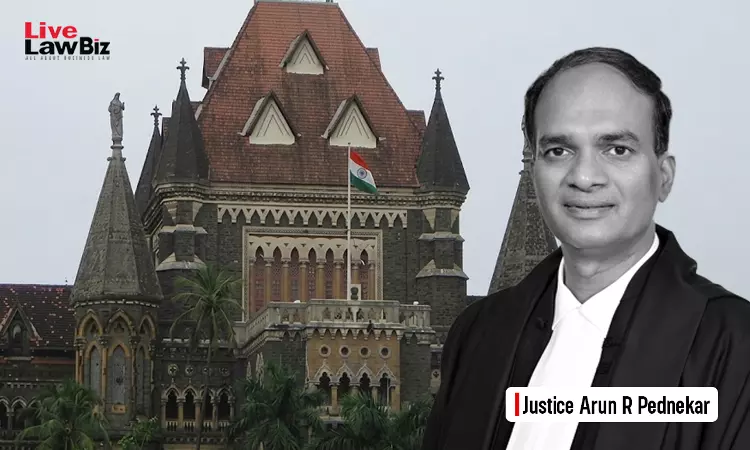
The Bombay High Court has ruled that a housing society as a landowner cannot be held liable for a developer's obligations under the Real Estate (Regulation and Development) Act, 2016 (RERA), merely because the developer entered into agreements for sale with flat purchasers under a redevelopment agreement.
Justice Arun R. Pedneker granted interim relief to Maruthi Co-operative Housing Society Limited, allowing it to appoint a new developer. The court also directed payment of ₹7.35 crore in unpaid transit rent and clearance of ₹1.11 crore in statutory dues.
The court observed, “However, none of the provisions of RERA renders the owner of the freehold or leasehold interest in the land, who enters into a development agreement with a developer, liable for discharging the developer's obligations under RERA merely because the developer subsequently enters into agreements for sale with third-party flat purchasers on the basis of such development agreement.”
The dispute arose from the stalled redevelopment of Shobha, a residential building constructed in 1967 in Chembur, Mumbai.
Under a development agreement dated July 10, 2013, Tridhaatu Maruthi Developers LLP undertook to redevelop the building, provide permanent alternate accommodation to the members, pay transit rent and clear statutory dues.
All 22 members vacated the building in May and June 2014. The developer failed to complete the project within the stipulated period. The order records an inconsistency in the completion deadline, referring to January 2017 in its contractual calculation and January 2018 in the society's petition.
The developer constructed a bare structure up to the tenth floor despite having permission only up to the eighth floor. It eventually abandoned the project and stopped paying transit rent, with arrears reaching ₹7.35 crore by April 7, 2026.
The society terminated the development agreement and power of attorney on that date and approached the high court for permission to appoint a new developer and recover the outstanding dues.
Many members were senior citizens who had spent years in alternative accommodation at their own expense.
Taking note of their hardship, the court observed:
“All the members are senior citizens, many of whom are super senior citizens, and are constrained to arrange alternative accommodation at their own expense and reside away from their original homes. The continued non-payment of transit rent has caused them considerable hardship.”
The court found that the developer had made no meaningful progress on the project for years and had failed to meet its contractual obligations. It held that the society had established a strong prima facie case for interim relief.
The court also examined the rights of flat purchasers who had entered into agreements with the developer. It held that, in the circumstances of the case, their rights could not survive the termination of the development agreement.
The court further observed that the developer could pursue monetary claims against the society through arbitration, if legally maintainable. However, it could not insist on preserving the agreement merely to retain its contractual rights after abandoning the project and leaving transit rent unpaid.
It observed, “The Developer's remedy, if any, would be to invoke arbitration against the Society in respect of its monetary claims, if otherwise maintainable in law. In the facts and circumstances of the present case, the Developer cannot insist upon preservation of the Development Agreement merely to retain its contractual rights, particularly when the Project has been abandoned and the transit rent payable to the members remains unpaid.”
The court granted interim relief permitting the society to proceed with redevelopment and directed the respondents to pay ₹7,35,07,670 in transit rent arrears and clear ₹1,10,76,852 in statutory dues.
The society must issue a notice invoking arbitration within 30 days. If the respondents do not consent to an arbitrator within the period prescribed by law, the society must approach the court for an appointment within a further 60 days. Failure to meet either deadline will automatically vacate the interim order.
For Petitioner (Maruthi Co-operative Housing Society Limited): Advocates Poorva Garg, Anish Shahapurkar and Hridyanshi Sharma, instructed by SHS Chambers.
Amicus Curiae: Advocate Amrut Joshi, assisted by Advocate Radhika Kulkarni.