
Homebuyer Can't Club Distinct Disputes In One Writ, Must Approach Competent Forums: Madras High Court
Shivani PS
28 July 2026 1:44 PM IST
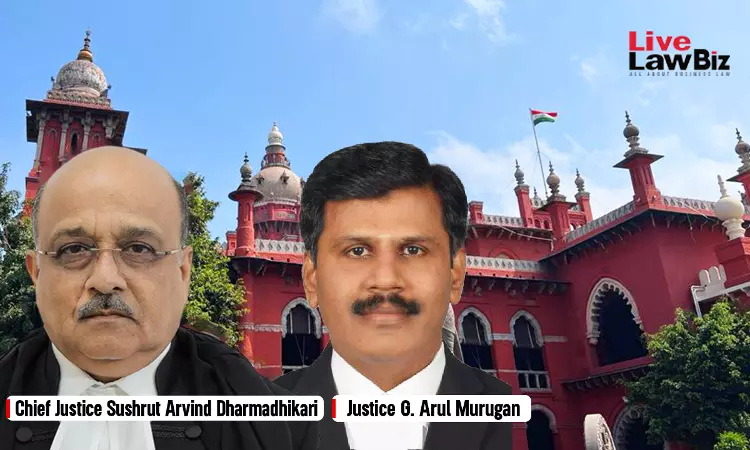
The Madras High Court on 10 July held that a homebuyer cannot invoke the writ jurisdiction under Article 226 of the Constitution to combine distinct grievances arising under different statutory regimes when specialised statutory forums provide the appropriate remedy.
A Bench of Chief Justice Sushrut Arvind Dharmadhikari and Justice G. Arul Murugan dismissed six writ petitions filed by homebuyer Parvez concerning the Aavisa Golf Township project, holding that disputes relating to consumer rights, real estate regulation, bank recovery, insolvency, money laundering and civil rights must be pursued before the forums specifically empowered to decide them. The judges held:
“The petitioner seeks to club distinct issues and have them adjudicated before this Court under writ jurisdiction. However, in respect of the grievance raised, the remedy lies strictly before the respective competent statutory forum. Hence, the present petitions are clearly misplaced and are not sustainable. The remedy available to the petitioner, as a homebuyer, to address her grievances lies only before the concerned competent forum, as has already been observed in the earlier writ petitions, which have since attained finality.”
The dispute arose from the Aavisa Golf Township, a 700 acre residential project at Sandhavellore and Pappankuzhi villages in Sriperumbudur Taluk, Kancheepuram district, developed by IVR Hotels and Resorts Ltd. Parvez purchased a plot in the project and entered into a construction agreement on 9 December 2011 for construction of a villa.
She alleged that the developer failed to provide promised amenities, including a golf course, golf club, hotel, school and hospital, and claimed that about 181 homebuyers had been defrauded. She thereafter filed six writ petitions, contending that the High Court should intervene as her property rights continued to be affected and further transactions relating to the project required restraint, notwithstanding the availability of statutory remedies.
The authorities argued that the disputes were already being dealt with under the respective statutory mechanisms and that the writ petitions were therefore not maintainable.
The Court noted that Parvez had earlier approached the Real Estate Regulatory Authority and the Tamil Nadu Real Estate Appellate Tribunal, which on 27 September 2023 directed registration of the project under the Real Estate (Regulation and Development) Act, 2016 (RERA). It also noted that an earlier batch of writ petitions had been disposed of on 22 April 2024 with liberty to approach the appropriate statutory forums. Instead of availing those remedies, she filed the present batch of petitions.
It held that deficiency in service claims must be pursued before the Consumer Forum or the RERA Authority, civil rights disputes before the competent Civil Court, challenges to measures under the Securitisation and Reconstruction of Financial Assets and Enforcement of Security Interest Act (SARFAESI Act) before the Debts Recovery Tribunal, insolvency proceedings before the National Company Law Tribunal, and proceedings under the Prevention of Money Laundering Act through the mechanism provided under that statute. The Bench observed:
“If the petitioner is aggrieved by any deficiency of service, the petitioner could opt to approach the jurisdictional Consumer Forum or the Regulatory Authority under the RERA Act. If the petitioner is aggrieved that certain civil rights are affected, then it is for the petitioner to approach the competent Civil Court to redress her grievances.”
Accordingly, the High Court dismissed all six writ petitions and the connected miscellaneous petitions without costs.
Appearances for petitioner (Vandana Parvez): Petitioner-in-person Dr. Vandana Parvez.
Appearances for respondents (Government of India & Ors.): Senior Panel Counsel A. Kumaraguru for the Union of India (R1); Attorney General R. Veeramani for the Government of Tamil Nadu, the Collector of Kancheepuram District, the Revenue Officer of Kancheepuram District and the Sub-Registrar, Sunguvarchatram (R2, R13-R15); Additional Solicitor General of India A.R.L. Sundaresan, assisted by Special Public Prosecutor for ED Cases N. Ramesh, for the Directorate of Enforcement (R4 & R5); Government Advocate (Criminal Side) M. Dinesh for the Investigating Officer, Tamil Nadu Crime Branch, the Superintendent of Police (CB-CID) and the Additional Director General of Police (CB-CID) (R6-R8).