
Madras High Court Asks DRAT Chairperson To Ensure Tamil Nadu DRTs Upload Orders In Standardised Format
Kirit Singhania
13 Nov 2026 5:56 PM IST
The Madras High Court at Madurai on Friday directed the Chairperson of the Debt Recovery Appellate Tribunal at Chennai to ensure that Debt Recovery Tribunals in Tamil Nadu continue uploading judgments, interim orders and daily proceedings in a standardised format on the official e-DRT portal with complete cause titles, court emblems, counsel details, verification QR codes and signature templates.
The Court was hearing a public interest litigation filed by Shiva VR, a Trichy resident seeking directions to ensure that DRT orders were uploaded in an appropriate format and within a time-bound manner.
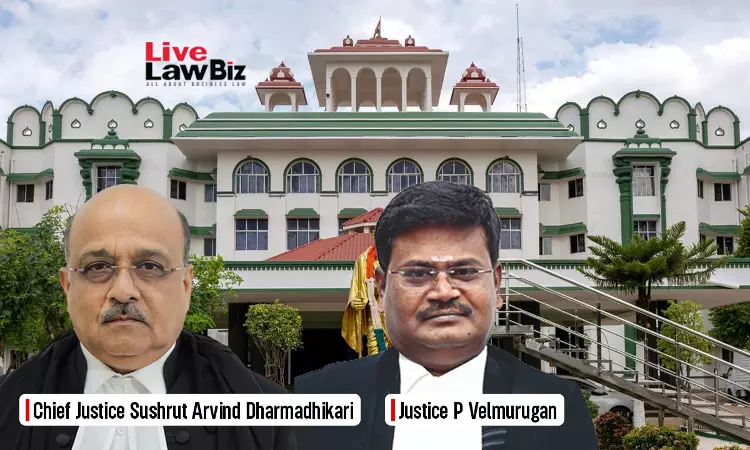
A Division Bench of Chief Justice Sushrut Arvind Dharmadhikari and Justice P. Velmurugan accordingly issued the following directions:
(i) Respondents 2 to 6 shall strictly continue the upgraded practice of uploading all final judgments, interim orders and daily proceedings onto the official e-DRT web portal in the standardized format, incorporating the court name/emblem, complete cause titles, appearing counsels, verification QR codes and proper signature templates, without reverting to truncated or unverified text blocks.
(ii) The respondent tribunals shall ensure that web orders and daily proceedings are uploaded in a time-bound manner, in compliance with the statutory provisions, referred to supra.
(iii) Applications for certified copies filed by litigants shall continue to be processed expeditiously within the stipulated service timelines, ensuring that statutory appellate remedies before the Debts Recovery Appellate Tribunal (DRAT) are not impeded by administrative delays.
The writ petition filed by the petitioner argued that while tribunals across the country uploaded fully formatted orders, the DRTs in Tamil Nadu published only truncated operative portions without complete cause titles, court identification and Presiding Officers' signature templates.
This allegedly led banks and other institutions to reject downloaded orders, particularly interim stay orders, forcing litigants to obtain physical certified copies, which could take 10 to 15 days. The petitioner had approached the Court after a representation to the Union Ministry of Finance and the concerned tribunals allegedly failed to secure uniform improvements.
The respondents submitted that the heavy workload, with daily dockets of 120 to 200 cases before a Presiding Officer, made uploading fully formatted orders for every proceeding impractical. They informed the Court that following technical and administrative improvements, upgraded formats had been implemented across the DRTs in Chennai, Coimbatore and Madurai.
These included court emblems, complete cause titles, counsel details, verification QR codes and signature templates. They also submitted that certified copy applications were being processed within the standard timelines.
The Bench referred to Rules 14 and 16 of the Debts Recovery Tribunal (Procedure) Rules, 1993, which require every order to be written, signed and dated by the Presiding Officer. It also noted Rule 5 of the Debts Recovery Tribunals and Debts Recovery Appellate Tribunals Electronic Filing Rules, 2020 and the DRT Regulations, 2024, which mandate online publication of orders and proceedings.
Emphasising that access to justice, transparency under Article 21 of the Constitution and effective e-governance require digital orders to contain all requisite particulars, the Court observed that incomplete orders could cause unnecessary difficulties to litigants and financial institutions and expose borrowers to allegations of document fabrication.
"Access to justice, transparency under Article 21 of the Constitution of India, and effective e-governance require that digital copies of orders available to litigants possess all requisite information so that bona fide litigants and financial institutions are not forced to needlessly endure operational hurdles or face spurious allegations of document fabrication."
The Court held that keeping the petition pending was no longer necessary, provided the improvements were maintained continuously.
It accordingly requested the DRAT Chairperson to ensure that the DRTs continued uploading all judgments, interim orders and daily proceedings in the upgraded standardised format, without reverting to truncated or unverified text blocks.
The Bench further asked the tribunals to ensure time bound uploading of orders and expeditious processing of certified copy applications so that administrative delays did not impede statutory appellate remedies before the DRAT.
For Petitioner: Advocate K.C.Maniyarasu
For Respondents : M.Karthikeya Venkitachalapathy, Deputy Solicitor General of India