
SARFAESI Act Does Not Mandate Resorting To Section 14 In Every Case Of Taking Possession: Madhya Pradesh High Court
Srinjoy Das
3 Feb 2026 3:07 PM IST
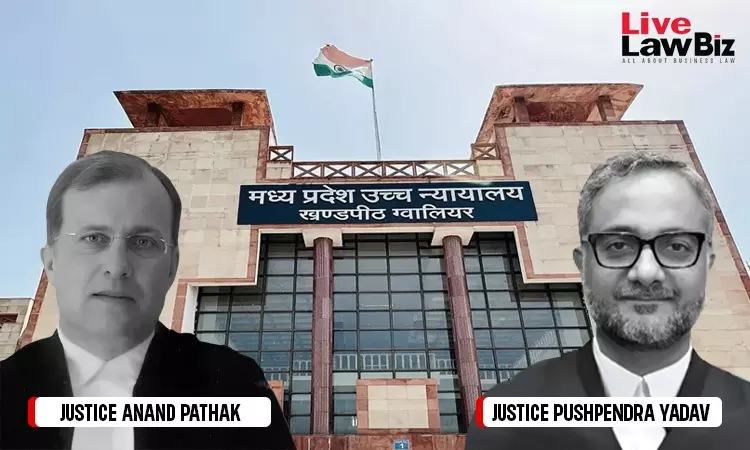
The Madhya Pradesh High Court has held that a secured creditor is not mandatorily required to invoke proceedings under Section 14 of the SARFAESI Act for taking physical possession of secured assets, and that possession can be lawfully taken directly under Section 13(4) read with Rule 8 of the Security Interest (Enforcement) Rules, 2002, where no resistance is offered by the borrower.
A Division Bench comprising Justice Anand Pathak and Justice Pushpendra Yadav allowed a writ petition filed by UCO Bank, setting aside the orders passed by the Debt Recovery Tribunal, Jabalpur, and the Debt Recovery Appellate Tribunal, Allahabad, which had directed the Bank to restore possession of mortgaged properties to the borrower and refund the auction amount to the auction purchaser.
The dispute arose after the borrower's loan account was declared a Non-Performing Asset (NPA) in October 2018. The Bank initiated proceedings under the SARFAESI Act and took possession of the secured properties after issuing statutory notices under Sections 13(2) and 13(4). The DRT and DRAT, however, held the possession to be illegal on the ground that the Bank had not approached the District Magistrate under Section 14 of the Act before taking physical possession.
Disagreeing with the Tribunals, the High Court held that such an interpretation was contrary to the statutory scheme of the SARFAESI Act. The Court observed that Section 13(4) expressly empowers a secured creditor to take possession of secured assets without the intervention of the court or tribunal, and that Section 14 comes into play only when the secured creditor requires assistance of the Magistrate in taking possession.
Relying on the Supreme Court's decisions in Standard Chartered Bank v. Noble Kumar and Transcore v. Union of India, the Bench reiterated that the Act contemplates three modes of taking possession—direct possession without resistance, possession with Magistrate's assistance in case of resistance, or direct approach to the Magistrate—and that recourse to Section 14 is optional, not mandatory.
The Court further noted that in the present case, one secured asset was a long-closed factory and the other an under-construction residential property, with no occupants and no resistance at the time of possession. The Panchnama prepared by the Bank confirmed peaceful possession, and there was no material to presume forcible dispossession merely because the borrower was absent.
Holding that the Tribunals' insistence on mandatory invocation of Section 14 would defeat the very object of the SARFAESI Act and unduly reward defaulting borrowers, the Court observed that such an approach would entangle secured creditors in procedural inertia, contrary to the legislative intent of speedy recovery.
Accordingly, the High Court set aside the impugned orders of the DRT and DRAT and permitted the Bank to proceed in accordance with law from the stage at which it was required to do so. The writ petition was allowed.