
Legal Heir Cannot Be Held Personally Liable For Entire Loan Of Deceased Guarantor: Madras High Court
Kirit Singhania
13 Nov 2026 4:24 PM IST
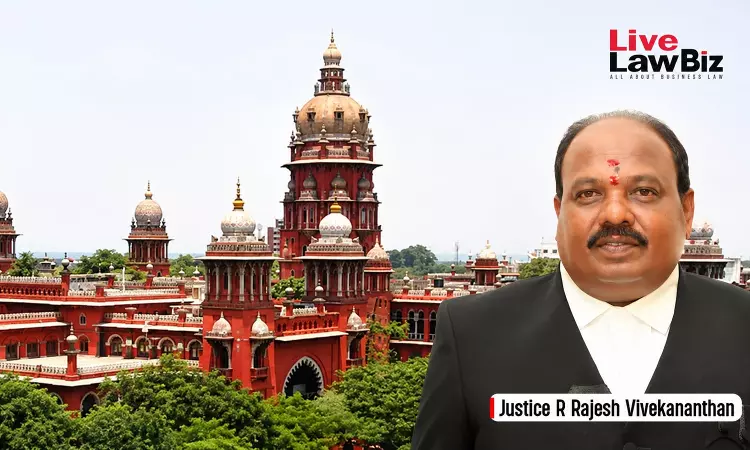
On 12 November the Madras High Court held that a legal heir of a deceased guarantor cannot be held personally liable for the entire outstanding loan merely by virtue of being a legal representative, and can be proceeded against only to the extent of the estate inherited from the deceased.
Justice R. Rajesh Vivekananthan dismissed a civil revision petition filed by Arun, while upholding the Additional District and Sessions Judge's order at Tirupattur rejecting his application for rejection of the plaint under Order VII Rule 11 of the Code of Civil Procedure (CPC). The Bench held:
“The second defendant, being one of the legal heirs of the deceased, may be proceeded against only to the extent of the estate of the deceased, inherited by him. The second defendant cannot, merely by reason of his status as a legal heir, be made personally liable for the entire loan amount in the absence of an independent legal basis for such liability.”
The case arose from an educational loan of Rs. 4 lakh sanctioned by Indian Bank on 28 July 2007 to Aruna and her father, Shanmugam. Both executed loan documents, while Shanmugam and his wife also furnished a guarantee.
After Shanmugam died on 22 September 2010 and his wife died on 22 May 2016, the bank impleaded their son Arun as a legal heir in its recovery suit against Aruna and Arun.
Arun contended that he had neither signed the loan documents nor benefited from the loan. He also submitted that his father had settled the property sought to be proceeded against in his favour on 25 October 2006.
The Court noted that the bank had specifically stated that Arun was impleaded only in his capacity as a legal heir and that its claim against him was confined to the estate of the deceased guarantor inherited by him.
In these circumstances, the Bench held that Arun's failure to sign the loan documents did not, by itself, warrant rejection of the plaint. It said:
“In view of the said submission, the contention that the second defendant is not a signatory to the loan documents does not, by itself, warrant rejection of the plaint, particularly when the plaintiff seeks to proceed against the estate of the deceased guarantor.”
Further, Justice Vivekananthan observed that the non-impleadment of another legal heir, Shanthi, and the claim concerning the property transferred under the settlement deed involved issues that required examination on the basis of pleadings and evidence.
Accordingly, the High Court dismissed Arun's civil revision petition and upheld the trial court's order. It clarified that Arun remained at liberty to raise all legally available defences before the trial court and that its order did not determine the bank's entitlement to attach or recover the loan amount from any specific property.
For the Petitioner: Advocate S. Udhaya Kumar, M/s Karan and Uday
For the Respondent: Advocate .Sundar Rajan