
Auction Purchaser Can Seek Refund If Material Title Defects Were Not Disclosed: Andhra Pradesh High Court
Sandhra Suresh
13 July 2026 5:25 PM IST
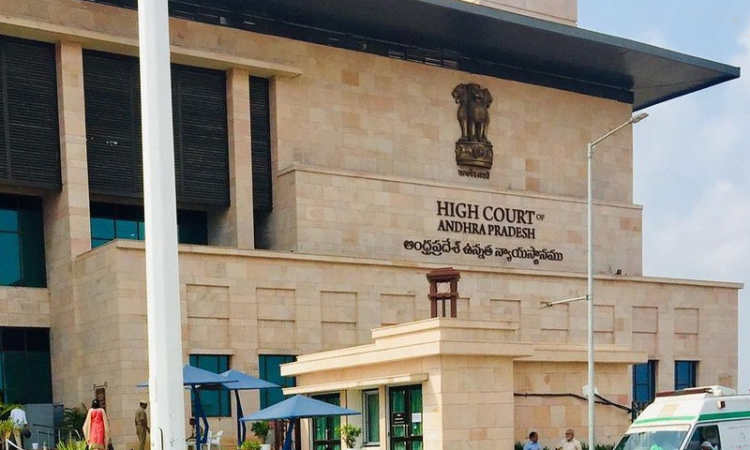
The Andhra Pradesh High Court has directed Indian Bank to refund the entire auction consideration paid by an auction purchaser, along with stamp duty, registration charges, and 9% simple interest, after holding that he could not be compelled to continue with a purchase clouded by title disputes. The court also set aside the sale certificate and the registered sale deed issued in his favour.
A Division Bench of Justice Battu Devanand and Justice A. Hari Haranadha Sarma observed that an auction purchaser cannot be required to proceed with the purchase where the property suffers from defects in title. The bench also held that undisclosed defects in title do not prevent a buyer from seeking a refund.
“Defects in title are latent defects. In the absence of words to the contrary in sale deed, the presumption is that the seller is having title free from reasonable doubt. In case of non-disclosure of material defect, and in case of defect in title of the seller, cannot prevent the buyer to seek for relief for refund of their money etc..”, the court noted.
The writ petition was filed by V. Amasa Reddy. He had participated in an e-auction conducted by Indian Bank on September 3, 2021, for land situated in Kalahasthi in Tirupati district.
Reddy emerged as the successful bidder for ₹1,30,50,000. He paid the entire sale consideration and another ₹9,78,970 towards stamp duty and registration charges. A sale certificate dated October 5, 2021, was issued and registered in his favour. A registered sale deed was also executed.
According to Reddy, he was subsequently served with summons in O.S. No.15 of 2022 pending before the X Additional District and Sessions Judge, Tirupati.The suit sought cancellation of the sale deed. He also received a communication from the Commissioner of Sri Kalahasthi Municipality stating that the land belonged to the municipality and directing him not to interfere with it, referring to an earlier High Court order. He contended that he could not obtain possession of the property.
Reddy addressed several representations to the bank seeking a refund of the auction amount. He also lodged a complaint through the CCTNS portal. Later, he sent further representations explaining the hardship caused by the pending disputes. Although the bank informed him in July 2024 that steps were being taken towards refund in consultation with higher authorities, no refund was made.
Before the court, Reddy submitted that he had purchased the property hoping to resell it for financial gain. He stated that he had borrowed substantial amounts from commercial lenders to finance the purchase. The litigation, according to him, had left him almost bankrupt. He also claimed that he was forced to pledge and mortgage his other properties and borrow additional money from friends and relatives.
Indian Bank opposed the petition. It submitted that the auction had been conducted in accordance with the SARFAESI Act and that the sale certificate had already been registered. The bank pointed out that the sale proceeds had been adjusted towards the borrower's loan account. It also argued that there was no clear litigation pending at the time of the auction. According to the bank, it had acted fairly and was taking steps to resolve the disputes affecting possession. It further contended that any litigation arising after the purchase had to be faced by the purchaser.
The court found the bank's contention unacceptable.
“There cannot be implied waiver on the part of the purchasers that they have purchased property with knowledge of clouds over the title and that they have to prosecute their remedies by way of litigation against all the litigating parties and that they cannot ask for refund of Sale consideration paid. If that principle is accepted, the same will amount to encouraging dishonesty.”, the court noted.
Examining the record, the court noted that an earlier writ petition relating to the property had been filed before the auction. It also noted that a civil suit and another writ petition concerning the property were pending. The court observed that a buyer intends to purchase property, not litigation. Requiring such a purchaser to contest multiple proceedings alongside the vendor could not be appreciated.
The bench referred to the seller's obligation regarding title and observed that defects in title are latent defects. It held that a buyer is entitled to seek appropriate relief, including refund, where material defects in title are not disclosed.
Referring to the bank's responsibility, the court observed that auctions conducted by banks generally create an impression that the title has been verified after obtaining legal opinion. Members of the public participate in such auctions because of the confidence they place in the institution.
“Generally, auction conducted by the Bank will give a general impression that the Bank might have verified the title with all clarity and certainty after having legal opinion. The public will opt for purchasing the same with the confidence and trust on the bank, but when they experience the litigation after investing all their life time savings, the sufferance, they experience is inexplicable and they deserve redressal.”, the court added.
The court held that there were lapses on the bank's part. It observed that the bank ought to have verified the title more thoroughly or auctioned the property only after clearing the clouds over the title. It further noted that while the civil suit was instituted after the sale, the earlier writ petition concerning the property had been pending before the auction.
The question whether the land, in whole or in part, was earmarked for a park formed part of that pending litigation. In those circumstances, the court held that Reddy was entitled to seek a refund.
Allowing the writ petition, the court directed Indian Bank to refund the bid amount of ₹1,30,50,000 with simple interest at 9% per annum from the date of deposit. It also directed reimbursement of ₹9,78,970 towards stamp duty and registration expenses with simple interest at the same rate from the date of payment.
The court set aside the sale certificate and the registered sale deed, directed the registration authorities to make the necessary entries, and granted 30 days for compliance.
For Petitioners: Advocate V Vinod K Reddy
For Respondents: Advocate Sreedhar Valiveti