
Andhra Pradesh High Court Says Agricultural Land Outside SARFAESI Scope, Sets Aside Canara Bank Auction
Ritika Verma
25 Sept 2026 2:33 PM IST
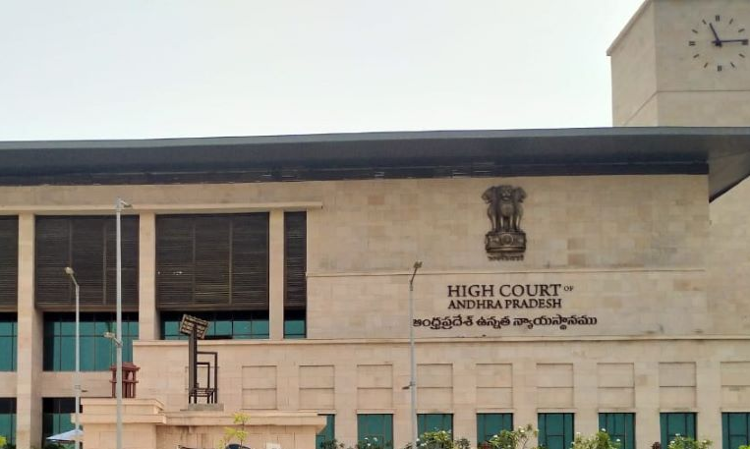
The Andhra Pradesh High Court has held that properties which are agricultural lands fall outside the scope of the SARFAESI Act, and that banks must exercise due diligence before accepting such properties as security, particularly when registered documents describe them as agricultural lands.
A Division Bench comprising Justices Battu Devanand and Sunitha Gandham allowed a writ petition challenging Canara Bank's sale notice and auction of two lands, holding that the properties were agricultural lands protected under Section 31(i) of the SARFAESI Act. The judges observed:
“Having knowledge about the protection given under Section 31(i) of the Act, respondent No.1 bank accepted the said lands towards security and further, not only issued statutory notices and auction notice, but also put the secured assets for sale and the procedure followed by respondent No.1 is nothing but violation of statutory provision. Having paid huge amount of Rs. 81,50,000/-, the respondent No. 2/auction purchaser has not yet received the fruits i.e., registered sale certificate and possession.
..this Court is of the considered view that the the sale notice dated 10.03.2025 and sale dated 28.03.2025 are illegal as the provisions of the Act shall not apply to any secured asset created in agricultural land and both the parties have to work out their remedies in respect of item Nos.1 and 2 of Schedule B before the Civil Court.”
The case arose from a loan obtained by the petitioner's proprietary concern from Canara Bank. The petitioner, who owned the two lands, stood as guarantor for the loan and offered the properties as security.
After the loan account was classified as NPA, the Bank initiated proceedings under the SARFAESI Act by issuing a demand notice under Section 13(2), followed by a possession notice. It thereafter proceeded to sell the secured properties.
Earlier, the borrower, represented by the petitioner, had challenged the Bank's sale proceedings before the Debt Recovery Tribunal. While that proceeding was pending, the Bank issued a fresh e-auction sale notice in respect of the two properties.
The petitioner challenged the fresh sale notice before the High Court, contending that the properties were agricultural lands and had been used for agricultural purposes since 2013. He therefore argued that the properties could not be sold under the SARFAESI Act in view of Section 31(i), which excludes “any security interest created in agricultural land” from the Act's application.
While the writ petition was pending, the Bank conducted the auction. The successful bidder agreed to purchase the properties for Rs. 81.50 lakh, but the sale certificate was not registered in his name.
The High Court appointed an Advocate Commissioner to ascertain the nature of the secured assets. During inspections, the Commissioner found crop residue indicating recently harvested paddy and, subsequently, standing jowar fodder maize, moist soil and irrigation patches, indicating ongoing agricultural operations.
The Bank contended that merely describing the properties as agricultural lands in revenue records was insufficient to attract Section 31(i). It submitted that the petitioner had to establish that the lands were actually being used for agriculture when the security interest was created.
The Court rejected this approach, holding that the revenue records could not be considered in isolation. It said the nature and actual use of the land, along with the purpose for which it had been set apart, had to be considered.
It noted that Section 31(i) expressly excludes “any security interest created in agricultural land” from the operation of the SARFAESI Act. It also observed that the provision protects agriculturists from losing their primary means of livelihood through summary enforcement of security interests.
The petitioner produced revenue records and other documentary material supporting the agricultural character and use of the properties. Considering this material along with the Advocate Commissioner's inspection reports, the Court found that the lands were dry agricultural lands and that agricultural operations had been carried on since 2013.
The Bench then examined whether the Bank had exercised due diligence before accepting the properties as security. It noted that both registered sale deeds described the properties as “zeroithi dry lands” and held:
“In this case, the petitioner discharged his burden by producing best possible documentary evidence and has proved that since 2013 agricultural operations were going on in the schedule properties. The respondent No.1 being leading bank failed to exercise due diligence while taking security. In both the sale deeds, it is clearly mentioned that they are zeroithi dry lands. Having received documents, the respondent No.1 bank failed to cross check the descriptions of the lands which are mentioned in the registered sale deeds and verify the nature of the land before accepting security and if necessary, obtain legal opinion to come to conclusion with regard to the exact nature of the land.”
The judges also held that the Bank had proceeded against properties protected by Section 31(i) and that the sale notice and subsequent auction could not be sustained under the SARFAESI Act.
Accordingly, the High Court allowed the writ petition, set aside the sale notice and auction, and directed the parties to work out their remedies before the Civil Court in respect of the two properties. It further directed the Bank to return the entire auction money of Rs. 81.50 lakh lying with it, along with interest at 6.85% per annum from the date of deposit until payment. Upon refund, the rights of the parties existing before the auction sale would stand restored.
For Petitioner: Venkata Rao Burla
For Respondents: T.B.L. Murthy