
Calcutta High Court Holds No Title Passed Under Tenancy Created After SARFAESI Notice
Shilpa Soman
9 Jun 2026 7:33 PM IST
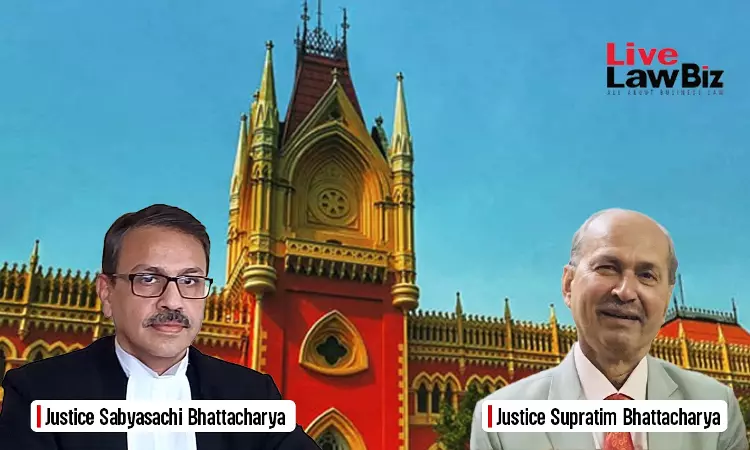
The Calcutta High Court on Tuesday set aside a trial court order directing parties to maintain status quo in a tenancy dispute over a property. It held that a tenancy created after issuance of a demand notice under the SARFAESI Act could not confer any rights on the tenant.
A Division Bench of Justice Sabyasachi Bhattacharyya and Justice Supratim Bhattacharya held that the tenancy relied upon by Julien Educational Trust had been created years after issuance of the demand notice and without any case having been made out regarding the secured creditor's consent.
"Hence, having been executed admittedly post the Section 13(2) notice in the teeth of the said bar, the tenancy is a nullity and no title passed through the same in favour of the respondent no.1.", the court noted.
The bench was hearing an appeal filed by Boon Realtors Private Limited against an order directing the parties to maintain status quo regarding the nature, character, possession, and alienation of the property.
Julien Educational Trust had filed the suit claiming rights under a tenancy agreement allegedly executed in its favour by the original owners on January 4, 2016. The Trust sought declarations that a sale certificate issued on June 30, 2021 and a sale deed executed on October 8, 2021 in favour of Boon Realtors were illegal, void and of no legal effect. It also sought consequential reliefs.
Boon Realtors contended that the borrowers' account had been declared a non-performing asset in 2011. It submitted that notices under the SARFAESI Act had been issued that year. The company argued that the tenancy relied upon by the Trust was created several years later and was barred by law.
The trust argued that the auction purchaser never obtained actual physical possession of the property. It also contended that its claims could only be adjudicated by a civil court.
The High Court held that no case had been made out regarding prior written consent of the secured creditor for creation of the tenancy. The Bench further held that the Trust failed to establish any prima facie right, title or interest in the property.
The Court also held that the suit itself was not maintainable before a civil court. It observed that the reliefs sought by the Trust fell within the jurisdiction of the Debts Recovery Tribunal.
Observing that the challenge was directed against measures taken under the SARFAESI Act, the Bench held:
"If we compare the scope of Section 17 with the reliefs sought in the plaint of the present suit, there would be no manner of doubt that all the reliefs sought in the suit by the respondent no.1 not only could be but had to be granted by the Debts Recovery Tribunal under the SARFAESI Act and not by the Civil Court, whose jurisdiction is precluded by Section 34 of the said Act. Thus, the suit is palpably barred by Section 34 of the SARFAESI Act."
The court held that the trial court overlooked the effect of Section 13(13) of the SARFAESI Act, which rendered the purported tenancy a nullity. It further held that the Trial Court failed to consider the combined effect of Sections 17, 13(4) and 34 of the Act.
The bench also noted that the trial court granted protection regarding possession despite no such relief having been sought in the injunction application.
Accordingly, the High Court allowed the appeal. It set aside the status quo order and dismissed the Trust's temporary injunction application.
For Appellant: Senior Advocate Joydip Kar, Advocates Rahul Das, Amit Kr.Nag, Partha Banerjee and Rishita Sarkar
For Respondents: Advocates Surajit Nath Mitra, Advocates Shameek Ray, Abir Lal Ghosh, Aritra Pal, Shubham Gupta, Siddhany Makkar and Rajsekhar Bal Bakshi