
Jharkhand HC Refuses Discharge In ₹94.42 Lakh Bokaro Tender-Linked PMLA Case, Finds Prima Facie Material
Ruchi Shukla
25 Jun 2026 5:13 PM IST
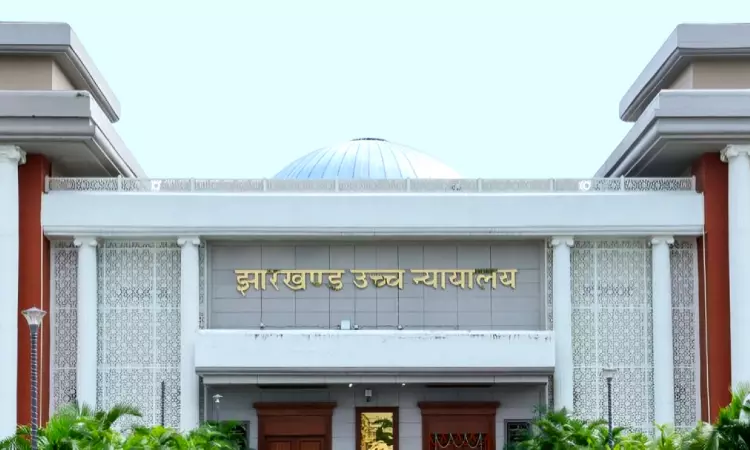
The Jharkhand High Court at Ranchi refused to interfere with the trial court's order in a Prevention of Money Laundering Act (PMLA) prosecution arising out of alleged irregularities in the Bokaro Steel Plant tender process.
A Single Judge Bench of Justice Sujit Narayan Prasad upheld the trial court orders rejecting the discharge application and framing charges against Chennai-based businessman Hitesh V. Shah in August 2025, alleging that bribe proceeds of Rs. 94.42 lakh were layered through relatives and projected as untainted transactions. He observed:
“It is the considered view that at this stage of the instant case, the Court was only required to consider whether a prima facie case has been made out or not and whether the accused is required to be further tried or not because at the stage of framing of the charge and/or considering the discharge application, the mini-trial is not permissible.”
The case originated from a 2017 Central Bureau of Investigation (CBI) FIR relating to alleged irregularities in tender processes at Bokaro Steel Plant and Durgapur Steel Plant, where MECON Ltd acted as consultant.
The FIR alleged a criminal conspiracy involving Hitesh V. Shah, partner in Shiv Machine Tools, Ajay Jalan of Zeal India Chemicals, and a public servant, Upendra Nath Mandal, then Senior Manager at MECON Ltd. It alleged that Mandal received illegal gratification in exchange for favouring firms in the tender process.
The Enforcement Directorate (ED) alleged that Shah paid Rs. 94.42 lakh as proceeds of crime and layered the funds through sham transactions. These included a Rs. 70 lakh payment shown as advance for machinery to Naskar Ceramics, and routing of funds as loans to Mandal's relatives through Shah's employees.
A Special PMLA Court took cognisance of the offence in November 2023, rejected Shah's discharge application in August 2025, and framed charges in March 2026.
Shah challenged the orders, contending that there was no material to show payment of illegal gratification and that the case rested on assumptions. He argued that the Rs. 70 lakh payment was a legitimate business transaction and that transfers to Mandal's relatives were friendly loans for medical and educational needs.
The ED opposed the plea, submitting that Shah was involved in generation, concealment, and projection of proceeds of crime. It alleged that the machinery invoice was backdated and issued after initiation of the CBI preliminary enquiry, and that the vendor lacked capacity to manufacture such machinery. It further contended that the alleged loans were structured transactions intended to disguise the bribe trail.
The High Court reiterated that at the stage of discharge, the court cannot conduct a mini-trial and must only examine whether the material discloses the ingredients of the offence. It noted that the financial trail was supported by bank statements and statements recorded under Section 50 of the PMLA, indicating layering through multiple entities.
The Bench observed that the Rs. 70 lakh payment was made to a tile vendor with a turnover of less than Rs. 20 lakh and was supported by a fabricated invoice, undermining the defence version. It held that the so-called friendly loans were, prima facie, part of a structured layering mechanism used to project illicit funds as legitimate.
Therefore, the Judge concluded that Shah appeared involved in acquisition, possession, concealment, layering, and projection of proceeds of crime amounting to Rs. 94.42 lakh as untainted property. He found no infirmity in the trial court's orders, and upheld the refusal to discharge.
Accordingly, the High Court dismissed the revision petitions.
For the Petitioner(s): Mr. Indrajit Sinha, Advocate; Mr. Sneh Singh, Advocate; Mr. Ajay Kumar Sah, Advocate [In both cases]
For the Respondent(s): Mr. Amit Kumar Das, Advocate [In both cases]