
Anirudhha Joshi's Personality Rights: Google Seeks Modification Of Delhi High Court Order Requiring Takedown Of Similar Content
Riya Rathore
8 April 2026 6:15 PM IST
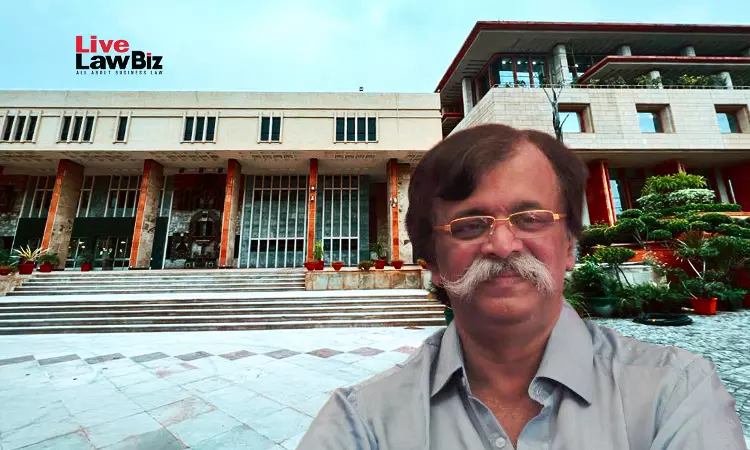
Google LLC has moved the Delhi High Court seeking modification of a John Doe interim injunction in a personality rights suit filed by Dr Aniruddha Dhairyadhar Joshi, arguing that directions requiring it to act on plaintiff-flagged “similar content” effectively force the platform to adjudicate legality under the “pain of contempt."
A single-judge bench of Justice Tushar Rao Gedela heard the matter.
The tech company maintained that it has no difficulty removing specifically identified URLs that have been adjudicated by the court. However, it contended that the plaintiff cannot be permitted to determine what constitutes infringing content going forward, submitting that any such determination must rest with the court.
The dispute centers on the February 24, 2026 interim order, particularly paragraph 38, which, apart from directing takedown of identified URLs, also extends to “content similar to the infringing content”.
Relying on the Supreme Court's ruling in Shreya Singhal v. Union of India, Google argued that intermediaries are required to act upon court orders or government notifications and cannot be compelled to independently assess the legality of content across large volumes of uploads.
It further submitted that while users may report additional content, the platform must retain the ability to express reservations and seek judicial determination, rather than face contempt proceedings for non-compliance with every such request.
On the issue of disclosure, Google opposed furnishing Basic Subscriber Information (BSI) for non-adjudicated links, arguing that such data pertains to third parties and can only be disclosed pursuant to specific court orders.
Opposing the plea, Senior Advocate Rajshekhar Rao, appearing for Joshi, termed Google's stance a “classic case of double speak”, pointing to its own policies that allow removal of content using an individual's name, image, or likeness. He argued that requiring the plaintiff to approach the court for every instance of misuse would defeat the purpose of a John Doe injunction.
“The problem is, when the beast rides on a vehicle and the vehicle decides to become the protector of the beast, then we have a problem,” Rao submitted.
He also emphasised that the case concerns misuse of identity, stating: “I came before your lordships… because I was being portrayed in a manner that I don't profess to be portrayed as… You may think that you are doing me a favor by having my picture with five gods. But that is not me.”
During the hearing, the court remarked the need to strike a balance, observing that public figures must tolerate a degree of criticism and even ridicule. “Anybody who is claiming to have personality rights… has the right to be ridiculed also. You have to understand that you will be ridiculed,” the court noted, adding that differing views and disagreement are integral to public discourse.
The court also flagged the broader implications of such directions, noting that interim orders in such cases may carry persuasive value in future matters and must therefore be carefully calibrated.
A key issue that arose during the hearing was whether, in cases of disagreement over flagged content, the intermediary should approach the court seeking clarification or whether the burden should lie on the plaintiff to initiate further proceedings.
“Nobody can say with certainty that this is right and this is wrong… there is a balance which has to be struck,” the Court observed.
The court granted Joshi four weeks to file a reply to the modification application, with two weeks thereafter for rejoinder, and posted the matter for further hearing in mid-May 2026