
Can Personality Rights Be Protected After Death? Meta Raises Query In Delhi HC Over Sadgurudev Babji's Personality Rights
Riya Rathore
26 May 2026 5:39 PM IST
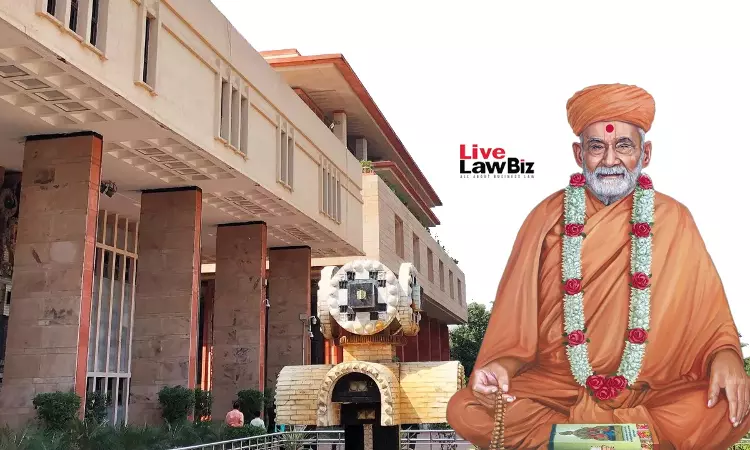
Meta, on Tuesday, questioned before the Delhi High Court whether personality rights can be asserted for a deceased person, during the hearing of a suit by the Shree Swaminarayan Sarvopari Siddhant Digvijay Trust against a breakaway faction allegedly using the likeness and personality of its founder, Sadguru Shri Devnandandasji Swami, popularly known as Babji.
During the hearing before Justice Tushar Rao Gedela, counsel for Meta, while addressing the reliefs sought against intermediary platforms, submitted that the maintainability of such a claim may require consideration.
“They are today urging before your Lordships, personality rights of a person who is not in this world. So whether that can be done at all, that is something that your Lordships will consider,” Meta's counsel submitted.
In response, the trust's counsel argued that such rights may be protectable in certain circumstances where a deceased person's personality is used in a particular manner.
“As far as a person who is no more... where his personality is dusted in a particular way, then it becomes an asset that can be protected,” the counsel submitted.
The trust has sued Sukhmay Karan Satsang Foundation and associated individuals, alleging that former trustees and sadhus who were once part of the plaintiff organisation broke away and subsequently formed a separate entity while falsely claiming Babji as their founder.
The plaintiff argued that the defendants' claim that Babji founded their organisation was factually incorrect, as Babji passed away in 2019, while the defendant foundation was incorporated only in 2024.
“They are claiming that he was the founder of their organisation,” the trust's counsel submitted.
The trust also alleged trademark infringement, contending that the rival entity's name incorporated elements associated with the plaintiff's religious identity and doctrine.
To support its case, the trust placed its bylaws before the court, which stated that the “name, appellation, murthy, portrait, pictorial representations, audio-visual publications, teachings, discourses and all related materials concerning the original founder of the sanstha shall remain under the exclusive control of the sanstha” and that “no other person shall use the same without prior written permission.”
The plaintiff also relied on an undertaking allegedly signed by a defendant, a former trustee who later became associated with the defendant organisation, in which he had committed to remaining under the discipline and command of the trust's successive presidents throughout his lifetime.
The trust further alleged that the defendants were circulating social media content and publishing material using Babji's image and likeness while presenting him as associated with their organisation.
During the hearing, Justice Gedela orally remarked on the nature of the dispute, observing, “Apparently it appears to be more of a faction than anything else. It has nothing to do with spiritual matters. This is absolutely a factions case. There are only two factions fighting for that main thing. That's all.”
Meta also pointed out procedural concerns, noting that WhatsApp had not been impleaded despite relief apparently being sought in relation to the platform. It further submitted that several URLs placed before the court were in Gujarati and had not been translated.
Counsel for the defendants also sought complete sets of documents relied upon by the plaintiff.
The court is likely to pass an ad-interim order in the matter