
Delhi High Court Modifies Google, Meta Takedown Directions In Aniruddha Bapu Personality Rights Case
Riya Rathore
28 Sept 2026 6:54 PM IST
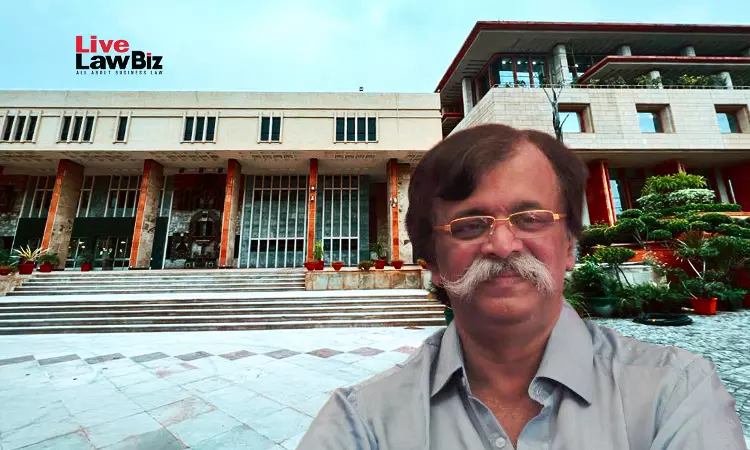
The Delhi High Court has modified its earlier directions to Google, Meta, and X for removing infringing content relating to spiritual leader Dr. Aniruddha Dhairyadhar Joshi, limiting mandatory takedowns of newly identified content to material that is “identical” to the content already covered by its February 24 order.
For content that is merely "similar," the platforms are required to remove it only if it violates their respective content policies.
The court had earlier directed removal of both kinds of content within 48 hours of a complaint.
Justice A.J. Bhambhani passed the order on September 15 in a suit by Dr. Aniruddha Dhairyadhar Joshi, who alleges infringement of his copyright, personality rights and publicity rights through deepfake and impersonated content.
The original order of February 24, 2026 had directed Google, Meta and X to remove the listed content, and also content similar to it, that was uploaded from India.
Google sought a limited vacation of that direction, and the plaintiff and Google later filed a joint application asking that the matter be disposed of on agreed terms.
Google and Meta argued that the direction was overbroad.
Under Section 79 of the Information Technology Act, 2000, intermediaries get "safe harbour" protection from liability for user content. The counsel argued that, as interpreted in Shreya Singhal v. Union of India and by a Division Bench in Myspace Inc. v. Super Cassettes Industries Ltd., they cannot remove content without a specific court order, unless they do so under their own policies.
They said the direction asked them to act on content of which they had no actual knowledge through a court order.
Joshi's counsel countered that it would be extremely onerous to approach the court every time similar content appears on a new URL or platform, and that this would defeat the purpose of the injunction.
To resolve both concerns, and relying on the court's July 27, 2026 decision in Home Box Office Inc. v. Streamzy.to, the court split the direction in two.
For content identical to the listed infringing content, the plaintiff can send the platform the details on affidavit with supporting documents. The platform must then "technically verify" whether the content is in fact identical, and if so, enforce the injunction "as a pro tem measure". At the same time, the plaintiff must file an application to implead those URLs, posts, accounts or handles, which the court will consider.
For content that is only similar, the plaintiff can send details on affidavit, but the platform must remove it, within 48 hours, only if it violates the platform's own policy or guidelines under the IT Act and its Rules.
The court also directed Google, Meta and X to give the plaintiff the available Basic Subscriber Information, such as name, address, phone number, email and IP address, behind the deepfake or impersonated content that has been blocked or removed. This must be given in password-protected files within three weeks. For additional identical URLs, this information will be disclosed only on specific directions from the court.
The applications were disposed of on these terms, and the suit will come up before the Joint Registrar on October 29, 2026.
For Aniruddha Dhairyadhar Joshi: Advocates R. Sudhinder, Ekta Bhasin and Anand Amit
For Defendants: CGSC Dhananjai Rana for D-2 and D-3; Advocates Aditya Gupta and Vani Kaushik for D-4; Advocates Amee Rana, Yash and Vishwajeet Deshmukh for D-5.