
'AI Tools Worse Than A Gun': Delhi HC Orders Takedown Of Content Infringing Drishti IAS Founder's Personality Rights
Riya Rathore
29 Sept 2026 12:34 PM IST
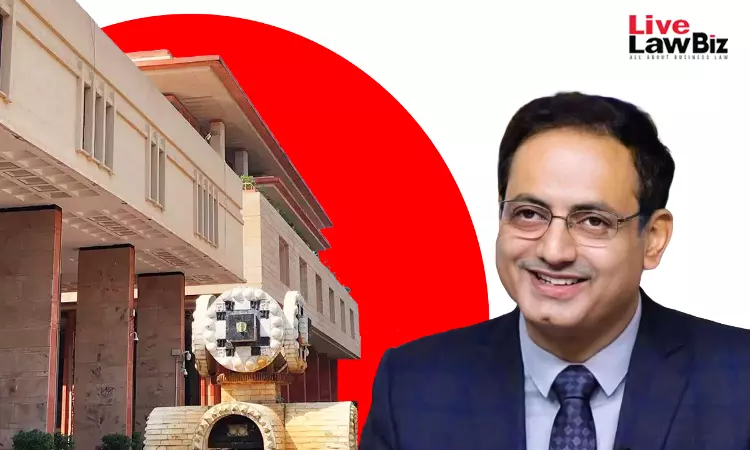
The Delhi High Court has ordered the takedown of fake social media profiles, deepfake endorsements, and unauthorised lecture clips using Drishti IAS founder Vikas Divya Kirti's identity.
However, it left open for later arguments the question of whether videos that clip and re-caption his lectures in a way that allegedly distorts their meaning amounted to copyright or personality rights infringement.
During the hearing, Justice A.J. Bhambhani raised concerns about powerful tools that can be used to create such content being made available without mechanisms to trace their users.
"What's happening is, these are very powerful tools that you're creating. And then you hand these tools to ghosts. You don't know who's going to use the tools," the judge told Meta's counsel, Advocate Varun Pathak.
When Pathak pointed to the licensing and permission requirements that apply offline, the judge drew a comparison with firearms.
"At least in our country, if you want to own a gun, they'll put you through a whole process."
Pathak said how a platform could then collect more identifying information than the law requires.
The judge responded, "It's worse than a gun because it can kill your reputation. You can just hand it to anybody. Free of cost. Just download."
The exchange arose after Advocate Diya Kapoor, appearing for Divyakirti, described a feature that lets a user lift someone else's video, such as a cooking demonstration, and overlay their own performance on top of it, turning another person's content into their own reel.
Pathak said he had not seen such a feature on Meta's platforms and would need to verify it but pushed back on the framing.
"We are not allowing manipulation on my platform," he said, arguing that any platform that lets a video be downloaded is, in that sense, a tool that can be misused, not a facilitator of the misuse itself.
Divya Kirti's personality rights suit alleges various parties of the building fake profiles in his name, running deepfake videos that show him endorsing betting and trading platforms, and reposting his lectures without permission.
Kapoor split the infringing material into categories and pressed for relief only where she said no competing right existed on the other side. Three categories qualified for today's order.
The first covers fake profiles and channels on YouTube and Instagram using Divyakirti's name, photograph and banner to post content he never wrote. Some carried a disclaimer stating they were not his official channel, which Kapoor argued does not cure the impersonation, since the accounts still used his image and name to pass off the posts as his own.
The second covers deepfake endorsement videos.
The third covers straight reproductions of his lectures, clips running 10 to 20 minutes with nothing added beyond a caption.
The court directed that the listed URLs across these three categories be disabled or removed, with the final list to be embedded in the order.
Meta's counsel also raised a jurisdictional objection, arguing that Rule 3 of the IT Rules and Section 46 of the Information Technology Act set up a grievance officer and adjudicating officer mechanism for exactly this kind of dispute and that Section 61 of the Act bars a civil court from stepping in.
Kapoor resisted this, arguing that her claim rests on the constitutional right to privacy, recognised by courts as a privacy tort, and on proprietary rights, not on any violation of the IT Act itself, so the bar does not apply.
The court did not rule on this question but flagged it as something it will need to weigh given the overlap between the two jurisdictions.
Pathak, on his part, argued that platforms should not be made to defend takedown requests for content they did not create, and suggested the uploaders themselves ought to be impleaded if the plaintiff wants the conduct actually defended. He also observed that rights holders rarely pursue damages against habitual offenders through execution proceedings, which might otherwise deter repeat violations.
The judge was sceptical of how realistic that route is in practice: "Have you heard of Order 21 of the CPC? If I give you even a 200 rupee decree today, go try to execute it. You'll be running in circles."
The court passed the takedown order covering the above-mentioned three categories.
It asked the parties to file a consolidated, updated list merging the URLs originally filed with those Divya Kirti had found since.
It also indicated it would direct the platforms to disclose Basic Subscriber Information and IP logs tied to the accounts behind the infringing content, so the persons responsible could potentially be traced.
A fourth category that was reserved included videos where Divyakirti's lecture footage is intercut with a title or caption that attributes a statement to him that he allegedly never made. For instance, a caption reading "Killing Gandhi" was laid over unrelated remarks.
Kapoor argued this amounts to three separate violations at once: copyright infringement for the unauthorised use of footage, a moral rights violation under Section 38B of the Copyright Act for distortion prejudicial to his reputation, and a personality rights violation for the false attribution itself.
The court said, "That's a question of argument," noting that some of this material could be characterised as commentary or criticism, which may attract the fair use defence available under Section 52 of the Copyright Act.
Unlike the straightforward lecture reposts, where nothing was added, these videos involved editorial choices, captions, spin, and framing that the defendants could argue are protected expression rather than mere reproduction.
Whether that framing crosses into copyright, moral rights, or personality rights violations, and where the line sits between legitimate criticism and infringement of Divyakirti's persona, remains to be argued in fuller detail later.