
Patent Office Cannot Raise New Objections Beyond Scope Of Remand: Bombay High Court
Riya Rathore
17 Jun 2026 12:41 PM IST
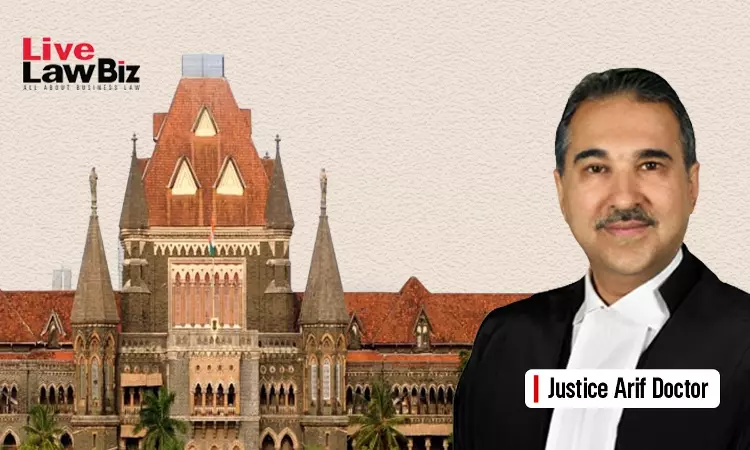
The Bombay High Court has held that a patent matter remanded solely to cure a breach of natural justice cannot be treated as a fresh examination proceeding, and the Patent Office cannot use such a remand to introduce entirely new prior art references or fresh grounds of objection.
Justice Arif S. Doctor passed the ruling while allowing an application filed by Qualyst Transporter Solutions LLC, a United States-based company whose patent application has been under prosecution in India for nearly a decade.
"The direction that the matter be 'considered afresh' must therefore be understood as requiring a fresh hearing after granting the Petitioner an opportunity to deal with the objections already raised and not as starting the examination process afresh or reopening the same," the Court observed.
The dispute traces back to a patent application examined by the Patent Office in 2020. After issuing a First Examination Report in December that year, the Patent Office received Qualyst's response and claim amendments in June 2021.
Hearing notices followed in August and September 2021.
In October 2025, the High Court set aside a refusal order after counsel for the Patent Office accepted that certain questions had been raised for the first time without giving the company an opportunity to respond.
The Court remanded the matter for a fresh hearing before an independent Controller and directed that the exercise be completed within three months.
Qualyst approached the Court again after the Patent Office issued a hearing notice in January 2026 introducing six prior art documents and additional objections that had not previously formed part of the record.
The company contended that the earlier remand was limited to curing the procedural defect identified by the Court and did not permit the Patent Office to reopen examination of the application. It also pointed out that the fresh hearing notice was issued on the final day of the three-month period within which the hearing itself had been directed to be concluded.
Opposing the application, the Patent Office argued that Controllers are permitted to communicate objections through hearing notices and that the company ought to respond to those objections before seeking intervention from the Court.
The High Court was not persuaded.
"A plain reading of the Order of Remand makes it clear that the earlier Order was set aside solely because certain questions had been raised for the first time at the hearing without having been previously communicated to the Petitioner," the Court held.
The Court noted that when the matter was remanded in 2025, there had been no suggestion that further examination was required. Nor had the Patent Office sought liberty to raise additional objections or rely on new prior art references.
It further held that the Controller's authority after remand was confined to correcting the procedural defect that had vitiated the earlier refusal order.
"In light of what is already noted in (B), (C) and (D) above, the answer, in my view, in the facts of the present case must be in the negative since the Controller's jurisdiction on remand was confined to curing the procedural defect identified in the Order of Remand, i.e., by giving the Petitioner a fresh hearing," the Court ruled.
Allowing the application, the Court clarified that the Patent Office may elaborate upon, clarify or further develop objections already emerging from the existing examination record and prior art references that were part of the proceedings. What it cannot do, the Court held, is introduce "entirely new prior art references or wholly new grounds of objection."
The court directed that the hearing be completed and a fresh order passed within eight weeks.
It also clarified that the ruling was confined to the particular facts of the case and the scope of the earlier remand order.
Following the pronouncement of the judgment, the Patent Office sought a stay on its operation. The Court granted a stay for four weeks.
For Qualyst Transporter Solutions: Senior Advocate Rashmin Khandekar a/ Murlidhar Khadilkar, Anand Mohan, Chinmay Page, Ashutosh Pawar i/b. Murlidhar Khadilkar
For Assistant Controller: Advocate Yashodeep Deshmukh a/w. Rutwik Rao, Vaidehi Pradeep i/b. Minal Avinash Vaidya