
Unit Owners, Not Society, Must Challenge Individual Property Tax Demands: Bombay High Court
Rajnandini Dutta
30 Jun 2026 5:28 PM IST
The Bombay High Court has held that after the Municipal Corporation of Greater Mumbai (MCGM) issued separate property tax demand notices to individual unit owners, any grievance regarding the assessment, penalty or sewerage tax became an individual dispute.
The court held that the appropriate remedy thereafter is the statutory appeal under the Mumbai Municipal Corporation Act. It dismissed writ petitions filed by a commercial premises society and some of its members after finding that MCGM had complied with an earlier direction to issue unit-wise property tax bills.
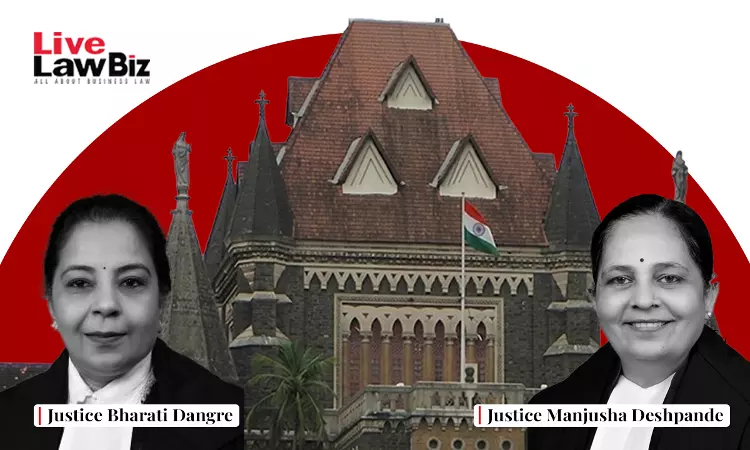
A Division Bench of Justice Bharati Dangre and Justice Manjusha Deshpande observed that once individual demand notices had been issued, the dispute no longer survived as a collective grievance of the society.
"In exercise of our writ jurisdiction we are not expected to get into each and every entry/unit wise or for the period and if any individual member now has any grievance in respect of the individual notice that is received by him computing the property tax along with the penalty by the notice separately issued upon him, he is at liberty to raise an individual dispute.", the court held.
The petitions were filed by Kotia Nirman Co-operative Commercial Premises Society Ltd. and some of its members. They sought separate property tax bills for individual unit owners, challenged the validity of the Sewerage and Waste Removal Rules, 2015, and sought restoration of the building's water supply, which had been disconnected over unpaid property tax dues.
The court noted that an earlier division bench had directed MCGM to issue separate demand notices after verifying records submitted by the parties. MCGM informed the court that it had completed the exercise and issued individual property tax demand notices for each unit. It also stated that property tax dues for the building stood at about ₹7.83 crore as of March 31, 2022.
The bench observed that disputes over payments allegedly made to the developer but not remitted to MCGM were not matters for consideration in writ jurisdiction. It held that individual unit owners could challenge their assessments before the Small Causes Court through the statutory appellate remedy. The court also clarified that the time spent pursuing the writ petitions could be considered while deciding applications for condonation of delay.
Rejecting the challenge to the Sewerage and Waste Removal Rules, 2015, the court held that the Standing Committee was empowered to frame the Rules under the Mumbai Municipal Corporation Act. It also noted that Rule 7.3 permits levy of sewerage tax even where water supply has been disconnected.
"Rule 7.3 clearly specify that, if water supply to any premises within Brihan Mumbai limits, stands disconnected, Sewerage Tax as prescribed here in above shall be leviable, irrespective of whether the Water Tax is leviable or otherwise."
Holding that a blanket challenge to the Rules was not sustainable, the bench clarified that individual unit owners remain free to challenge the levy in their respective cases through the statutory appellate remedy.
The court accordingly dismissed both writ petitions. It also dropped the contempt proceedings after holding that MCGM had complied with its earlier directions by issuing separate unit-wise property tax demand notices.
For Petitioner: Advocates Ajay Panicker with Dhairya Sampat i/b Ajay Law Associates
For Respondent: Advocates Ashwin Sakolkar (through video-conferencing) with Prakash Chavan with Shruti Keer