
Future Revenue Share Can Be Consideration For Stamp Duty On Development Agreement: Bombay High Court
Rajnandini Dutta
28 Aug 2026 4:48 PM IST
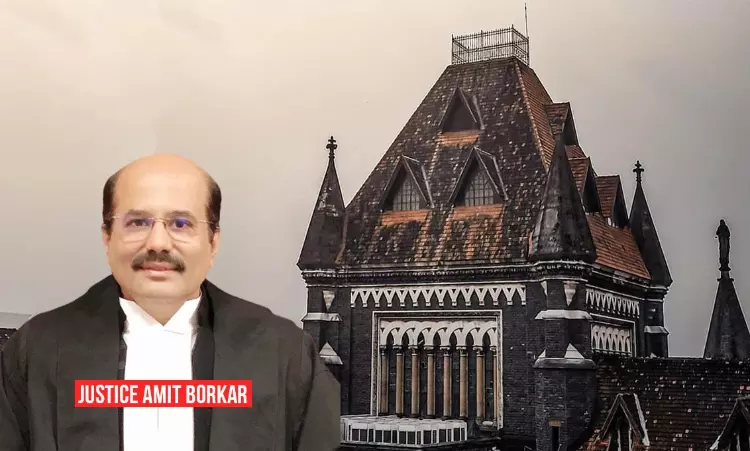
The Bombay High Court on 24 August held that a landowner's agreed share in future sale proceeds can be treated as consideration for determining stamp duty on a development agreement, even if the exact amount is not known when the agreement is executed.
Justice Amit Borkar dismissed Star Developers' petition challenging the demand for deficit stamp duty, holding that the 42% revenue share agreed to be paid to the landowner could be considered while determining the market value of the transaction under Section 2(na) of the Maharashtra Stamp Act. The Bench held:
“The fact that the consideration is not a fixed amount in rupees does not mean that there is no consideration. Consideration can be agreed in different forms. Here, the amount which the owner was to receive was connected with the sale proceeds of the constructed units. Therefore, merely because the exact amount was not known on 29 April 2013, it cannot be said that there was no consideration at all.”
The case arose from a 2013 Joint Venture Agreement concerning development of land at Bavdhan in Pune. Under the agreement, the parties proposed to develop a residential and commercial project and sell the constructed units. The landowner was to receive 42% of the revenue from the sales, while Star Developers was to receive the remaining 58%.
Star Developers initially paid around Rs. 16.26 lakh towards stamp duty, based on a property valuation of around Rs. 3.25 crore. The stamp authorities subsequently found that the landowner's 42% share in the sale proceeds also had to be considered, resulting in a higher valuation and a demand for additional stamp duty.
The company then challenged the demand, arguing that money that might be received from the future sale of flats could not constitute present consideration. It also contended that detailed valuation guidelines dealing with such revenue-sharing arrangements were introduced only in 2015, while the agreement was executed in 2013.
The High Court accepted Star Developers' contention that the 2015 guidelines could not retrospectively create a stamp duty liability for an agreement executed in 2013. It held that stamp duty, being a fiscal levy, must have its basis in the law itself and cannot be imposed merely through a subsequent administrative guideline.
However, it held that the stamp duty liability in the present case flowed from the Maharashtra Stamp Act itself. It said the 2015 guidelines merely provided the method for determining the value and did not create the underlying liability.
Further, the Bench rejected the contention that the future sale proceeds were too uncertain to constitute consideration. It noted that although the precise amount was not known on the date of the agreement, the formula for determining the landowner's entitlement had already been fixed. The landowner was contractually entitled to 42% of the sale proceeds. It held:
“The liability comes from the Act and not from the 2015 Guidelines. The submission that the revenue-sharing amount is not consideration cannot be accepted. The 42% share of the gross sale proceeds was the contractual return connected with the development rights and could be considered for determining market value under Section 2(na).”
It also clarified that a Comptroller and Auditor General (CAG) audit objection cannot by itself determine the stamp duty payable. It can only bring a possible case of undervaluation to the notice of the competent authority, which must independently determine the stamp duty under the Maharashtra Stamp Act.
Accordingly, the High Court dismissed Star Developers' petition and upheld the deficit stamp duty determined by taking into account the revenue-sharing arrangement.
For Petitioner: Ms. Manjiri Parasnis
For State: Ms. Mamta S. Srivastava, AGP