
Educational Institutions Must Prove Solely Charitable Use For Property Tax Exemption: Bombay High Court
Rajnandini Dutta
8 Oct 2026 3:21 PM IST
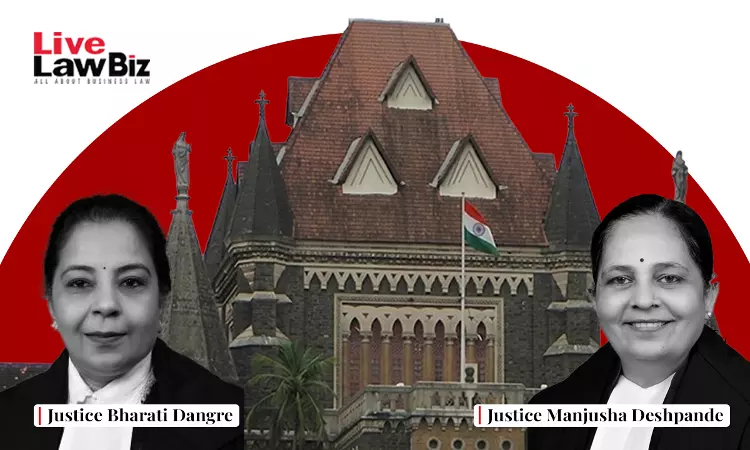
The Bombay High Court on 29 September held that educational institutions cannot claim property tax exemption merely because they are run by a charitable trust or enjoy minority institution status, and must establish that their premises are used solely for charitable purposes to claim exemption for each financial year.
A Division Bench of Justices Bharati Dangre and Manjusha Deshpande dismissed a petition filed by Jai Hind Sindhu Education Trust challenging property tax demands raised by the Pimpri Chinchwad Municipal Corporation (PCMC) against its educational institutions in Pune. It observed:
“In our view, the position that every educational institution achieves the charitable purpose no longer is the accepted norm, but it will be imperative for the society/the school which imparts education to establish that its buildings and lands or portions thereof are occupied and used for a public charitable purpose, as mere owning of land/building is not sufficient, but it must satisfy the other aspect, namely, that it is solely used for charitable purpose.”
The Trust runs a primary school, high school, junior college and commerce college. The Corporation had demanded property tax from the Trust, which claimed exemption under Section 132(1)(b) of the Maharashtra Municipal Corporations Act, 1949, on the ground that it was a registered charitable organisation operating educational institutions on a non-profit basis.
Further, The Trust relied on a certificate issued by the Corporation in 1991 stating that its educational premises were exempt from property tax. The Corporation, however, contended that exemption was not automatic and had to be established based on the actual use of the premises during each assessment year.
The Court held that while education is recognised as a charitable purpose under the Maharashtra Public Trusts Act, merely imparting education does not establish that the property is used exclusively for charitable purposes. It added that institutions engaged in commercial or profit-making activities cannot claim exemption merely on the basis of their charitable registration.
It further held that the Trust had to apply for exemption every financial year and establish its eligibility through appropriate documents. Its minority institution status, by itself, did not confer an automatic right to exemption.
Finding no illegality in the tax demands, the Bench dismissed the petition and vacated the interim protection granted to the Trust. It, however, permitted the Trust to seek exemption for future years by submitting the necessary supporting material to the Corporation.
Accordingly, the High Court dismissed the writ petition.
For the Petitioners: Advocate Dormaan J. Dalal with Advocate Shirley Mody.
For the State of Maharashtra: Advocate General Dr. Milind Sathe with Additional Government Pleader Kedar B. Dighe and Assistant Government Pleader Savita A. Prabhune.
For Pimpri Chinchwad Municipal Corporation (Respondent Nos. 2–5): Advocate Shrikrishna Ganbavale with Advocate Shantanu Patil.