
Delhi High Court Allows Harper Collins To Circulate Rana Kapoor Book, Restricts Four Passages
Riya Rathore
7 Nov 2026 9:59 AM IST
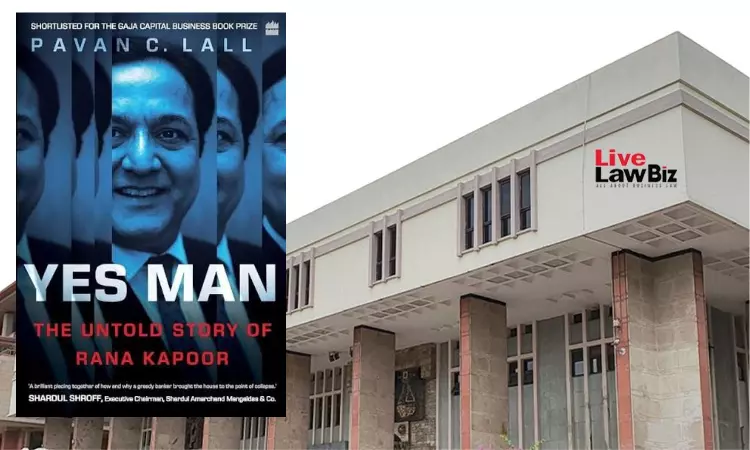
The Delhi High Court has allowed HarperCollins to continue circulating Yes Man: The Untold Story of Rana Kapoor, while restraining publication of four specific passages concerning Yes Bank's former managing director, Rana Kapoor. Three passages were found prima facie defamatory, while the fourth was characterised as derogatory.
Justice Harish Vaidyanathan Shankar, on Friday, modified an earlier order that had restrained HarperCollins and the book's author, Pavan Chand Lall, from selling or circulating the entire book during the pendency of Kapoor's suit.
The dispute concerns four passages dealing with Kapoor's time at Bank of America and Yes Bank, his professional qualifications and the bank's credit approval process.
One passage describes Kapoor as an “arrogant, erstwhile tycoon” who had built a top-ranked bank before his own actions brought it “teeteringly close to implosion”. Another states that “the word on the street was” that his maternal uncle, Chopra, had called senior management at Bank of America to help him get a job at its Barakhamba Road branch.
A third passage questions Kapoor's professional competence, pointing out that although he did not have an MBA from an IIM, at least four of the five people reporting to him at Bank of America's branch were IIM graduates who “could intellectually run circles around him”.
The fourth passage alleges that there was a “buzz” that Kapoor organised credit approvals for clients without managerial sanction, issued documents without signatures and disregarded prescribed banking protocols. It also refers to unusually high expenditure on bank accounts.
Kapoor had alleged that these statements were defamatory and sought an injunction against circulation of the book, among other reliefs.
The trial court had found three of the statements prima facie defamatory. It had characterised the passage describing Kapoor as an “arrogant, erstwhile tycoon” as derogatory. Although its findings concerned only these four passages, it restrained circulation of the entire book.
HarperCollins and Lall challenged the order before the High Court, arguing that the blanket restraint was unwarranted. They contended that the statements were based on material available in the public domain and constituted fair comment.
Lall also pointed out that the book had been published in December 2020 and had remained in circulation thereafter.
The High Court found no reason to interfere with the trial court's findings that three passages were prima facie defamatory and the fourth was derogatory. It observed that the material available in the public domain, by itself, could not establish the truth of the specific allegations or make them protected fair comment. Whether the publisher and author could ultimately rely on the defences of justification or fair comment would have to be decided at trial.
However, the court questioned why circulation of the entire book had been stopped when the findings concerned only four specific passages.
“The fact that certain passages in a literary work may, at the interlocutory stage, be found to be prima facie objectionable does not necessarily mean that the publication of the work as a whole must be interdicted,” the court observed.
It also noted that Kapoor had not challenged the trial court's findings concerning the other statements in the book. The remaining contents had not been found to constitute defamatory or derogatory material at this stage.
“Pending trial, the ban on the publication of the book is clearly not warranted. A total ban on the publication of the book, to the mind of this Court, tilts the balance in the favour of one category of rights asserted, namely that of the right to social reputation, without addressing the right to freedom of speech and expression which is guaranteed by the Constitution,” Justice Shankar observed.
The court added that “the protection which is warranted can be secured without necessarily bringing the entire Subject Book within the scope of the injunction.”
It accordingly modified the trial court's order to confine the injunction to the portions containing the four passages. The remaining portions of the book can continue to be published and circulated.
The court directed that the passage describing Kapoor as an “arrogant, erstwhile tycoon” be kept out of publication until the trial court determines its final character.
The appeals and pending applications were disposed of. There was no order as to costs.
For Harper Collins: Advocates Essenese Obhan, Ashima Obhan, Yogita Rathore and Tushar Chauhan
For Respondents: Advocates Naman Joshi, Guneet Sidhu and Aakash Deep Singh for R-1; Senior Advocate Percival Billimoria with Advocates Nattasha Garg, Anubhav Dubey, Thakur Ankit Singh, Rachita Sood, Priyamvada Paneru, Liza Arora and Anandi Katiyar for R-2.