
Calcutta High Court Says MSME Can't Seek Revival Benefit After SARFAESI Action, Rejects Debpara Claim
Kirit Singhania
9 Sept 2026 4:00 PM IST
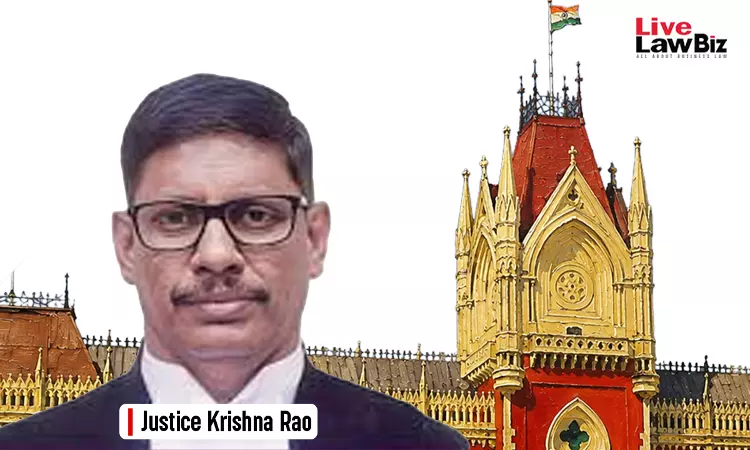
The Calcutta High Court on 2 September dismissed a writ petition filed by Debpara Tea Company Ltd against State Bank of India (SBI), which sought the benefit of the Framework for Revival and Rehabilitation of Micro, Small and Medium Enterprises (MSMEs) and challenged the classification of its account as a Non-Performing Asset (NPA).
Justice Krishna Rao held that an MSME cannot seek the benefit of the Framework at a belated stage after the bank has issued a notice under Section 13(4) of the Securitisation and Reconstruction of Financial Assets and Enforcement of Security Interest Act, 2002 (SARFAESI Act) and the borrower has already invoked the statutory remedy under Section 17 before the Debt Recovery Tribunal (DRT). The Bench held:
“In view of the above, this Court did not find that the petitioners are entitled to get the benefit of Framework for Revival and Rehabilitation of the MSMEs at the later stage when the bank has also issued notice under Section 13(4) of the SARFAESI Act and the petitioners have also initiated a proceeding under Section 17 of the SARFAESI Act against the bank before the Tribunal.”
Debpara Tea Company, an MSME, was sanctioned financial assistance of Rs. 13.73 crore on 7 October 2020, which was enhanced on 6 May 2022. SBI classified the company's account as an NPA on 29 December 2023. It subsequently issued a notice under Section 13(2) of the SARFAESI Act (notice demanding repayment of the secured debt) on 21 March 2024.
The petitioners submitted a representation to the bank on 15 July 2024. The Court noted that the representation did not seek the benefit of the Framework for Revival and Rehabilitation of MSMEs.
SBI thereafter issued a notice under Section 13(4) of the SARFAESI Act (notice enabling a secured creditor to take measures for enforcement of its security interest) on 16 September 2024.
The petitioners then approached the DRT under Section 17 of the SARFAESI Act (a statutory remedy against measures taken by a secured creditor under Section 13(4)). S.A. No. 193 of 2024 remained pending before the DRT. They contended that SBI was bound to consider the 2016 Framework before classifying their account as an NPA.
The Court noted that the petitioners had not sought the benefit of the Framework in their representation dated 15 July 2024. It further noted that they invoked the remedy under Section 17 before the DRT after the bank issued the notice under Section 13(4).
It held that once the petitioners had invoked the statutory remedy under Section 17, their grievance could not be adjudicated in the writ petition. It observed:
“Considering the above, this Court finds that only after issuance of notice under Section 13(4) of the SARFAESI Act, the petitioners have filed the present writ petition praying for the benefit under the Framework for Revival and Rehabilitation of the MSMEs but this Court finds that the petitioners have not taken appropriate steps for getting the benefit of the said Framework for Revival and Rehabilitation of the MSMEs of the appropriate stage and on the other hand, the petitioners have taken the recourse of Section 17 of the SARFAESI Act by initiating a proceeding against the bank before the Learned Tribunal.”
Relying on the judgments in Pro Knits and Shri Shri Swami Samarth, the Bench observed that while banks are required to follow the MSME Framework before classifying an account as an NPA, an MSME must also assert its eligibility in time and follow the prescribed procedure.
Accordingly, the High Court declined to grant Debpara Tea Company the benefit of the Framework for Revival and Rehabilitation of MSMEs at the later stage and dismissed the writ petition.
For Petitioner: Abhrajit Mitra, Sr. Adv., Advocates Abhidipto Tarafder, Debayan Ghosh, Dipankar Thakur
For Respondents: Advocates Anirban Pramanick, P. Nath, Bhagyasree Dey