MSME Can Invoke Dispute Resolution Mechanism Even If Registered After Contract: Delhi High Court
Mohd.Rehan Ali
12 Nov 2026 4:02 PM IST
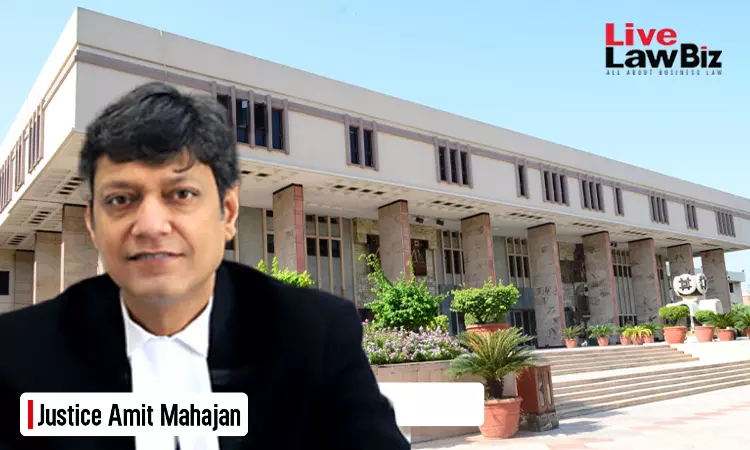
The Delhi High Court has reiterated that an enterprise can invoke the dispute resolution mechanism under the Micro, Small and Medium Enterprises Development Act, 2006, even if it obtained MSME registration after executing the contract in question.
Justice Amit Mahajan observed that the Supreme Court's ruling in NBCC (India) Ltd. v. State of West Bengal & Ors., 2025, squarely covered the issue.
“Hence, it emerges that the above cited judgment in NBCC (supra) squarely covers the case at hand, as it has been settled that any party to the dispute can seek recourse to the Section 18 of the MSME Act, even if registration has been obtained subsequent to the execution of the Contract as Section 8 grants a discretion to a micro or a small enterprise in filing a memorandum with the authority. Thus, the Respondent No. 2 could have taken a recourse to Section 18 of the Act,” the court observed.
The court was hearing a petition filed by TPL-KIPL Joint Ventures challenging two orders passed by the Micro and Small Enterprises Facilitation Council, District Magistrate (West), Delhi. Through orders dated July 10 and July 29, 2024, the Council terminated conciliation proceedings and referred the dispute to the Delhi International Arbitration Centre (DIAC).
The dispute arose from a Letter of Intent issued on November 27, 2017, followed by a Work Order executed on January 19, 2018. Under the arrangement, KRA Infrastructure Developers Pvt. Ltd. was engaged as a sub-contractor for constructing a sewage system, including ancillary works and an IPS, along with operating and maintaining the entire system for six years in Karnal town.
The petitioner argued that KRA Infrastructure was not registered as an MSME when the Letter of Intent and Work Order were executed. It pointed out that the company obtained registration on November 7, 2020, and contended that the benefits under the Act operated prospectively. Therefore, they could not be extended to contracts executed before registration, it argued.
The petitioner also objected to the Council referring the dispute to arbitration without first deciding its preliminary objections concerning jurisdiction and KRA Infrastructure's eligibility to invoke the Act.
Opposing the petition, KRA Infrastructure argued that registration under Section 8 was not a prerequisite for invoking the Council's jurisdiction under Section 18. It claimed that it had been functioning as an MSME since 2007 and that the registration obtained in 2020 followed a change in the registration format.
The company further argued that the petitioner could raise its jurisdictional objections before the arbitral tribunal under Section 16 of the Arbitration and Conciliation Act, 1996.
The High Court relied on the Supreme Court's ruling in NBCC, which interpreted Section 18 to permit "any party to a dispute" to make a reference. The Supreme Court also noted that Section 8 gives micro and small enterprises discretion to file a memorandum with the authorities. The matter was referred to a larger bench for consideration.
The High Court noted that KRA's registration certificate classified it as a small enterprise. It also observed that the claims arose from the Work Order and that the final bill had been raised in 2021, after registration.
The court further noted that the Council had only terminated conciliation proceedings and referred the dispute for arbitration. It had not adjudicated the rival claims of the parties. The petitioner had therefore failed to establish that it was prejudiced by the orders.
Clarifying that it had examined only the issue of subsequent MSME registration, the court left the parties free to raise their respective contentions before the arbitral tribunal. It made no observations on the merits of their claims.
Accordingly, the High Court dismissed the petition.
For Petitioner: Advocates Renu Gupta & Pratiksha Jalan
For Respondent: Advocate Rakesh Gupta