
Purva Dhanashree Moves Delhi High Court Amid Trademark Dispute Over 'Vilasini Natyam'
Riya Rathore
26 Feb 2026 5:48 PM IST
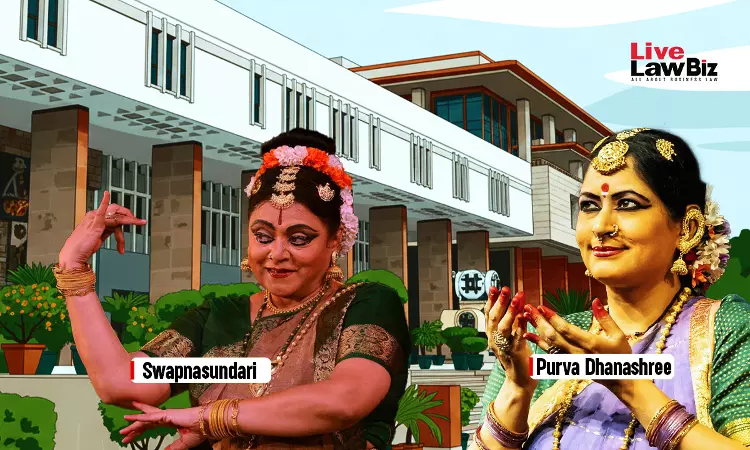
Renowned classical dancer Purva Dhanashree has approached the Delhi High Court seeking permission to continue using the name 'Vilasini Natyam' for her public performances, challenging the exclusive trademark claimed by her guru, Swapnasundari, a Padma Shri awardee, over the traditional dance form.
On Thursday 26 February, Justice Tushar Rao Gedela urged the “guru-shishya” duo to resolve the matter through dialogue, noting that while the trademark is registered, the guru's own research indicates the name may not have been personally coined by her.
During proceedings, Dhanashree's counsel sought urgent relief, arguing, “The public shouldn't be confused as to what this particular dance is. Neither should anyone who's trying to perform this particular dance be deprived of calling it what it has been known by for the last 200–500 years.”
Dhanashree highlighted her long association with the art form, stating she had been performing under the name for 20 years prior to the trademark registration and had been recognised by the Sangeet Natak Akademi for her contributions.
Her counsel further argued that the name was not a personal creation. According to the guru's book, the late Telugu scholar Dr. Arudra proposed the name in 1995 after consulting cultural experts and hereditary dancing families, and the majority recommended it.
“She did not create it,” the counsel asserted, adding that the trademark application was filed in 2021, eleven years after the book was published and a decade after Dhanashree began performing publicly.
They also relied on Swapnasundari's own published research, noting that “Vilasini Natyam represents a tradition practiced by hereditary female dancers of Telugu origin in temples and courts, with inscriptions dating back to the 10th century.”
Further, Dhanashree's counsel also argued that “permitted use” can sometimes be recognised for non-registered users, the Court clarified that such permission ordinarily flows from the owner.
Advocate Vaibhav Vutts, representing Swapnasundari, clarified that the guru's primary concern is the preservation of the revived tradition, not the name itself. He argued that “Vilasini Natyam needs to present that art form” and anyone using the name must “comply with what Vilasini Natyam stands for.”
Describing the guru as the “brainchild” behind the revival, Vutts emphasised that the name should not be used to misrepresent other dance styles.
The Court examined whether the term was coined by the guru. A significant portion of the discussion centered on whether the dancer could at least use the word “Vilasini” (e.g., “The Dance of Vilasini”). Dhanashree alleged that the guru frequently sends legal notices to event organizers, who are often artists themselves and are deterred from hosting her. Justice Gedela remarked on a lighter note that “Vilasini” is a common name, adding, “The word Vilasini, no one can have any objection to.”
On “style” Justice Gedela distinguished trademarks from other intellectual property. He observed:
“You may be right that you have developed a particular dance form... that could be copyrighted. But a trademark is a mark. It can't have any form in it,” he observed. Referring to the guru's book, he added, “Ordinarily, we would have gone by you if this book wasn't there. It is not coined by you.”
Ultimately, the Court urged both artists to “sit down over a cup of coffee” and resolve the dispute as “guru-shishya” rather than litigants, observing that “creative people can't be logical... That's why they are artists.”
The matter has been adjourned to allow both sides to seek instructions on a possible settlement.