
Bombay High Court Restrains DUNE From Creating Third-Party Rights In 'SNAP', Protects VVAA's 40% IP
Riya Rathore
9 Oct 2026 5:01 PM IST
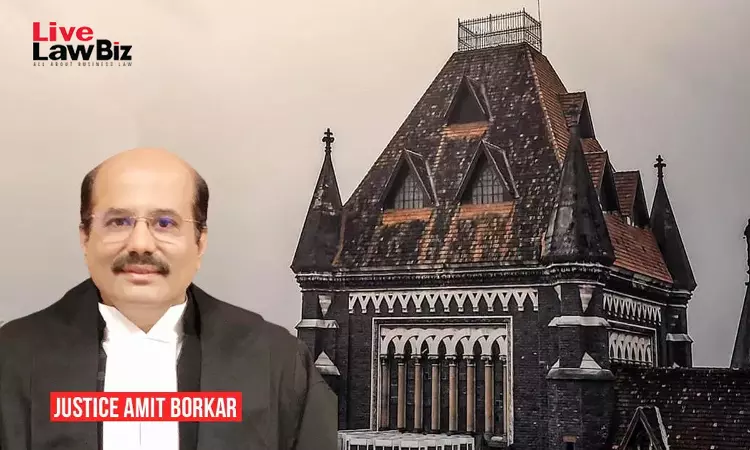
The Bombay High Court on 5 October restrained DUNE Collective LLP from creating third-party rights in the Hindi feature film “SNAP” that could prejudice co-producer VVAA Films Private Limited's claimed 40% intellectual property interest, pending commencement of arbitration.
Justice Amit Borkar also directed DUNE to disclose records showing how it had used VVAA's funds, but declined to order specific performance of the co-production agreement or grant a blanket restraint against DUNE acting on its termination. The Bench held:
“The period which the parties agreed cannot be reduced from thirty days to thirty-six hours because the Respondent considered the alleged default to be serious,”
DUNE Collective LLP produced “SNAP”, with VVAA Films Private Limited as its co-producer. Under a co-production agreement dated 3 April 2026, VVAA agreed to invest up to Rs. 15 crore in three tranches of Rs. 5 crore each towards production and publicity.
In return, VVAA was entitled to 40% of the film's intellectual property rights and 40% of its net profits. The agreement provided for joint ownership of the rights in a 60:40 ratio, worldwide and in perpetuity.
A separate agreement dated 23 December 2025 required Zee Entertainment Enterprises Limited, which is not a party to the dispute, to pay DUNE a fixed assignment fee of Rs. 14 crore for the film. The amount was intended to be deposited into a joint escrow account.
VVAA paid the first tranche in ten instalments between 3 April and 3 June 2026. On 29 June 2026, DUNE demanded an additional Rs. 6.5 crore within 36 hours, threatening to terminate the agreement “with immediate effect” if VVAA failed to pay.
On 4 July 2026, VVAA rejected the demand and approached the High Court, apprehending that DUNE would bring in outside financiers and create third-party rights in the film.
It argued that the second tranche had not become payable because DUNE had failed to satisfy the conditions governing its release. It relied on DUNE's emails, which acknowledged that invoices and vendor payments remained pending. It also alleged that DUNE had failed to operationalise the joint escrow account and provide the audited accounts required under the agreement.
At the centre of VVAA's challenge was Clause 12.1, which permitted termination only after written notice and a 30-day period to remedy the breach. VVAA contended that DUNE had not followed this procedure. It further argued that, as a 40% co-owner of the film's copyright, it could not be deprived of its rights while DUNE exploited the film independently.
DUNE countered that VVAA had breached the agreement by delaying payments and that time was of the essence. It claimed that VVAA's 40% share was consideration for the entire Rs. 15 crore investment and that its entitlement could therefore be limited to 13.33%. DUNE also argued that nine emails sent between 5 April and 25 June 2026 had given VVAA sufficient notice to cure the alleged default.
Further, it contended that the agreement was “determinable” and could not be specifically enforced under the Specific Relief Act. It also warned that any delay would expose it to 12% interest on the Rs. 7 crore received from Zee.
The Court rejected DUNE's attempt to characterise VVAA as merely a financier. It noted that the agreement expressly described VVAA as a “Co-Producer” and granted it 40% of the film's rights.
It observed that DUNE's “submission... that the 40% interest would come only after payment of the entire Rs.15 Crores cannot be accepted.” It also noted that DUNE had accepted the entire first tranche and continued to act under the agreement, while its own emails acknowledged pending invoices.
However, the Bench did not consider VVAA entirely compliant with its obligations. It observed that VVAA could not claim complete compliance because it had not paid the first tranche in a single payment within the stipulated period.
On termination, it held that Clause 12.1 required a default to be followed by a 30-day opportunity to remedy it, which “cannot be treated as only an empty formality.” DUNE's demand allowing only 36 hours did not conform to the agreed procedure.
The Court found that VVAA had established a prima facie case that DUNE's termination notice dated 29 June 2026 did not comply with the agreement. It also held that damages might not adequately protect VVAA if DUNE created third-party rights in the film, potentially altering the parties' commercial positions irreversibly.
However, it cautioned that proceedings under Section 9 could not be used to “rewrite the Agreement” or conclusively determine the parties' rights under Clause 12. It declined to grant full specific performance, instead moulding the interim relief to ensure that “neither party gets an irreversible advantage”. DUNE remained free to take ordinary production and post-production steps necessary to complete the film.
Pending commencement of arbitration, and subject to further orders of the Arbitral Tribunal, the Bench restrained DUNE from creating third-party rights in VVAA's rights and interest in “SNAP”. DUNE cannot sell, assign, license or encumber VVAA's claimed 40% intellectual property interest, except as permitted under the agreement and with VVAA's concurrence.
It also barred DUNE from relying on the 29 June termination to deal with VVAA's existing rights contrary to the agreement. It directed DUNE to provide VVAA, within four weeks, with bank statements, invoices, vouchers and other records showing how it had used VVAA's funds, along with the production accounts required under the agreement.
Justice Borkar also stated that VVAA must take steps to commence arbitration within 30 days, and declined to direct performance of the agreement or grant the broader restraint sought against DUNE acting on the termination.
Lastly, the High Court clarified that its observations were prima facie and that the Arbitral Tribunal would decide the merits of the dispute.
For VVAA Films: Advocate Rashmin Khandekar with Akshata Modi, Pratyush Ranjan, Yash Jain and Santosh Salekar i/b Halai & Co.
For DUNE Collective: Senior Advocate Chirag Mody with Parag Khandhar and Tapan Radkar i/b DSK Legal