
Extraordinary Writ Jurisdiction Cannot Be Invoked In Factual Disputes: Orissa High Court
Manu Sharma
26 Feb 2026 4:01 PM IST
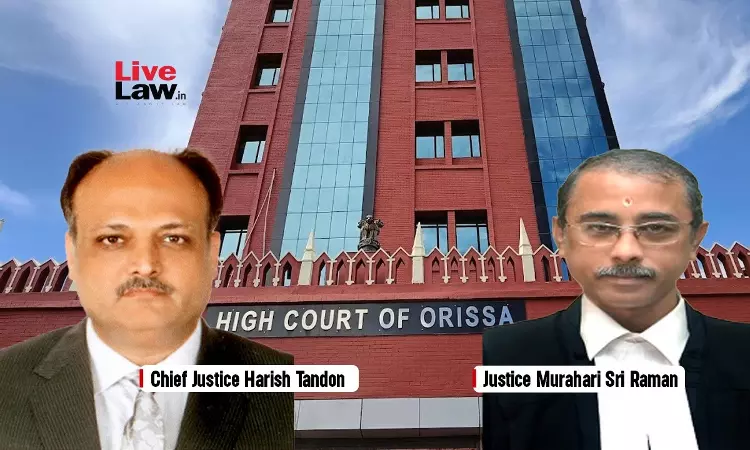
The Orissa High Court on 18 February, held that questions involving disputed facts, including the existence and relevance of incriminating material, cannot be examined in writ proceedings under Articles 226 and 227 of the Constitution.
A Division Bench of Chief Justice Harish Tandon and Justice Murahari Sri Raman, while dismissing a writ petition filed by Saroj Kumar Sahoo, emphasised that extraordinary writ jurisdiction is not available where an effective alternative remedy exists under the Income Tax Act.
The Bench held:
"Ergo, no case is made out by the petitioner to invoke power under Article 226 of the Constitution of India..."
Sahoo, a businessman from Orissa had challenged a faceless income tax assessment order directing him to pay a total demand of Rs. 45,20,09,261 for AY 2022-23. He challenged the jurisdiction of the Assessing Officer, contending that under Section 158BA(2) of Chapter XIV-B, any pending assessments should abate upon initiation of a search and that block assessment applies only to “total undisclosed income.” He contended that the proceedings were contrary to the statutory scheme.
The Court declined to “intermeddle” with the assessment passed by the National Faceless Assessment Centre and the Assistant Commissioner of Income Tax on 17 March 2025.
The Court observed that the assessment was based on scrutiny of Sahoo's disclosed return, selected for high creditors and high liabilities, and not on undisclosed income discovered during the search of associated companies such as Siddhiriddhi International Pvt. Ltd.
The Court noted that the search warrants and resulting Panchnama were issued in the names of the companies and not Sahoo personally. No evidence was presented linking undisclosed income discovered in the company searches to Sahoo individually.
This was the second occasion the matter reached the High Court. An earlier assessment in March 2024 had been set aside because Sahoo was denied a personal hearing, highlighting procedural lapses.
Relying on Commissioner of Income Tax v. Chhabil Dass Agarwal, the Bench reiterated that the High Court is “loath to exercise extraordinary jurisdiction” where statutory remedies, such as filing an appeal under the Income Tax Act, are available.
Accordingly, the Court dismissed the writ petition, allowing Sahoo to pursue remedies under the appellate mechanism provided in the Income Tax Act.
For the Petitioner: Saswat Kumar Acharya, Jaish Joshi, Abhijeet Agarwal and Dhiren Chaudhary, Advocates
For the Opposite Parties: Subash Chandra Mohanty, Senior Standing Counsel, assisted by Avinash Kedia, Junior Standing Counsel