
Telangana High Court Quashes IT Reassessment On Issue Already Examined, Calls It Change of Opinion
Mehak Dhiman
30 April 2026 6:53 PM IST
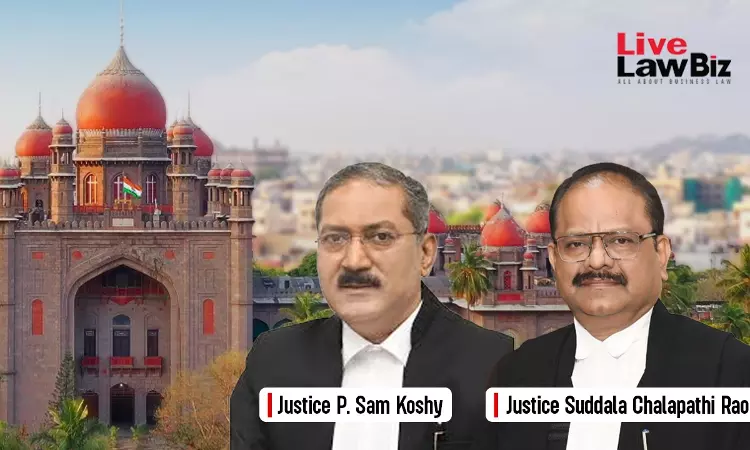
The Telangana High Court has set aside income tax reassessment proceedings against Piramal Swasthya Management and Research Institute, holding that the tax department cannot reopen an issue it had already examined and accepted during the original assessment.
“once the assessment proceedings are completed and assessment order is passed, the 1st respondent cannot reopen the assessment proceedings by issuing the impugned show-cause notice, dt.27.02.2023, alleging that Form 10 had not been electronically submitted, thereby disentitling the petitioner to the benefit of Sections 11(2) and 11(5) of the Act in respect of the amount of Rs.3,43,34,021/-,” the court held.
A Division Bench of Justice P. Sam Koshy and Justice Suddala Chalapathi Rao was dealing with a plea challenging action initiated under Sections 148A(d) and 148 of the Income Tax Act for the assessment year 2017–18.
The petitioner, a public health organisation registered under Section 12A, had filed its return declaring nil income and claimed exemption on accumulated funds under Section 11(2).
During the original assessment, the tax officer closely examined the issue of Form 10, a document required to claim tax exemption on funds set aside for future use. This assessment was carried out under Section 143(3) of the Income Tax Act, which allows a detailed scrutiny of a taxpayer's return.
Although the form was initially submitted in physical (manual) format instead of being filed online, the petitioner later uploaded it during the proceedings. After reviewing the explanation and supporting documents, the officer accepted the return and finalized the assessment on July 26, 2019.
More than four years later, the tax department issued a fresh show-cause notice under Section 148A(b), a provision that allows the department to ask why a completed assessment should be reopened. It claimed that because Form 10 had not been filed electronically within the prescribed time, the petitioner was not entitled to the exemption. The department alleged that income of Rs. 3.43 crore had escaped assessment.
Despite the petitioner pointing out that this very issue had already been examined earlier, the officer proceeded to pass an order under Section 148A(d), which permits reopening after considering the taxpayer's reply, and issued a formal reassessment notice under Section 148.
The High Court noted that the requirement to file Form 10 electronically had been introduced in that very assessment year and that the petitioner had clearly disclosed that it had initially filed the form manually.
It also found that the tax officer had specifically examined this issue during the original scrutiny, sought details, and accepted the explanation before completing the assessment.
“impugned show-cause notice is untenable, for the simple reason that the return of income, along with Form 10, though filed manually, was duly examined and accepted by the assessment authorities at the time of the original assessment order, dt.26.07.2019, pursuant to which, the assessment proceedings were completed, in all respects and the order was validly passed, and the assessment officer once accepts the manually submitted Form 10 and completes the assessment, reopening of the said completed assessment would amount to review, which is impermissible under law,” the bench observed.
“the contention of the learned Senior Standing Counsel as the Form 10 was not electronically submitted as mandated under Rules 17(2) & (3), the earlier assessment is liable to reopened, does not hold merit and is negated”., it added.
Holding that the reassessment amounted to a change of opinion and an impermissible review, the court set aside the order passed under Section 148A(d) and the consequential notice under Section 148, and allowed the writ petition.
For Petitioner: Advocate Suryanarayana, representing K. Raghavendra Rao
For Respondent: A. Ramakrishna Reddy, Standing Counsel for respondent No.1, and Sri Vijay K. Punna, Senior Standing Counsel for respondents No.2