
Vehicle Possession And Document Transfer Concludes A Sale For Capital Gains Tax: Madras High Court
Mehak Dhiman
12 March 2026 4:41 PM IST
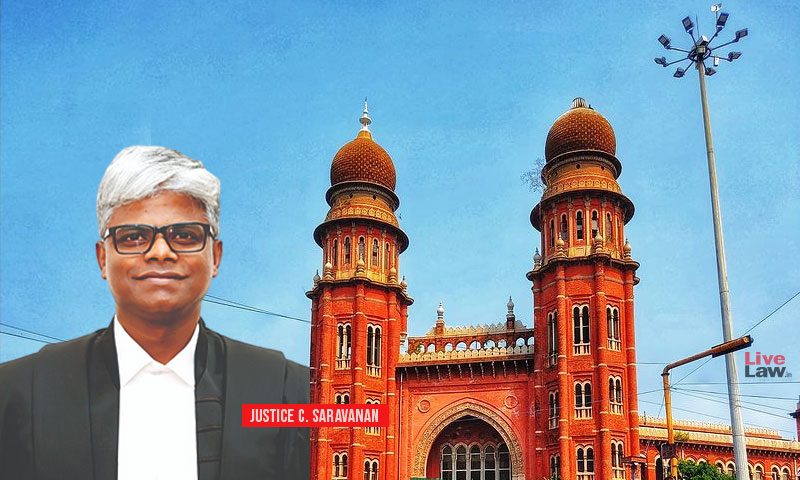
The Madras High Court has held that delivery of a vehicle along with its original documents may constitute a completed sale for income-tax purposes, even if the registration certificate is not formally transferred in the buyer's name.
A Bench comprising Justice C. Saravanan dismissed the writ petition filed by Dr. Arvind Kumar R. Shaw (the petitioner), upholding the assessment order passed by the Income Tax Department treating the sale of his Rolls‑Royce as a short-term capital gains transaction for the assessment year 2018–19.
The Bench stated:
"Even as per the provisions of the Motor Vehicles Act, 1988 and the Rules made thereunder, it can be said that there was a transfer of ownership. The petitioner should have followed the mandatory requirement of Section 50 of the Motor Vehicles Act, 1988 and Section 55 of Central Motor Vehicles Rules, 1989."
The dispute arose after the Income Tax Department, during investigation proceedings linked to searches in connection with another individual, traced and seized the petitioner's luxury car from a service centre in Kochi.
The petitioner contended that the car was never actually sold. It had been handed over to a broker for a prospective buyer, and that payment for the car was never received.
According to him, the vehicle was delivered to an intermediary on the understanding that it would be purchased for Rs. 80 lakh by a person associated with the Lulu Group. When the intermediary later became untraceable, the petitioner claimed he retained a duplicate key and lodged a police complaint alleging theft, asserting that the car remained under his control until the seizure.
The tax authorities, however, concluded that the petitioner had in fact sold the vehicle for Rs. 2.44 crore in September 2017. They treated the transaction as a sale of a short-term capital asset and computed taxable capital gains accordingly. Subsequently, the Commissioner of Income Tax (Appeals) dismissed the petitioner's appeal.
At the High Court, Justice Saravanan examined the nature of a “sale” and observed that although the Income Tax Act does not specifically define the term, it must be understood in light of the law governing the sale of goods.
The Court observed that when the petitioner handed over possession of the car along with the registration certificate, insurance documents, and other papers to the intermediary, the property in the goods effectively stood transferred. The Court held that delivery of the vehicle along with its documents constituted symbolic delivery and was sufficient to complete the sale.
The Bench rejected the petitioner's argument that the absence of a formal transfer of registration under the Motor Vehicles Act meant that the vehicle had not been sold. It held that non-compliance with statutory transfer procedures may attract other consequences, but cannot invalidate the fact that a sale had already taken place when possession and control were transferred.
The Court further noted that retention of a duplicate key by the petitioner did not negate the sale and could at best indicate a lien. It held:
"Merely because petitioner still retains the duplicate keys is not a relevant criteria to conclude that there was no sale on 29.09.2017. At best, retention of the duplicate/spare key of the vehicle was a mere lien."
Finding no reason to interfere with the assessment order or the appellate order, the High Court directed the Income Tax Department to auction the seized vehicle, which had remained in its custody since 2017, and deposit the proceeds in an escrow account to be dealt with in accordance with the outcome of the appellate proceedings before the Tribunal.
Accordingly, the Bench dismissed the writ petition, while granting liberty to the petitioner to pursue statutory appellate remedies before the Income Tax Appellate Tribunal.
For Petitioner: Senior Counsel, Ravikumar Paul
For Respondent: Senior Standing Counsel, A.P.Srinivas and Junior Standing Counsel, A.N.R.Jayaprathap