
Karnataka High Court Upholds ITAT Order Treating SAP Customer Event Receipts As Operating Revenue
Mehak Dhiman
26 Nov 2026 3:27 PM IST
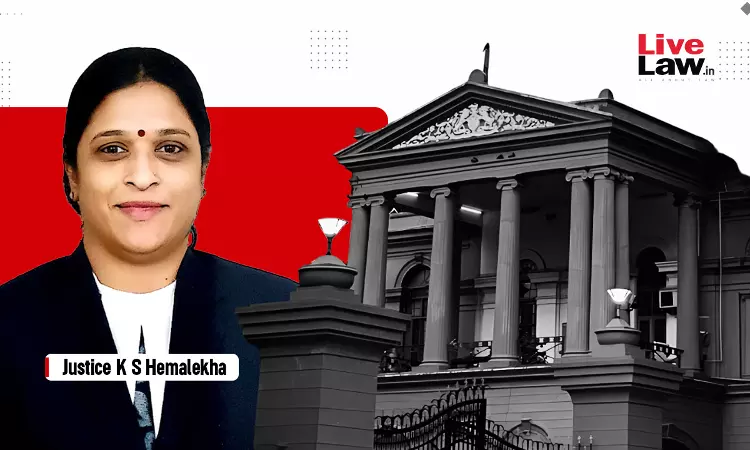
The Karnataka High Court on 18 November held that revenue earned from customer events closely connected with a company's software distribution business constitutes operating revenue for transfer pricing purposes, ruling that such receipts cannot be excluded while computing the segment's Profit Level Indicator (PLI).
A Division Bench comprising Chief Justice Vibhu Bakhru and Justice K.S. Hemalekha dismissed the Revenue's appeal against the Income Tax Appellate Tribunal's (ITAT) decision to include Rs. 229 million earned by SAP India Private Limited from customer events in the operating revenue of its software distribution segment. It observed:
“Since the PLI adopted was the ratio of operating profit to the Revenue, it would be necessary to take into account profits and revenues of the entire segment, and there would be little scope for excluding any activity that is an integral part of the segment.”
The Revenue had challenged the ITAT's order allowing SAP India's miscellaneous application after the Tribunal initially failed to consider its ground concerning the exclusion of customer-event revenue while computing the operating revenue of the distribution segment.
SAP India, a subsidiary of SAP entities in Germany and Singapore, is engaged in sub-licensing, distribution and after-sales support of SAP products, apart from providing consultancy services to its associated enterprises.
For Assessment Year 2020–21, SAP India reported distribution segment revenue of Rs. 37,258 million, which included Rs. 229 million earned from customer events.
However, while computing the PLI under the Transactional Net Margin Method (TNMM), the Transfer Pricing Officer (TPO) excluded the customer-event revenue without assigning any specific reason. The TPO determined the median PLI of comparable entities at 11.08% and consequently made a transfer pricing adjustment of approximately Rs. 181.38 crore in the distribution segment.
SAP India challenged the exclusion before the Dispute Resolution Panel (DRP), contending that the customer events facilitated interaction with SAP experts, partners and stakeholders, created awareness about SAP products and provided training. The DRP, however, treated the entry fees collected from participants as miscellaneous income unrelated to its core business.
Subsequently, the ITAT held that revenue from customer events formed part of the operating revenue of the software distribution segment. It observed that the events were closely connected with the sale of SAP products and were primarily intended to create product awareness, engage stakeholders and support sales.
Before the High Court, the Revenue argued that entry fees collected from participants could not be treated as operating revenue since the events were primarily promotional activities and did not constitute an independent business activity.
It contended that the receipts were not directly linked to the international transaction involving the distribution of SAP products and, therefore, could not be included while determining the arm's length margin.
The Court observed that the TPO had accepted TNMM as the appropriate method and that the PLI was based on the ratio of operating profit to revenue.
It held that, while applying TNMM to the distribution segment, the revenue and profits of the entire segment had to be considered, leaving little scope to exclude activities forming an integral part of that segment.
Further, the Bench noted that the TPO had not recorded any finding that the customer events fell outside the distribution segment and had excluded the corresponding revenue without assigning reasons.
It also observed that marketing activities were integral to the distribution business and that the Revenue itself had acknowledged the events as part of SAP India's marketing strategy. It said:
“The questions framed by the Revenue also suggest that customer events were a part of the marketing strategy. Indisputably, expenditure and marketing strategy would be a part of the transactions covered in the segment…”
Finding no perversity in the ITAT's conclusion that the customer events were closely connected with the distribution and sale of SAP products, the judges held that no substantial question of law arose for consideration.
Accordingly, the High Court dismissed the Revenue's appeal and upheld the ITAT's decision to include the Rs. 229 million customer-event revenue while computing the operating revenue of SAP India's software distribution segment for transfer pricing purposes.
For the Appellants: Mr. E.I. Sanmathi, Advocate.
For the Respondent: Mr. M. Dilip, Advocate.